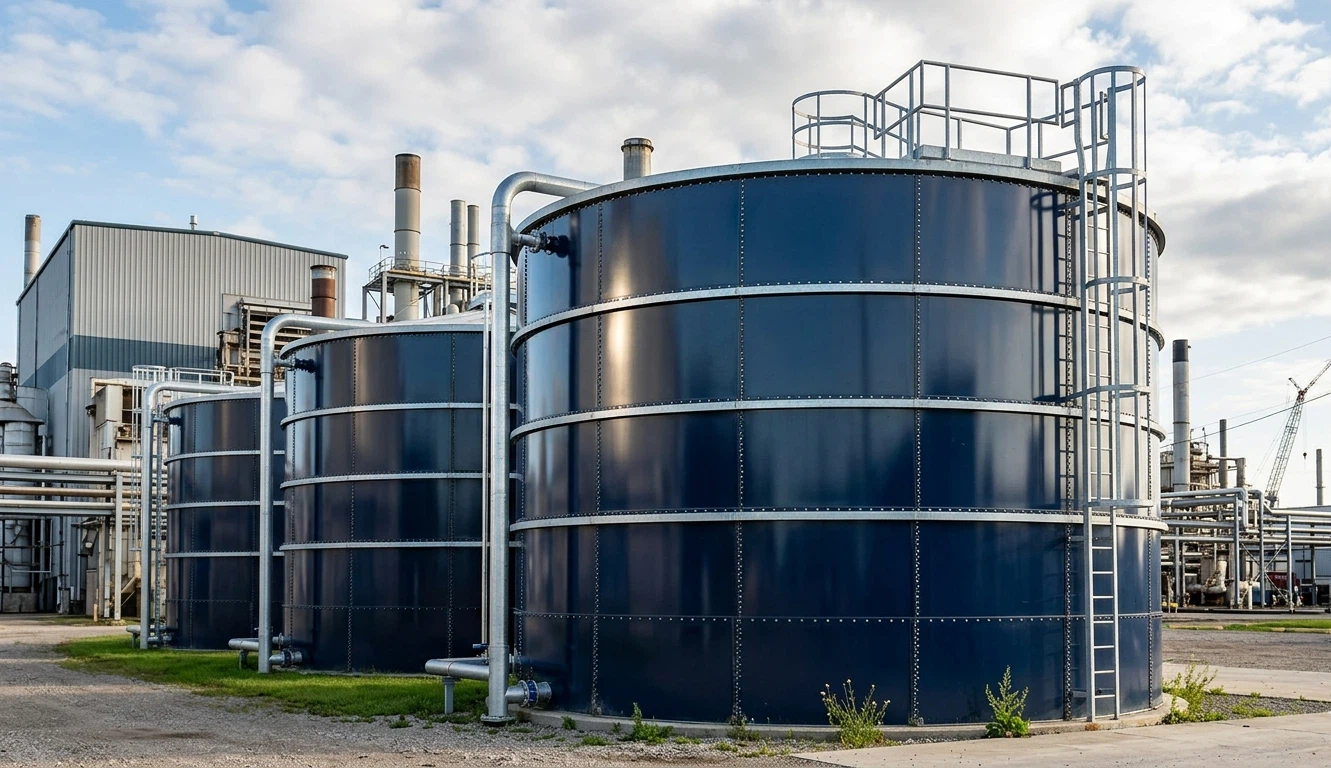
Sending a maintenance crew into a confined space is a massive liability. If the entry point is too narrow, the flange is rusted shut, or the internal ladder lacks a proper fall arrest system, a simple routine check quickly turns into a multi-day operational shutdown.
This engineering guide breaks down the exact sizing, placement, and safety parameters required for your industrial water tank inspection access. By applying these rules, you will stop fighting your equipment during annual maintenance, pass your safety audits without fines, and significantly reduce the labor hours required to drain and clean your system.
Оглавление
Why Do Confined Space Regulations Dictate Tank Design?
A water storage unit is not just a container; legally, it is a permit-required confined space.
When you design or purchase a tank, you are not just planning for a worker to climb inside with a flashlight. You must engineer the structure assuming a worst-case scenario: extracting an unconscious worker.
According to the specific definitions laid out in the OSHA 1910.146 standard for Permit-Required Confined Spaces, a space that has limited or restricted means for entry or exit requires rigorous atmospheric testing and rescue protocols. If your access points are poorly positioned, rescue teams cannot deploy their tripod hoists or extraction backboards. Designing for compliance upfront eliminates the need for expensive structural modifications after a failed safety inspection.
What Are the Sizing Rules for a Water Tank Manhole Design?
The physical dimensions of your entry points determine what equipment can go in and how fast sludge can come out.
Many legacy tanks feature a 20-inch or 24-inch diameter water tank manhole design. While a 24-inch opening meets bare-minimum standards for a person to squeeze through, it is a severe bottleneck in practical industrial applications.
- The SCBA Factor: If atmospheric testing detects low oxygen, workers must wear a Self-Contained Breathing Apparatus (SCBA). A worker wearing an SCBA cylinder cannot fit through a 24-inch hole without removing the gear, pushing it through first, and putting it back on inside—a massive safety violation.
- The 30-Inch Rule: For real-world maintenance, specify a minimum 30-inch (or 750mm) flanged manway.
- Placement: You need at least two access points to establish mechanical ventilation. One on the roof for the air blower, and a side-shell manhole near the base for physical entry.
Industry experts at Water & Wastes Digest explain how proper tank inspection requires unhindered entry for robotic crawlers and heavy scaffolding, making oversized access ports a mandatory specification for modern facilities.
How to Prevent Flange Leaks at the Tank Manhole?
A large side-shell entry point handles the highest hydrostatic pressure in the entire structure. When a tank is filled, thousands of gallons of water push directly against that steel door.
If the flange face warps during welding or the bolting sequence is uneven, you will see weeping along the bottom edge. To fix this, you must drain the entire tank.
- Gasket Selection: Never use cheap rubber. Specify EPDM gaskets for potable water and standard industrial water. Use Viton if the water contains harsh chemicals or hydrocarbons.
- Compression Limits: Gaskets should be compressed by about 25% to 30%. Over-tightening the bolts will crush the gasket, causing it to extrude out the sides and fail.
Choosing the right sealing mechanism at your access points is the most critical step in preventing industrial water tank leakage, directly protecting your facility floors from continuous water damage.
What Makes a Tank Ladder System OSHA 1910.23 Compliant?
You cannot perform a safe inspection if the crew cannot safely reach the roof hatch. For tall structures, your tank ladder must meet strict dimensional and anti-fall criteria.
Forget what you know about old safety cages. Recent OSHA updates have phased out cages in favor of active fall protection.
- Rung Spacing: Ladder rungs must be uniformly spaced between 10 and 14 inches apart.
- Clearance: There must be a minimum of 7 inches of perpendicular clearance behind the rungs to ensure a worker’s work boot can fully lock onto the step.
- Fall Arrest Systems: For ladders extending over 24 feet, cages are no longer compliant for new installations. You must install a ladder safety system (a central cable or rail system that connects to the worker’s harness).
For detailed legal breakdown on these fall protection shifts, EHS Today details the exact OSHA fixed ladder requirements that facility managers frequently fail during audits.
When dealing with high-capacity above-ground industrial water tanks, the internal ladder is constantly exposed to a humid, corrosive airspace. Specify 316L stainless steel or heavily pultruded fiberglass reinforced plastic (FRP) for internal ladders. Carbon steel, even if galvanized, will eventually rust, snap under a worker’s weight, and cause a fatal fall.
Why Will a Missing Water Tank Vent Collapse Your Structure?
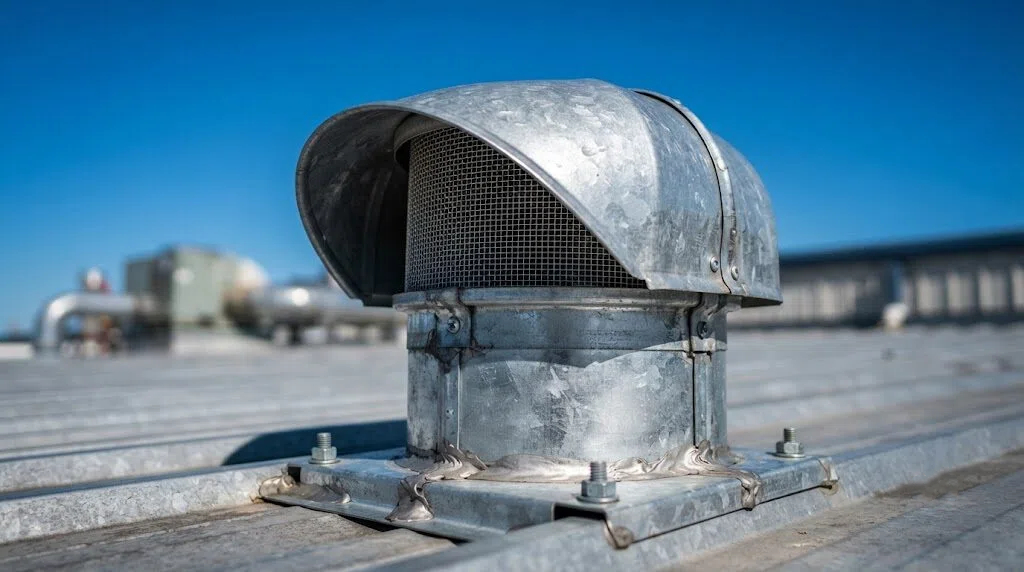
The water tank vent is often treated as a minor accessory, but it dictates the structural survival of your equipment.
When your facility’s high-flow pumps draw water out of the tank, the water level drops rapidly. This displacement must be replaced by air. If your vent is undersized or clogged by bird nests, the pump creates a massive internal vacuum.
Atmospheric pressure (14.7 psi) pushing against the outside of a steel tank will easily buckle the walls inward, crushing the structure like a soda can. This is a common and catastrophic engineering failure, well documented in historical records of storage tank failures on Wikipedia.
- Sizing the Vent: The air venting capacity must always exceed the maximum possible liquid fill or discharge rate.
- Protection: Vents must feature a fine stainless-steel mesh screen (typically 24-mesh) to block insects and debris, combined with a frost-proof hood if installed in freezing climates.
Don’t just take a vendor’s word for it. In a heavily discussed thread among plant engineers on Reddit’s Chemical Engineering forum, professionals repeatedly highlight how a $100 frozen vent screen caused a $100,000 tank implosion.
Are Your Drainage Ports Slowing Down the Safe Inspection Process?
The longest phase of tank maintenance is often waiting for the last few inches of sludge and water to drain.
A standard side manhole has a bottom lip (flange neck) that sits a few inches above the tank floor. You cannot sweep mud and water out of a standard manhole; it gets trapped behind the lip.
To maximize cleaning efficiency:
- Specify a Flush Clean-Out Door: This is a specialized rectangular access port installed exactly flush with the tank floor. Workers can use high-pressure hoses to push sediment directly out the door.
- Floor Sloping: The concrete foundation or the steel floor itself should have a 1% to 2% slope directing water toward the sump or clean-out port.
If you are currently in the procurement phase, leveraging a modular industrial water tank allows you to customize the exact panel location for your clean-out doors and access hatches before the equipment ever reaches your site, bypassing the need for expensive on-site hot work.
How to Establish Proper Mechanical Ventilation?
You cannot rely on natural airflow to clear hazardous gases from a confined space.
Before a crew enters, you must force fresh air into the structure.
1.Open the top roof hatch.
2.Open the bottom side-shell manhole.
3.Attach a high-capacity mechanical blower to the bottom manhole using flexible ducting.
This creates a positive pressure draft that pushes stagnant air and volatile organic compounds (VOCs) up and out through the roof. Never blow air down from the top, as this just traps heavier-than-air gases (like hydrogen sulfide) at the bottom where your crew will be standing.

Fixing Your Industrial Water Tank Inspection Access
Poorly engineered entry points drain your maintenance budget through extended labor hours and expose your company to severe compliance penalties. By specifying oversized side-shell manholes, upgrading to active fall arrest ladders, and ensuring precise vent sizing, you remove the physical bottlenecks from your operational workflow.
Take a hard look at your facility’s current blueprints. Upgrading your industrial water tank inspection access is not just an engineering task—it is a direct investment in the safety of your personnel and the uptime of your plant.
Часто задаваемые вопросы
What is the minimum OSHA requirement for a confined space entry manhole?
OSHA considers any opening smaller than 24 inches in diameter to be severely restricted. However, for rescue operations requiring backboards or SCBA gear, engineering best practices require a minimum 30-inch opening.
How often should tank ladder fall arrest cables be inspected?
Before every single use by the climber, and formally inspected annually by a competent safety professional. If the cable shows any fraying or the tension is loose, the ladder must be tagged out of service immediately.
Can I use a roof hatch as my only access point?
No. While acceptable for a quick visual check, relying solely on a roof hatch makes emergency extraction nearly impossible without specialized crane-mounted hoists. A side-shell entry point is required for deep cleaning and safe horizontal extraction.
Why is my tank vent weeping water during filling?
Your vent is likely acting as an overflow because the primary overflow pipe is undersized or blocked. The vent is only designed for air displacement; liquid forcing its way through the vent indicates a dangerous over-pressurization event.