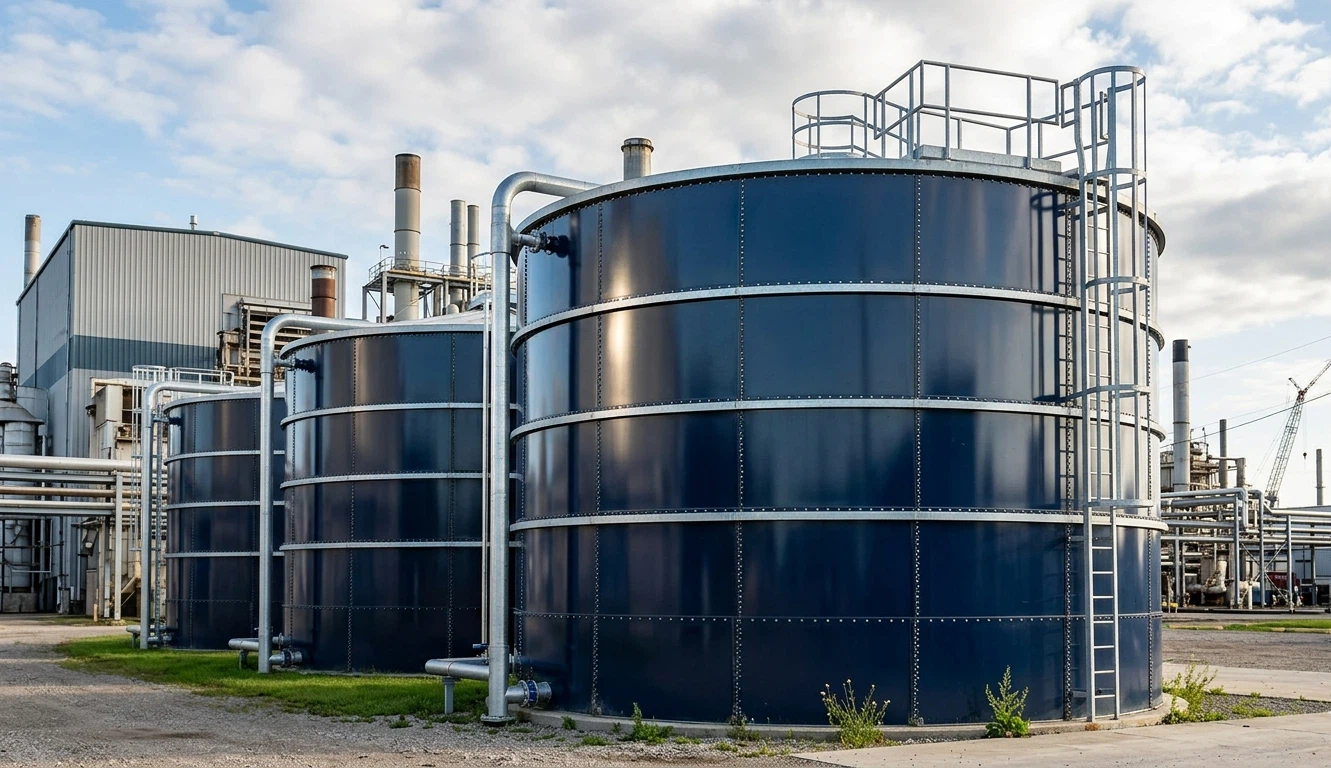
Choosing between above-ground and underground water storage is not only a construction decision. It affects inspection access, maintenance planning, future expansion, installation complexity, and long-term operating costs.
Above-Ground Industrial Water Tanks are often the better option when a facility needs easier inspection, faster installation, flexible capacity changes, or lower maintenance difficulty. However, underground systems still have advantages in specific projects where land use, appearance, or environmental protection are the priority.
This guide explains how engineers and project owners can compare above ground vs underground water tank for industrial use, including installation requirements, inspection considerations, lifecycle costs, and situations where each option makes more sense.
Оглавление
When Are Above-Ground Industrial Water Tanks a Better Choice for Industrial Projects?
The best choice depends on how the tank will be used, inspected, and modified over its service life.
Many industrial facilities choose underground storage because it saves surface space. However, this advantage can become a limitation when the project requires frequent inspection, future expansion, or easier maintenance access.
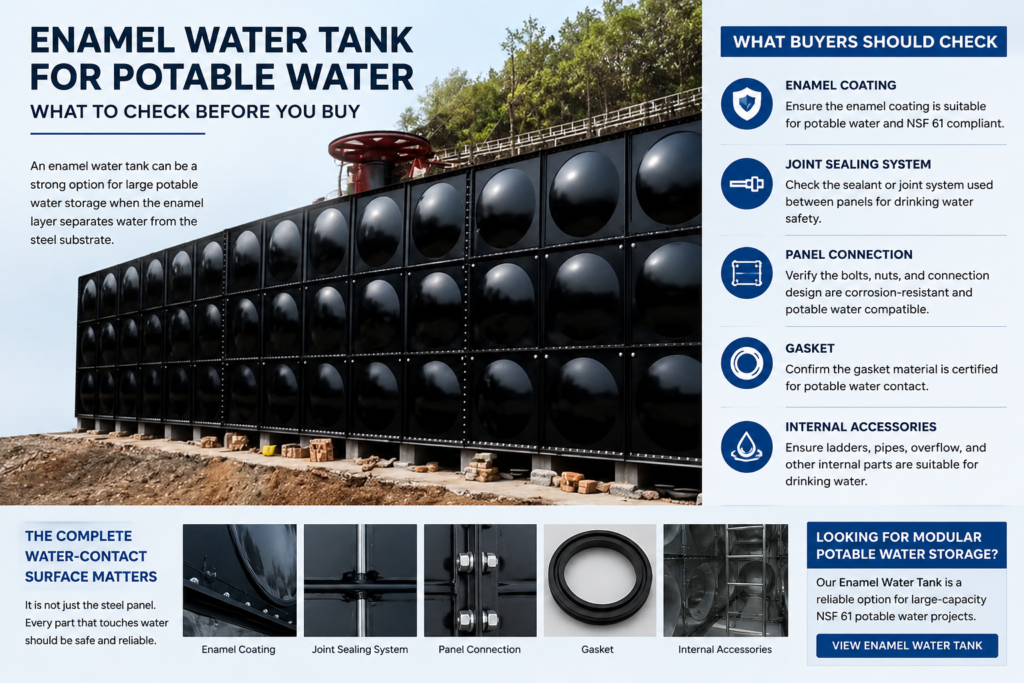
Above ground water storage is often preferred in the following situations:
1.The tank requires regular inspection and monitoring
Industrial water systems cannot simply be installed and forgotten.
Facilities storing:
- process water
- fire protection water
- potable water
- cooling water
- wastewater treatment water
often require scheduled inspections.
An above-ground tank allows engineers to visually check:
- external corrosion
- coating condition
- connection points
- leakage signs
- structural deformation
without excavation.
For underground systems, identifying a leak may require additional testing, excavation, or specialized equipment.
The U.S. Environmental Protection Agency (EPA) highlights the importance of inspection and maintenance programs for water storage infrastructure. Their guidance on asset management explains why regular inspection helps extend infrastructure service life:
According to EPA’s Water Infrastructure Asset Management guidance, proactive inspection and maintenance help reduce unexpected failures and improve long-term system reliability.
2.The project may require future capacity expansion
Industrial demand rarely stays constant.
A manufacturing facility may increase production.
A processing plant may add new equipment.
A commercial site may require additional fire water capacity.
This is where above-ground systems provide flexibility.
A modular tank design allows additional capacity to be considered during future expansion phases.
For example:
Initial phase:
- Install a 500 m³ storage system
Future phase:
- Add additional tank modules
- Expand piping connections
- Increase storage capacity
This approach can reduce disruption compared with expanding an underground structure.
3.Excavation conditions make underground installation complicated
Underground water tanks are not simply tanks placed below the surface.
They require:
- excavation work
- soil evaluation
- waterproofing measures
- drainage planning
- structural reinforcement
In areas with:
- high groundwater levels
- unstable soil
- rocky ground
- limited construction access
underground installation can become more complicated and expensive.
Above-Ground vs Underground Water Tank for Industrial Use: What Should Engineers Compare First?
The question is not whether above-ground tanks are better than underground tanks.
The real question is:
Which storage method creates fewer risks for this specific project?
A practical comparison should include installation, inspection, maintenance, and future requirements.
| Фактор | Above-Ground Storage | Underground Storage |
|---|---|---|
| Installation process | Foundation preparation and tank assembly | Excavation, waterproofing, underground construction |
| Inspection access | Direct visual inspection | Limited access after installation |
| Leak detection | Easier to identify external issues | Requires additional investigation |
| Обслуживание | Easier coating repair and modification | Repairs may require excavation |
| Expansion | More flexible for modular systems | More difficult after completion |
| Land usage | Requires available surface area | Saves above-ground space |
| Environmental exposure | Requires insulation or coating consideration | Naturally protected from some weather conditions |
Installation Time and Construction Risk
For many industrial projects, schedule control is a major concern.
Above-ground systems usually involve:
1.Foundation preparation
2.Tank assembly
3.Piping connection
4.Inspection and commissioning
Underground systems usually add:
1.Excavation
2.Soil support preparation
3.Waterproofing
4.Backfilling
5.Additional structural verification
The longer construction sequence creates more variables that must be managed.
However, above-ground installation also requires proper planning.
Important considerations include:
- foundation load capacity
- seismic requirements
- wind exposure
- insulation requirements
- pipe connection layout
A poorly designed above-ground installation can create operational problems just like an improperly installed underground system.
Why Many Industrial Projects Evaluate Above-Ground Storage Before Underground Options
For industrial buyers, the decision usually comes down to three questions:
Can the tank be inspected easily?
If regular inspection is important, above-ground systems provide a clear advantage.
Will the facility need changes later?
If future capacity increases are likely, modular above-ground solutions provide more flexibility.
What happens when maintenance is required?
A tank that is easier to access is usually easier to repair, inspect, and modify.
This does not mean underground storage is unsuitable. It means the decision should consider the entire operating lifecycle instead of only the initial construction stage.
Why Do Industrial Facilities Prefer Above-Ground Storage for Inspection and Maintenance?
For many industrial operators, the biggest difference between above-ground and underground storage appears after installation.
A water tank may operate for decades, but during that period it will require:
- routine inspection
- coating evaluation
- connection checks
- cleaning
- repairs
- possible modifications
This is where above ground water storage often provides practical advantages.
An above-ground tank allows maintenance teams to directly access critical areas instead of relying on indirect inspection methods.
How Does Water Tank Inspection Differ Between Above-Ground and Underground Systems?
Water tank inspection is not only about checking whether a tank is leaking.
A complete inspection usually evaluates:
- external corrosion
- coating damage
- structural deformation
- weld conditions
- foundation movement
- inlet and outlet connections
For above-ground tanks, many issues can be identified through visual examination before they become serious problems.
Typical inspection points include:
| Inspection Area | What Engineers Check |
|---|---|
| Tank wall | Corrosion, coating condition, deformation |
| Connections | Leakage, stress, pipe movement |
| Foundation | Settlement or uneven loading |
| External surface | Damage from weather exposure |
| Accessories | Valves, ladders, vents, safety equipment |
What Changes During Industrial Tank Installation When Choosing Above-Ground Systems?
Industrial tank installation requires different planning depending on whether the tank is installed above or below ground.
For above-ground systems, the main engineering focus is usually:
- foundation preparation
- load distribution
- anchoring
- piping arrangement
- environmental protection
The installation sequence is generally:
1.Site Preparation
The foundation area must be evaluated for:
- soil bearing capacity
- drainage conditions
- level tolerance
An uneven foundation can create stress concentration on the tank structure.
2.Foundation Construction
Above-ground tanks typically require:
- concrete slab foundations
- ring foundations
- support structures
The foundation must distribute the filled tank load evenly.
3.Tank Assembly and Connection
Modular industrial tanks are often assembled on-site using prefabricated panels.
Important installation checks include:
- panel alignment
- bolt tightening
- sealing condition
- coating protection
- pipe connection accuracy
A small installation error can create operational issues later.
Are Above-Ground Water Tanks More Practical When Long-Term Costs Are Considered?
The lowest initial price is not always the lowest project cost.
When comparing industrial storage systems, engineers often evaluate the total lifecycle cost.
This includes:
- installation expenses
- inspection requirements
- maintenance access
- repair difficulty
- future expansion
Initial Installation Cost
Underground systems may appear attractive because they save surface space.
However, the project cost may include:
- excavation
- soil reinforcement
- waterproofing
- drainage systems
- backfilling
Above-ground systems usually require:
- foundation construction
- tank assembly
- insulation or coating protection when needed
The final cost depends heavily on site conditions.
Maintenance and Repair Cost
This is where many projects underestimate long-term impact.
An above-ground tank generally allows:
- faster visual inspection
- easier coating repair
- simpler component replacement
For underground tanks, maintenance may require additional access work.
A small leak that is easy to repair above ground can become a larger project underground.
Expansion and Modification Cost
Industrial facilities change.
A factory may increase production capacity.
A fire protection system may require additional storage.
A processing line may require more process water.
Above-ground modular systems can often be expanded by adding sections or increasing capacity.
This is one reason many industrial buyers consider modular systems during early planning.
How Does Material Selection Affect Above-Ground Industrial Water Tank Performance?
Choosing the tank structure is only one part of the decision.
The material and coating system must match the stored water type and operating environment.
Different applications require different considerations:
Хранение питьевой воды
Requirements often include:
- corrosion resistance
- safe internal coating
- compliance with drinking water requirements
For potable water applications, enamel coating is commonly considered because the glass-like surface provides corrosion protection and a smooth internal surface.
Промышленная технологическая вода
Important factors may include:
- chemical exposure
- temperature variation
- cleaning frequency
- operational requirements
A tank designed for industrial process water may require different materials compared with drinking water storage.
Fire Water Storage
Fire protection tanks often prioritize:
- available storage volume
- rapid access
- inspection readiness
- compliance with local requirements
The selection should always follow project specifications rather than choosing a tank type based only on appearance or initial cost.
When Is Underground Water Storage Still the Better Option?
Although Above-Ground Industrial Water Tanks provide advantages in inspection, maintenance, and future modification, underground storage remains the right choice for some industrial projects.
A balanced decision requires understanding where underground systems perform better.
Underground tanks are often considered when:
- available land area is limited
- visual impact must be minimized
- temperature protection is important
- surface space is required for other operations
For example, facilities located in dense urban areas may not have enough open space for a large above-ground structure. In these cases, underground storage can preserve valuable surface area.
However, underground installation requires careful engineering because the tank must withstand:
- soil pressure
- groundwater conditions
- external loading
- long-term waterproofing requirements
The decision should be based on the project environment rather than assuming one solution works for every application.
Should You Choose Above-Ground Storage?
Choose Above-Ground Industrial Water Tanks When:
✔ Regular inspection access is important
✔ Future expansion is expected
✔ Maintenance speed matters
✔ Excavation conditions are challenging
✔ The project allows sufficient surface space
Consider Underground Storage When:
✔ Surface area is extremely limited
✔ Appearance restrictions exist
✔ Underground space is already planned
✔ Environmental protection from temperature variation is a priority
The right choice is not determined by the tank type alone.
It depends on:
- project location
- operating requirements
- maintenance strategy
- expansion expectations
- lifecycle planning
Часто задаваемые вопросы
Are above-ground water tanks better than underground tanks?
Not always. Above-ground tanks are usually better when inspection, maintenance, and future expansion are important. Underground tanks are useful when surface space is limited.
What is the main advantage of above-ground water storage?
The main advantage is easier access. Engineers can inspect, maintain, and repair the tank without excavation.
Are above-ground industrial water tanks easier to maintain?
Yes. External inspection, coating repair, and component replacement are generally easier because the tank is accessible.
Как часто следует проверять промышленные резервуары для воды?
Inspection frequency depends on tank type, stored water, regulations, and operating conditions. Many facilities perform routine visual checks and scheduled detailed inspections.
Do above-ground water tanks need insulation?
Insulation may be required when stored water must be protected from freezing, overheating, or temperature fluctuations.