Selecting an industrial water tank for food processing plants is about more than storing water. In food and beverage production, the storage system becomes part of the process. Poor material selection, difficult-to-clean interiors, or unsuitable sealing components can increase contamination risks, complicate maintenance, and affect product quality.
This guide explains how to evaluate hygienic water storage systems from a practical perspective. You’ll learn how tank materials influence water quality, why cleaning-friendly design matters, and which factors engineers and buyers should review before selecting a food processing water tank.
Table of Contents
Why does hygienic water storage matter in food processing plants?
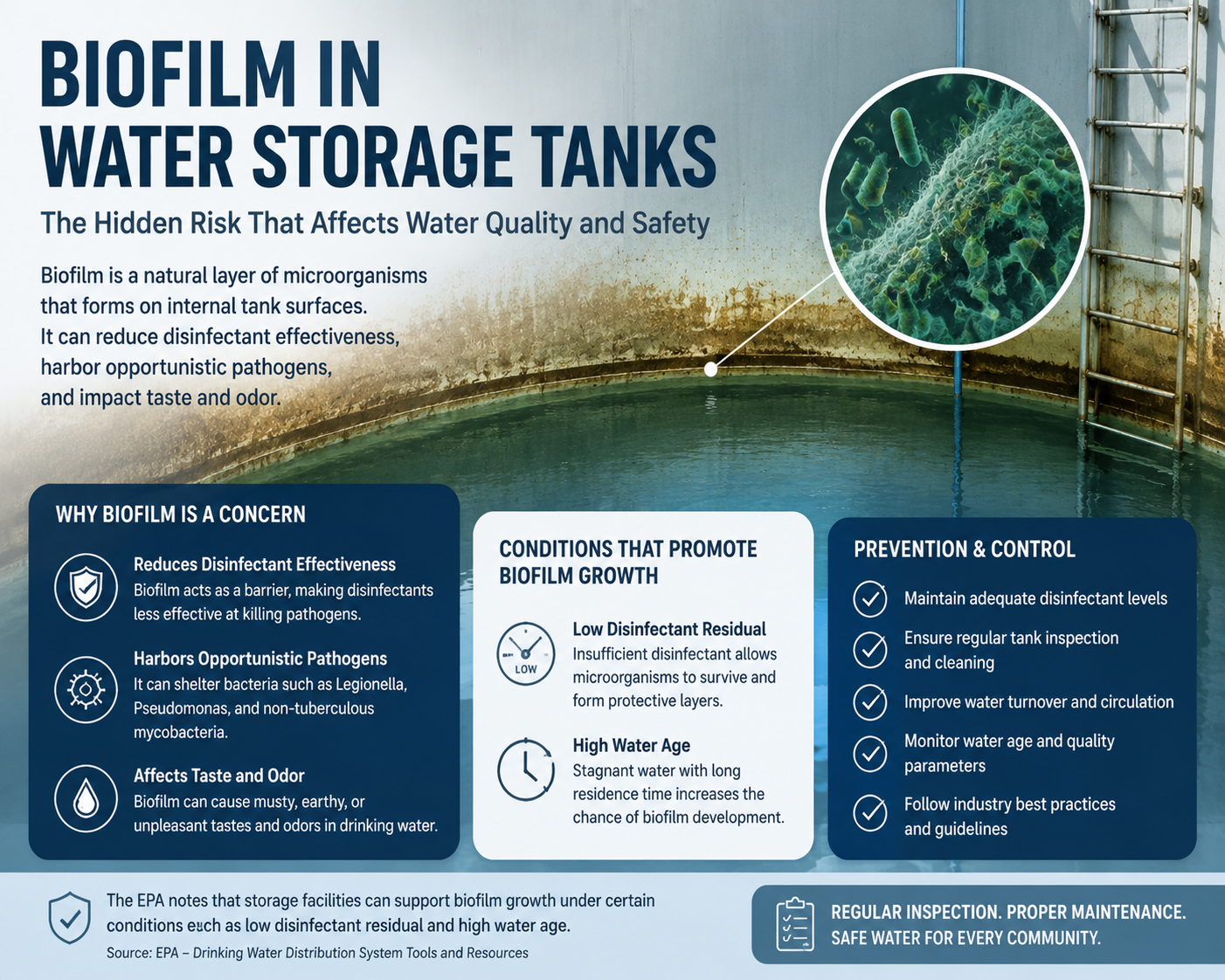
Water is used throughout food production, including ingredient preparation, equipment cleaning, cooling systems, and final product processing. If stored water becomes contaminated before use, the issue may spread throughout the production line.
A hygienic industrial water storage system helps reduce risks associated with:
- Microbial growth
- Sediment accumulation
- Internal corrosion
- Cross contamination
- Difficult cleaning procedures
For water storage systems, this means choosing tank materials and designs that support regular inspection and cleaning rather than simply increasing storage capacity.
What should a water tank for food processing plants be designed to prevent?
A food processing tank should not only store water—it should also minimize areas where contaminants can accumulate.
Design considerations include:
Smooth internal surfaces
Rough interior surfaces make cleaning more difficult and may allow residue to remain after washing.
Dead zones
Poorly designed tanks can create low-flow areas where water remains stagnant.
Drainability
The tank should allow complete drainage during maintenance to reduce standing water.
Manways and inspection ports make routine cleaning and maintenance more practical.
The 3-A Sanitary Standards, widely referenced in hygienic equipment design for food processing, emphasize cleanable design principles that reduce contamination risks in processing equipment.
Which material is best for a food processing water tank?
Material selection affects both hygiene and long-term maintenance costs.
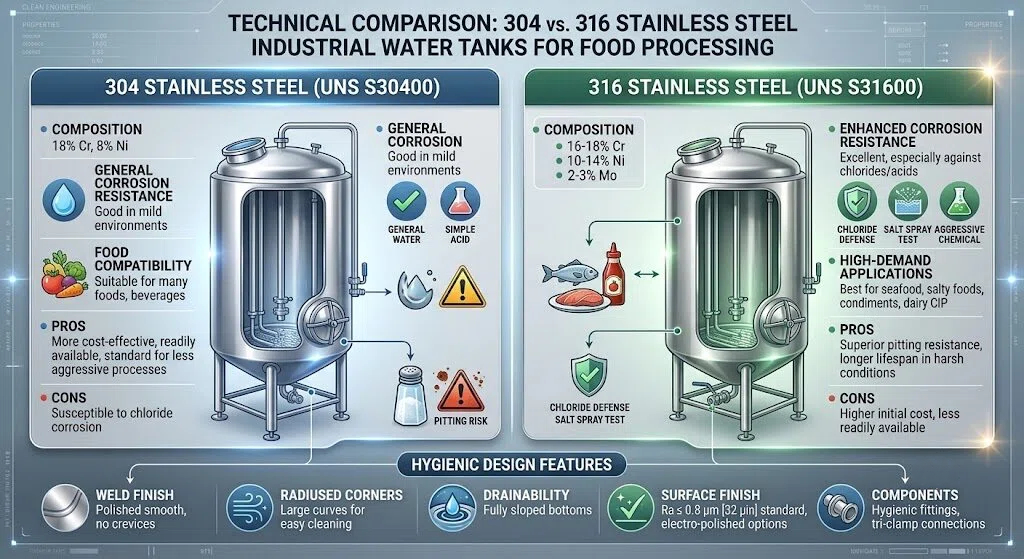
Although different materials are available, stainless water tanks remain one of the most common choices for food and beverage facilities because they combine corrosion resistance with smooth, cleanable surfaces.
| Material | Typical Application | Considerations |
|---|---|---|
| Stainless Steel 304 | General food processing | Good corrosion resistance and easy cleaning |
| Stainless Steel 316 | High-salt or corrosive environments | Better resistance to chlorides and aggressive cleaning chemicals |
| Carbon Steel (coated) | Non-potable industrial water | Requires coating maintenance |
| FRP | Some utility water applications | Material compatibility should be verified for food use |
Selecting the right material depends on:
- Water source
- Cleaning chemicals
- Production environment
- Operating temperature
- Regulatory requirements
If you’re comparing construction materials in more detail, this guide on industrial water tank materials and cost factors explains how material choice influences maintenance, corrosion resistance, and lifecycle cost:
Does stainless steel always mean better hygiene?
Not automatically.
Material is only one part of hygienic design.
A stainless steel tank can still become difficult to maintain if it includes:
- Poor weld finishing
- Sharp internal corners
- Inaccessible pipe connections
- Inadequate drainage
Likewise, a properly designed tank with polished welds and smooth transitions is easier to clean during routine maintenance.
The European Hygienic Engineering & Design Group (EHEDG) discusses hygienic design principles that reduce bacterial retention by eliminating areas where residues and moisture can collect.
For this reason, buyers should evaluate manufacturing details alongside material grade.
How do cleaning requirements affect industrial water tank selection?
Cleaning frequency varies between facilities.
Some beverage plants clean water systems daily, while ingredient water tanks may follow scheduled sanitation programs.
Before selecting a food processing water tank, ask these questions:
- Can every internal surface be reached during cleaning?
- Is complete drainage possible?
- Are inspection ports large enough for maintenance?
- Can seals withstand repeated cleaning chemicals?
- Will the tank remain clean between sanitation cycles?
The answers often have a greater impact on long-term operating efficiency than the tank’s initial purchase price.
When potable water is involved, verifying compliance is equally important. This article explains how NSF/ANSI 61 verification helps confirm that materials used in drinking water systems are suitable for contact with potable water:
Material Choice vs Cleaning Design
Before making a purchasing decision, it helps to separate material performance from maintenance requirements.
| Evaluation Point | Why It Matters |
|---|---|
| Stainless steel grade | Corrosion resistance and compatibility with cleaning chemicals |
| Surface finish | Easier residue removal and lower contamination risk |
| Internal geometry | Reduces stagnant water and dead zones |
| Drainage design | Supports complete cleaning and sanitation |
| Inspection access | Simplifies routine maintenance and inspections |
A tank made from premium material can still become a maintenance challenge if the cleaning design is overlooked.
Why do seals and gaskets matter as much as the tank itself?
Many buyers compare stainless steel grades but spend little time evaluating sealing materials. In food processing, however, gaskets are often the first components exposed to repeated cleaning cycles, temperature changes, and chemical sanitizers.
A sealing system should:
- Resist cracking and hardening over time
- Maintain a tight seal after repeated cleaning
- Be compatible with food-contact applications
- Prevent external contaminants from entering the tank
An unsuitable gasket can become a maintenance issue long before the tank reaches the end of its service life.
If you’re evaluating sealing materials, this guide explains how potable water tank gaskets and sealants influence hygiene and long-term reliability.
Can poor tank design affect water quality?
Yes. Even when incoming water meets quality requirements, poor storage conditions can reduce water quality before it reaches production.
Common design issues include:
- Stagnant water caused by poor internal flow
- Internal corrosion from unsuitable materials
- Sediment buildup at the tank bottom
- Leakage around joints and fittings
- Difficult-to-clean internal corners
These problems increase maintenance frequency and may interrupt production schedules.
The U.S. Environmental Protection Agency (EPA) explains that proper storage system management is an important part of maintaining drinking water quality throughout a distribution system.
What mistakes do buyers make when selecting a food processing water tank?
Many purchasing decisions focus on initial cost rather than operating conditions.
The following mistakes are common:
Choosing material based only on price
Lower-cost materials may require more frequent maintenance or earlier replacement in corrosive environments.
Ignoring cleaning access
If technicians cannot easily inspect or clean the interior, routine sanitation becomes more difficult.
Overlooking sealing components
Tank performance depends on more than the shell. Gaskets, nozzles, and access covers should be evaluated as part of the complete system.
Assuming every stainless steel tank is the same
Material grade, weld quality, surface finish, and fabrication details all influence long-term hygienic performance.
Forgetting leakage prevention
Even a small leak can introduce contamination, waste treated water, and increase maintenance costs.
This article discusses practical methods for industrial water tank leakage prevention, including structural design and inspection strategies:
How should engineers evaluate an industrial water tank for food processing plants?
Instead of comparing specifications alone, review the complete operating environment.
A practical evaluation checklist includes:
- Is the tank material compatible with the water source?
- Are internal surfaces smooth and easy to sanitize?
- Can the tank be fully drained?
- Are inspection openings adequate?
- Are sealing materials suitable for potable water applications?
- Does the design reduce stagnant water?
- Will future maintenance be straightforward?
Looking at these factors together provides a more accurate picture of long-term performance than comparing material grades alone.
Conclusion
Choosing an industrial water tank for food processing plants is not simply a matter of selecting the largest capacity or the highest-grade material. Water quality depends on how the entire storage system performs during daily operation.
A well-designed system combines hygienic water storage, appropriate stainless water tank materials, cleanable internal geometry, reliable sealing components, and maintenance-friendly access. These factors work together to protect water quality, simplify sanitation, and support consistent production.
Before making a purchasing decision, evaluate the tank as part of the entire processing system rather than as an isolated piece of equipment. That approach leads to better long-term performance, easier maintenance, and greater confidence in water safety.
FAQ
What is the best material for a food processing water tank?
For many food and beverage applications, stainless steel is preferred because it offers corrosion resistance, smooth surfaces, and easier cleaning. The final choice depends on water chemistry, cleaning methods, and production conditions.
Why is hygienic water storage important?
Hygienic storage helps reduce contamination risks, supports product quality, and makes routine sanitation more effective.
Is NSF/ANSI 61 required for food processing water tanks?
It depends on the application and local regulations. When tanks store potable water, NSF/ANSI 61 verification is commonly specified to confirm that materials in contact with drinking water do not introduce harmful contaminants.
How often should industrial water tanks be cleaned?
Cleaning frequency varies by production process, water quality, and regulatory requirements. Facilities typically establish sanitation schedules based on risk assessments and operating procedures.
How can I reduce maintenance costs over the life of a water tank?
Selecting appropriate materials, ensuring easy inspection access, using compatible sealing materials, and following preventive maintenance schedules generally reduce long-term maintenance requirements.