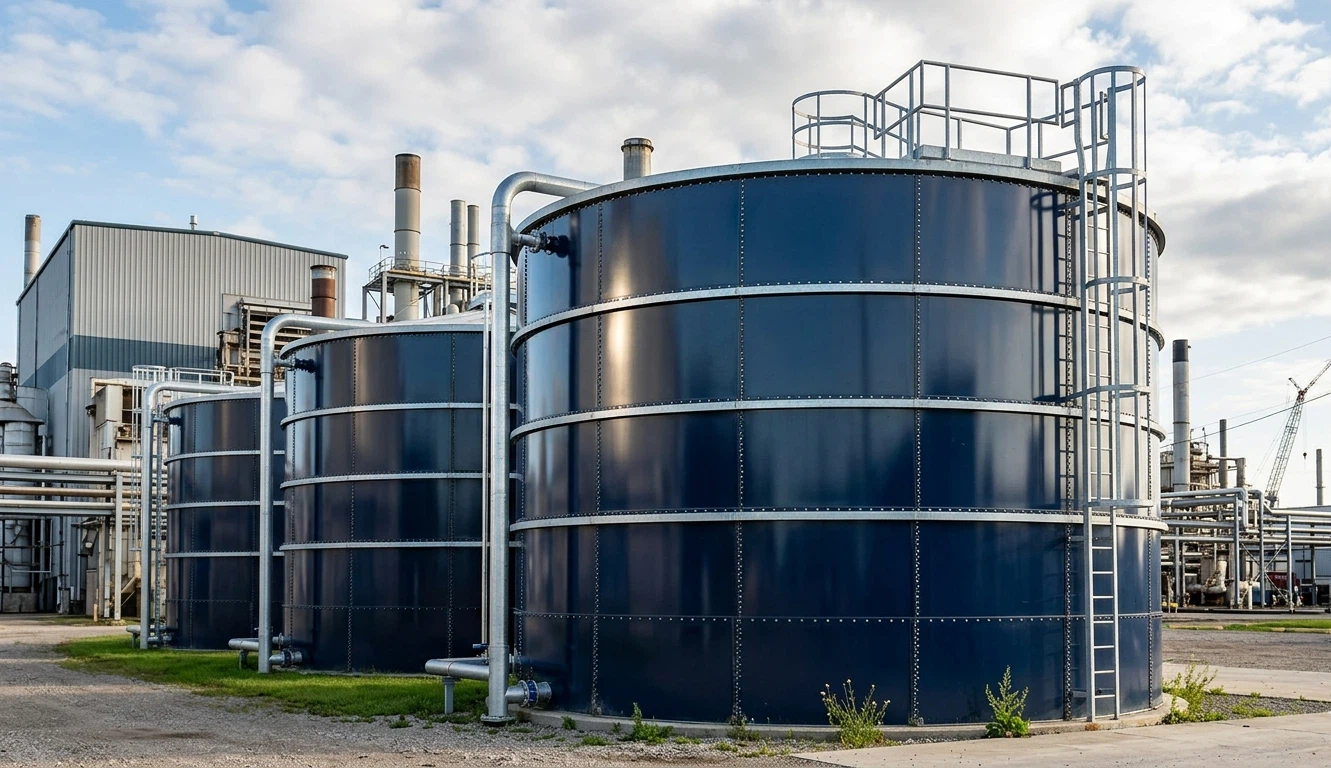
In 2026, the reliability of water storage systems has become a decisive factor in the success of industrial infrastructure projects. Whether for fire protection systems, food processing, or chemical wastewater treatment, the process of finding the best industrial water tanks has long evolved beyond simple “container procurement.” As global demands for environmental compliance and system longevity rise, modularity, high-performance materials, and customized designs have become the core competitive advantages of the industry.
As an engineering procurement manager or facility engineer, it is crucial to clearly understand how different materials perform under specific working conditions when faced with complex supplier options. This article provides an in-depth analysis of five mainstream industrial tanks and explores how they define water storage standards in 2026.
جدول المحتويات
Gold Selection Criteria: What Defines the “Best”?
Before determining which models qualify as the best industrial water tanks, several core performance dimensions must be considered. First is compliance. Especially when involving drinking water safety, WRAS approved industrial water tanks are the mandatory entry threshold for high-end markets in the UK and the Middle East. This ensures that the tank materials will not cause secondary pollution to the water quality.
Second is environmental adaptability. With the increase in extreme weather events, the demand for insulated industrial water tanks for extreme climates has surged. Whether it is the summer heat of Saudi Arabia or the harsh winters of Northern Europe, high-quality polyurethane foam insulation ensures stable internal liquid temperatures, preventing freezing or bacterial growth caused by overheating.
Performance Evaluation of Five Core Products and Industrial Applications
To help you secure the best industrial water tanks, we analyzed the current mainstream products based on material characteristics and application scenarios.
Fiberglass Water Tank (GRP/SMC)
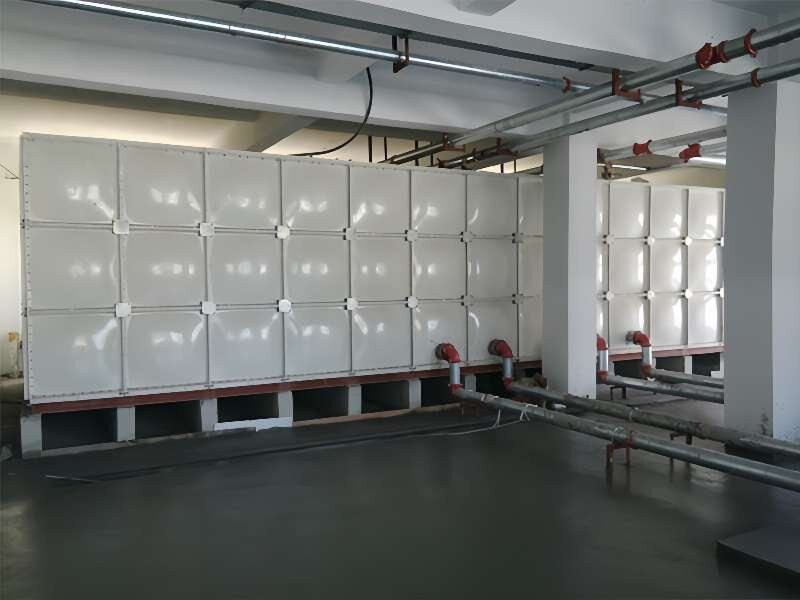
Fiberglass (also known as SMC or GRP) tanks are the most widely used modular water storage solution globally. In our performance evaluation, it is recognized as the best GRP sectional water tank for fire protection. Due to its excellent corrosion resistance and resistance to algae growth, it can maintain structural stability over long periods in outdoor environments.
خزان مياه من الفولاذ المقاوم للصدأ

For the food and medical industries, the best industrial water tanks are undoubtedly made of stainless steel (SS304/316L). These tanks focus on ultimate hygiene standards. In the competition for Food grade GRP water tank for beverage industry applications (either as a high-end alternative or supplement), stainless steel wins due to its extremely high physical strength and seismic resistance. It can withstand higher pressures and temperatures, making it the first choice for high-precision factories.
Enamel Water Tank (Glass-Fused-to-Steel)
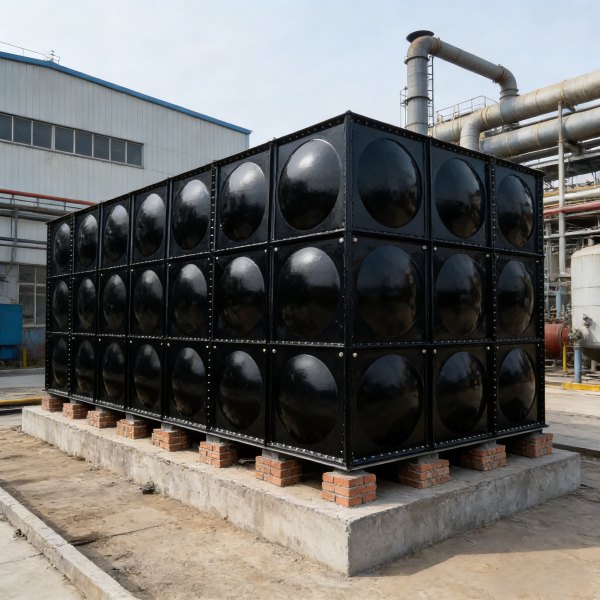
When it comes to storing strong acids, alkalis, or industrial wastewater, enamel tanks stand out. By fusing glass to the steel surface through high-temperature firing, it becomes the best corrosion-resistant tank for chemical storage. This material combines the strength of steel with the corrosion resistance of glass, making it ideal for complex industrial circulation systems.
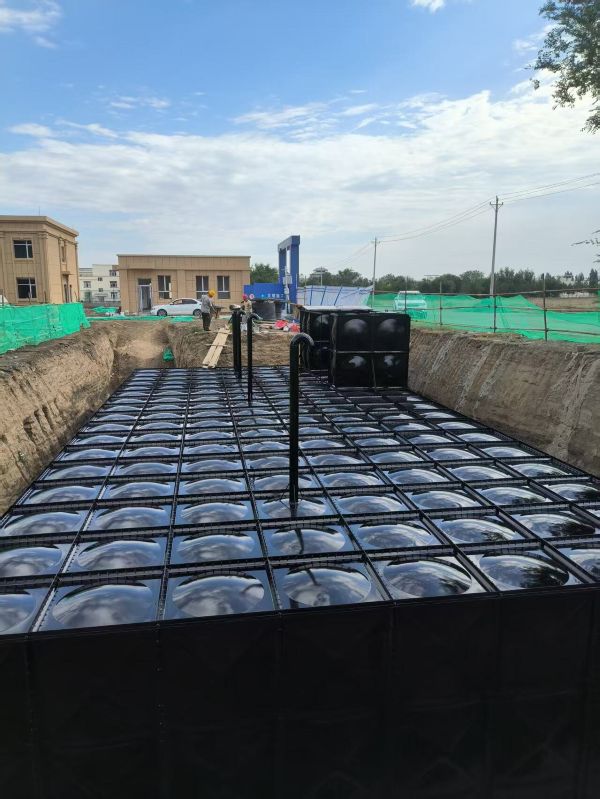
In space-constrained urban areas or large parks, underground tanks have become an innovative alternative for the best industrial water tanks. Typically composed of high-strength composite panels, they can withstand external soil pressure. This design frees up surface space for greening or parking while offering excellent natural insulation, making it ideal for underground fire water sources.
For large-capacity agricultural irrigation or mine water use, budget control is key. Galvanized steel tanks continue to occupy a significant market share thanks to the advantages of cost-effective sectional water tank installation for industry. While slightly inferior to enamel in extreme corrosion protection, its durability-to-price ratio is unparalleled for large-scale storage projects with neutral water quality.
Technical Parameters and Industry Selection Comparison Table
Through the following table, you can intuitively compare the indicators of different materials in the ranking of the best industrial water tanks:
| ميزة | Fiberglass (GRP) | Stainless Steel (SS) | Enamel (Glass-Fused) | مترو الأنفاق | الفولاذ المجلفن |
| Main Advantage | Anti-corrosion, anti-algae, lightweight | Highly hygienic, heat resistant | Acid/alkali resistant, wear resistant | Space-saving, natural insulation | High strength, low unit cost |
| Suggested Lifespan | 20-30 Years | أكثر من 30 عامًا | 25-30 Years | 20-25 Years | 15-20 Years |
| صعوبة التثبيت | Low (Modular) | واسطة | واسطة | High (Involves civil works) | قليل |
| Compliance | WRAS/NSF | Food Grade/ISO | Industrial Grade | Fire Standards | Industrial Standards |
| Recommended App | Fire, Domestic supply | Beverage, Pharma plants | Wastewater, Chemical | Underground pump room | Agriculture, Cooling water |
Procurement and Installation: Considerations for Global Engineering
The journey to find the best industrial water tanks usually ends with supply chain efficiency. For global engineering projects, choosing custom industrial water tank manufacturers in China has become a standard practice to balance budget and quality. Mature factories like Zhengling not only provide panels that meet international standards but also offer full technical support for sectional water tank installation.
Furthermore, engineers need to refer to standard sizes for industrial hot water storage tanks during the early design stages. More importantly, they should seek suppliers capable of providing flexible customized solutions to adapt to complex job site layouts.
To ensure long-term operation, it is essential to follow a professional maintenance guide for modular GRP water tanks. Even for the best industrial water tanks, regular cleaning and structural inspections can significantly extend their service life.
خاتمة
In 2026, investing in the best industrial water tanks is a guarantee for the safe operation of your project for the next decade. By comparing the performance of Fiberglass, Stainless Steel, Enamel, Underground, and Galvanized tanks, we find that there is no absolutely “perfect” single material—only the most suitable solution for specific working conditions.
Whether your project is in a high-salt mist coastal area or a frigid highland, choosing a supplier like Zhengling—with international certification and global delivery capabilities—is the fastest path to obtaining the best industrial water tanks.
التعليمات
How do I choose the best industrial water tanks for my project?
First, check the water quality requirements (whether food grade is needed), then consider the environment (whether insulation is required), and finally choose GRP (all-rounder) or Stainless Steel (high-end) based on your budget.
Why are sectional tanks better than one-piece welded tanks?
hey are easier to transport and are not restricted by narrow doors or confined spaces. Since they are factory-prefabricated, the on-site sectional water tank installation is extremely fast.
Which is better for industrial wastewater: Enamel or Stainless Steel?
Generally, Enamel (Glass-Fused-to-Steel) is the better choice because its coating has a higher resistance to complex chemical compositions than standard grades of stainless steel.
Has the lifespan of water tanks increased in 2026?
Yes. Through more advanced coating technologies and the popularization of the maintenance guide for modular GRP water tanks, the expected lifespan of modern industrial water tanks has increased by about 25% compared to a decade ago.