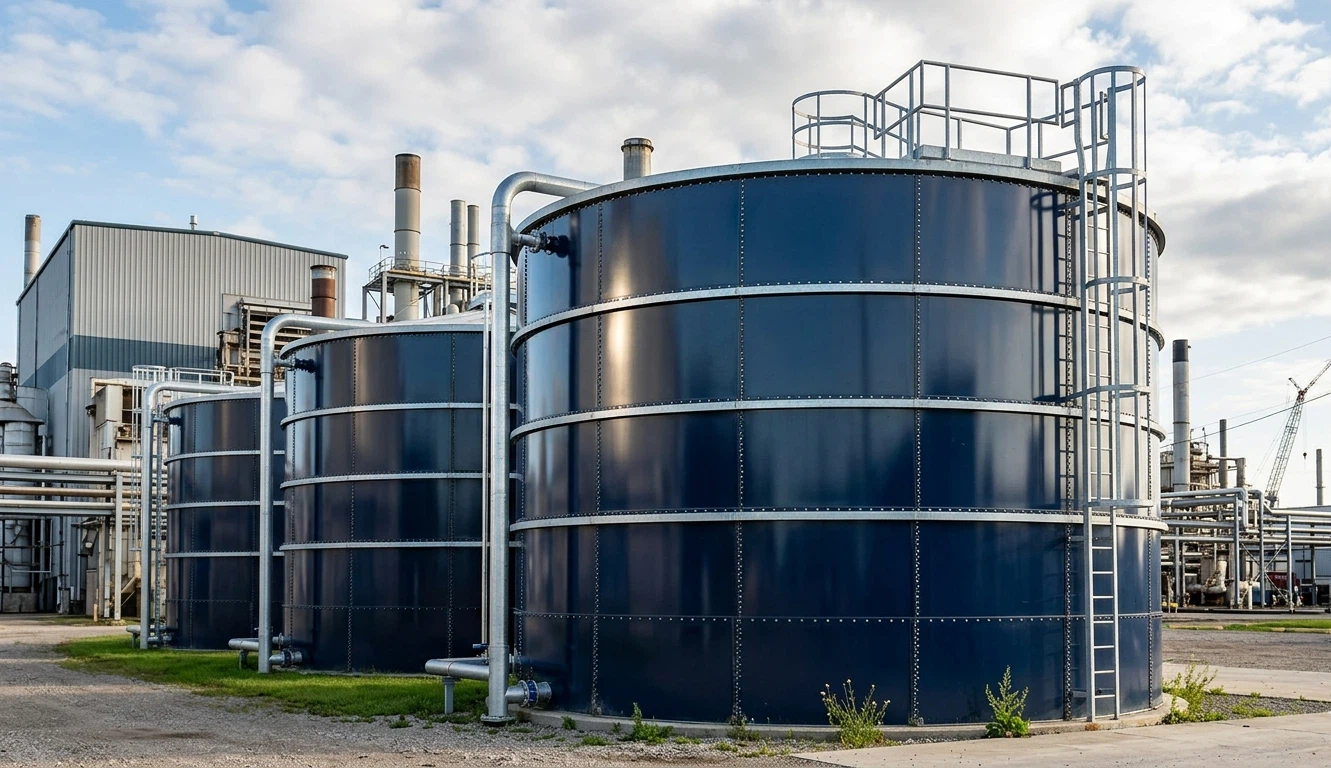
Water management is one of the most critical variables in agricultural productivity. From irrigation planning to seasonal storage, choosing the right Agricultural water storage tank directly affects operating stability, maintenance workload, and long-term cost control. Unlike industrial or municipal projects, agricultural storage must adapt to open environments, variable water quality, and limited on-site management.
Rather than asking which tank is “the best,” a more practical question is which solution aligns most closely with agricultural realities. This article approaches Agricultural water storage tank selection from an analytical perspective, focusing on performance fit, durability, and operational balance.
جدول المحتويات
Understanding Agricultural Water Storage Requirements
Agricultural water systems face conditions that differ significantly from urban infrastructure. A functional Agricultural water storage tank must operate reliably in outdoor environments, often exposed to sunlight, temperature changes, and uneven ground conditions.
arms also require scalable capacity. Water demand fluctuates across seasons, meaning storage systems should support expansion or modular installation. Equally important is maintenance simplicity, as many agricultural sites lack full-time technical staff.
Why Material Choice Matters More Than Capacity
Capacity is often the first specification buyers look at, but material selection plays a deeper role in determining long-term usability. For any Agricultural water storage tank, the tank’s material influences corrosion resistance, water quality stability, and structural lifespan.
Agricultural water may contain sediment, fertilizers, or organic matter. The tank material must tolerate these conditions without degrading or contaminating stored water. Over time, this factor has more operational impact than size alone.
Evaluating Common Water Tank Options in Agriculture
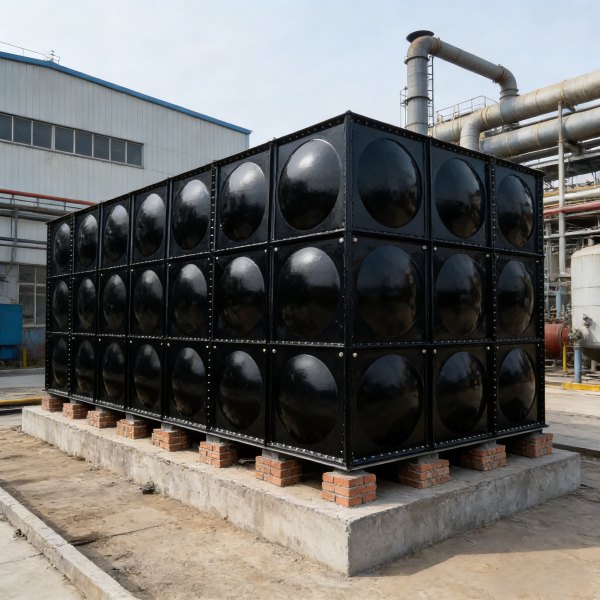
Galvanized water tanks are widely used due to their strength and familiarity. They perform well in open fields but require attention to coating wear over time. Stainless steel water tanks offer excellent corrosion resistance but often exceed agricultural budget thresholds for large-scale use.
خزانات مياه مطلية بالمينا provide a balance between durability and water safety, making them a frequent choice where long-term storage consistency matters. When considering an Agricultural water storage tank, enamel-coated systems often align well with both environmental exposure and water quality needs.
Underground and Fiberglass Tanks: Specific Use Cases
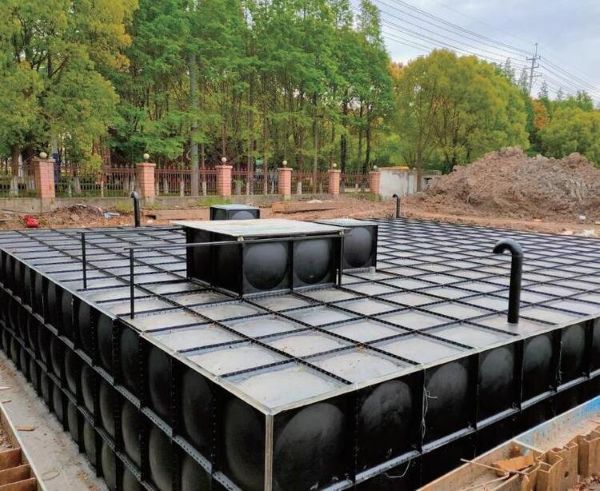
Underground water tanks are effective where land use efficiency is a priority. However, installation complexity and inspection difficulty limit their flexibility. Fiberglass water tanks are lightweight and corrosion-resistant, but their structural behavior under large volumes requires careful foundation planning.
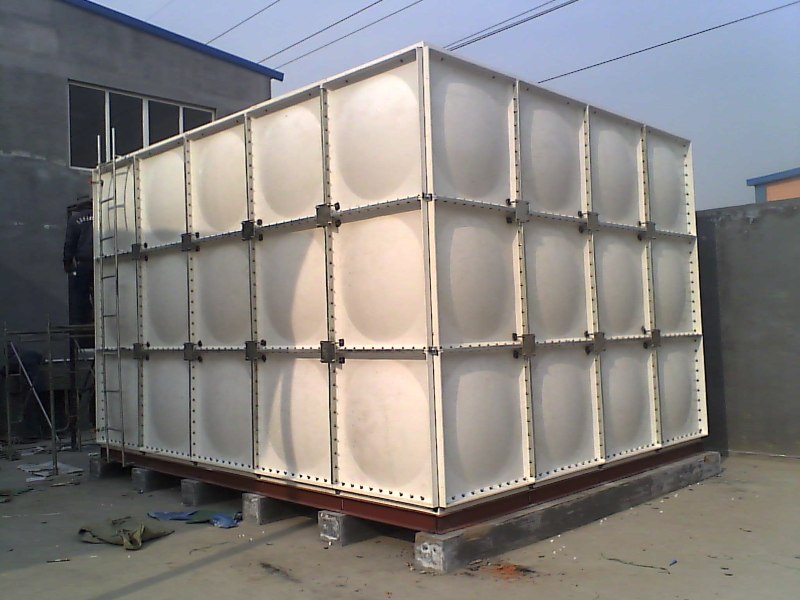
In practice, these solutions work best for specific scenarios rather than as a universal Agricultural water storage tank solution. Their value increases when site conditions clearly match their strengths.
Structural Support and Long-Term Stability
Beyond the tank body itself, structural components significantly affect system lifespan. A reliable Agricultural water storage tank relies on proper base construction and support rods to maintain shape under water pressure.
Water tank bases and support rods are often overlooked during procurement, yet they determine how well a tank performs over years of filling and draining cycles. In agriculture, where ground conditions may vary, these elements contribute directly to operational stability.
Why Enamel Water Tanks Often Fit Agricultural Needs Best
From a holistic perspective, خزانات مياه المينا tend to match agricultural requirements more consistently than other options. As an Agricultural water storage tank, enamel systems combine corrosion resistance, stable water quality, and adaptability to modular expansion.
Their maintenance demands remain manageable, and their service life aligns well with long-term agricultural planning. Rather than excelling in one narrow area, enamel tanks provide balanced performance across multiple priorities farmers face daily.
Matching Tank Choice to Farming Scale
Small farms may prioritize cost efficiency, while large agricultural operations value durability and scalability. A well-selected Agricultural water storage tank supports growth without requiring system replacement.
Enamel water tanks, supported by proper bases and rods, scale effectively from medium to large installations. This flexibility explains why they are increasingly favored in modern agricultural water systems.
Final Analysis: Choosing with Practical Insight
Selecting an Agricultural water storage tank is less about comparing specifications and more about understanding daily agricultural realities. Environmental exposure, water quality variation, maintenance capacity, and expansion plans all influence the final decision.
When evaluated through this lens, enamel water tanks emerge as a particularly suitable solution for many agricultural scenarios, not because other options fail, but because they align more closely with long-term farming needs.