Table of Contents
Introduction
Underground water tanks have become an essential part of modern water management, especially for facilities that prioritize land utilization, system protection, and long-term reliability. Whether used for fire protection, irrigation, rainwater harvesting, or industrial operations, underground tanks offer a secure, space-efficient, and durable solution. Their ability to remain protected from environmental exposure allows them to maintain water quality and structural integrity over long periods.
According to global water infrastructure studies released by the International Water Association, more industries and municipalities are investing in underground water storage to optimize land usage and protect systems against temperature extremes and environmental corrosion. When properly engineered, underground tanks offer operational stability even in challenging soil conditions.

What Are Underground Water Tanks
An underground water tank is a water storage system installed below ground level. These tanks are manufactured using reinforced concrete, steel, FRP/GRP, polyethylene, or modular panels depending on the application and engineering requirements. They are designed to withstand soil pressure, groundwater impact, seismic activities, and long-term external loads. Underground tanks are commonly used where above-ground space is limited or where water storage must be protected from sunlight, temperature fluctuations, or vandalism.
Types of Underground Water Tanks
Concrete Underground Tanks
Common in municipal, firefighting, and industrial applications. They offer extremely high structural stability and long service life, making them ideal for large-volume storage.
FRP/GRP Underground Tanks
Lightweight, corrosion-resistant, and easy to install. These tanks perform well in chemically active soil environments and are suitable for industrial or rainwater systems.
Steel Underground Tanks (Coated/Galvanized)
Designed with protective coatings to resist soil corrosion and mechanical stress. Often used in industrial projects requiring high strength and sealed construction.
Polymer Underground Tanks (HDPE/PE)
Flexible, lightweight options suitable for domestic or small commercial rainwater harvesting systems. Not ideal for high-load industrial environments.
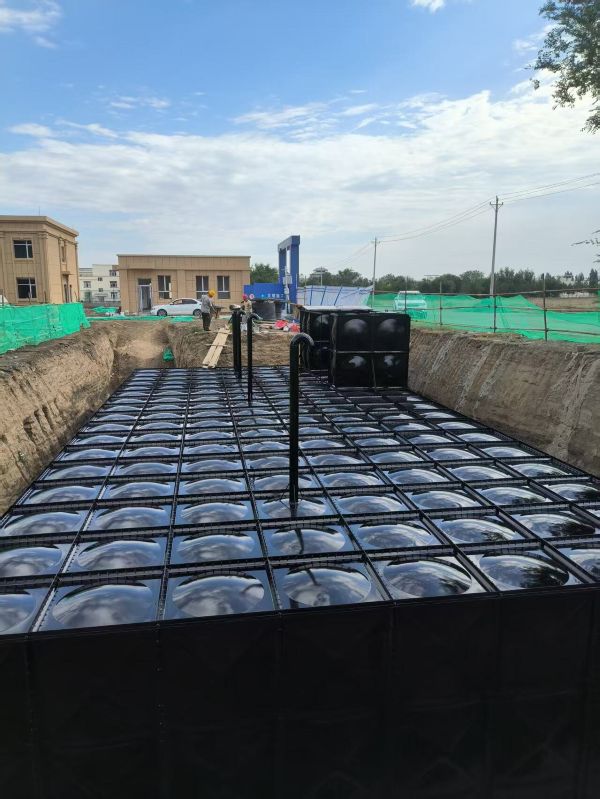
Modular Underground Water Tanks
Made from interconnected panels that can be assembled on-site. These tanks offer large storage capacities in areas with limited access and are commonly used in urban engineering projects.
Advantages of Underground Water Tanks
Efficient Use of Space
Storing water underground frees surface areas for buildings, parking lots, landscaping, or industrial operations—making it ideal for urban or restricted industrial zones.
Stable Water Quality
Being shielded from sunlight prevents algae growth, while stable underground temperatures protect water from thermal fluctuations that could degrade quality.
Enhanced Safety and Security
Underground tanks are naturally protected from physical damage, fire exposure, weathering, and unauthorized access.
Long-Term Durability
Properly engineered underground tanks withstand soil pressure, groundwater influence, and seismic forces, offering reliable performance over decades.
Aesthetic Benefits
Because they are hidden underground, these tanks preserve architectural and environmental aesthetics, particularly in commercial or residential environments.
Applications of Underground Water Tanks
- Firefighting Water Storage for industrial parks, warehouses, and commercial centers
- Rainwater Harvesting Systems for Sustainable Water Reuse
- Industrial Process Water Storage in factories and treatment plants
- Potable Water Supply for hotels, hospitals, and remote sites
- Stormwater Management in Urban Drainage Projects
- Agricultural Irrigation where surface space is limited
- Backup Water Supply for critical infrastructure, such as data centers and power plants
Technical Comparison of Underground Tanks
| Tank Type | Structural Strength | Corrosion Resistance | Installation Difficulty | Lifespan | Ideal Applications |
|---|---|---|---|---|---|
| Concrete | Very High | High | High | 40+ years | Municipal, Fire, Industrial |
| FRP/GRP | High | Excellent | Medium | 25–40 years | Industrial, Chemical, Rainwater |
| Steel (Coated) | Very High | Moderate to High | Medium | 20–35 years | Industrial, Heavy Duty |
| Polymer (HDPE) | Medium | Excellent | Easy | 15–25 years | Domestic, Light Commercial |
| Modular | High | High | Medium | 20–30 years | Urban, Limited Access Sites |

Engineering Considerations for Underground Tanks
Professional design must take into account the following:
Soil Conditions
Geotechnical analysis determines backfill type, water table levels, and soil bearing capacity.
Structural Load Requirements
Tanks installed under parking lots or roadways require reinforced designs capable of supporting heavy loads.
Groundwater Management
Anti-floating design is essential in regions with high groundwater levels to prevent tank uplift.
Internal and External Coatings
Protective coatings or waterproofing must be applied based on water type and soil chemistry.
Access and Ventilation
Underground tanks require access hatches, safe ladders, and ventilation to maintain water quality and operational safety.
Maintenance of Underground Water Tanks
While underground tanks are low-maintenance, proper servicing is essential:
- Scheduled internal cleaning and sediment removal
- Inspection of structural components, manholes, and sealing materials
- Monitoring for groundwater infiltration
- Ensuring venting systems remain unobstructed
- Checking internal coatings or liners periodically
Routine inspections ensure optimal performance and significantly extend the tank’s lifespan.
Conclusion
Underground water tanks offer a reliable, space-efficient, and long-lasting solution for industrial, municipal, and commercial water storage. Their ability to maintain water quality, optimize land use, and provide structural stability makes them an ideal choice for modern infrastructure. With proper engineering design and regular maintenance, underground tanks deliver decades of dependable performance for both potable and industrial applications.
FAQ
Are underground water tanks safe for drinking water?
Yes, when properly designed and built with certified materials suitable for potable water.
How long does an underground tank last?
Depending on the construction material, underground tanks typically last 20–50 years.
Can underground tanks handle vehicle load?
Yes. With appropriate structural reinforcement, they can be installed beneath parking areas or driveways.
Do underground tanks require waterproofing?
In many cases, yes, especially in areas with high groundwater levels.
Are underground tanks suitable for industrial water systems?
Absolutely. They are commonly used for firewater, process water, rainwater, and emergency backup supply.