Table of Contents
Introduction
Underground water tanks have become increasingly popular in modern water infrastructure projects due to their ability to combine space efficiency, environmental protection, and structural safety. Unlike above-ground storage, these tanks are installed below the surface, offering natural insulation and protection from UV exposure, weather extremes, and accidental mechanical damage.
Across municipal, industrial, and agricultural sectors, underground tanks provide a durable, long-term solution for storing potable water, fire protection reserves, irrigation water, and process water. When paired with properly engineered water tank bases and support rods, they ensure structural stability under both static and dynamic loads. This comprehensive guide will explore underground water tank types, material selection, structural design, installation best practices, and long-term maintenance considerations.

What Is an Underground Water Tank
An underground water tank is a storage system buried below ground level, designed to store and supply water safely and efficiently. Its design requires careful consideration of internal water pressure, external soil loads, groundwater conditions, and environmental factors. Unlike above-ground tanks such as galvanized water tanks or stainless steel water tanks, underground tanks rely heavily on surrounding soil for lateral support, making base preparation and reinforcement crucial.
Underground tanks can integrate with municipal water systems, rainwater harvesting, or industrial processes. Proper integration ensures consistent water quality and reliable supply for residential, commercial, or emergency applications.
Key Advantages of Underground Water Tanks
Space Optimization
One of the main benefits of underground tanks is the preservation of surface area. Urban planners and industrial facility managers often face space constraints. By installing tanks underground, property above can be utilized for buildings, parking, or landscaping. Compared to above-ground fiberglass water tanks or modular enamel water tanks, underground storage maximizes usable land without sacrificing capacity.
Temperature Stability
Soil provides natural insulation, keeping stored water at a relatively stable temperature year-round. This minimizes the risks associated with freezing in cold climates and overheating in hot regions, which is particularly important for potable water applications or sensitive industrial processes.
Enhanced Protection
Underground tanks are shielded from UV exposure, extreme weather, and potential vandalism or accidental impact. This protective environment prolongs the life of the tank material, whether galvanized, stainless steel, enamel-coated, or fiberglass, and reduces maintenance requirements.
Structural Design Considerations
Load Bearing and Soil Pressure
Unlike above-ground tanks, underground tanks must withstand combined loads from internal water, surrounding soil, traffic above, and sometimes building foundations. Engineering calculations assess both vertical and horizontal forces to ensure the tank remains stable under all conditions. Properly designed water tank bases and support rods are essential for evenly distributing stress and maintaining structural integrity over time.
Anti-Floating Measures
High groundwater levels can create buoyant forces capable of lifting empty or partially filled tanks. To counteract this, engineers use concrete anchors, reinforced bases, or tie-down rods to keep the tank in place. For large-capacity stainless steel underground tanks, these measures are critical to prevent structural damage.
Waterproofing and Sealing
High-quality gaskets, coatings, and sealants are required to prevent leakage and groundwater infiltration. This is especially important when storing potable water or integrating with enamel water tanks to meet hygiene standards. Proper sealing also protects fiberglass water tanks from chemical reactions with surrounding soil or moisture.
Materials Used in Underground Water Tanks
Galvanized Steel Underground Water Tanks
Galvanized steel offers strong structural support and moderate corrosion resistance, making it suitable for industrial water storage or fire protection reserves. When combined with water tank support rods, galvanized tanks can withstand hydrostatic pressure and soil loads effectively.
Stainless Steel Underground Water Tanks
Stainless steel provides superior corrosion resistance, hygiene performance, and long-term durability. These tanks are ideal for potable water applications, municipal water systems, and chemical-sensitive environments. Their compatibility with support rods and reinforced bases ensures stability even under heavy loads.
Enamel-Coated Underground Water Tanks
Enamel or glass-fused-to-steel tanks provide excellent corrosion protection and a hygienic surface for drinking water. They are commonly used in municipal and industrial applications where long-term durability and low maintenance are required.
Fiberglass Underground Water Tanks
Fiberglass tanks are lightweight, corrosion-resistant, and easy to install. They are suitable for agricultural irrigation, chemical storage, or regions with aggressive soil conditions. Combined with properly designed tank bases, fiberglass tanks maintain shape and resist stress over time.
Reinforced Concrete Tanks
Concrete underground tanks are highly durable and ideal for large municipal or industrial projects. They provide excellent compressive strength and can be integrated with support rods for additional stability in seismic zones.
Installation Process Overview
Site Preparation and Excavation
Site selection is critical. Engineers must evaluate soil type, groundwater conditions, and accessibility. Proper excavation ensures adequate depth, stable soil, and sufficient room for backfilling.
Foundation and Bedding
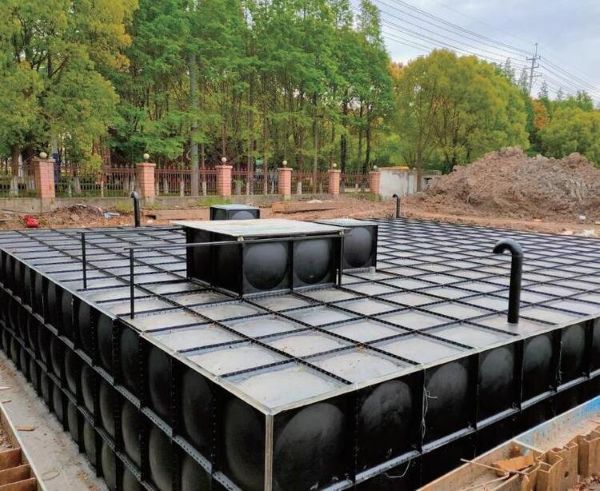
A level foundation—often composed of compacted gravel, reinforced concrete, or prefabricated modular base panels—prevents uneven load distribution. The integration of water tank bases and support rods during foundation preparation ensures long-term stability.
Tank Placement and Backfilling
Tanks must be carefully positioned and aligned. Backfilling is performed in layers, with controlled compaction to avoid stress on the tank walls. This step is essential for stainless steel, galvanized, or fiberglass underground water tanks, where deformation can occur under uneven soil pressure.
System Connection and Testing
All pipelines, valves, and access ports are installed and pressure-tested. This step ensures water quality integrity, prevents leakage, and verifies structural stability before commissioning.
Applications of Underground Water Tanks
Municipal and Residential Water Supply
Underground tanks are ideal for potable water storage, pressure regulation, and emergency reserves. Their integration with enamel water tanks ensures hygiene compliance and long-term reliability.
Industrial Water Storage
Factories, chemical plants, and food-processing facilities use underground tanks to store process water, cooling water, or fire protection reserves. Material choice—stainless steel, galvanized steel, or fiberglass—depends on water type and environmental conditions.
Fire Protection Systems
High-capacity fire water storage is often required in commercial and industrial sites. Underground tanks preserve surface space while providing reliable water supply during emergencies.
Agricultural and Irrigation Use
Rainwater harvesting, irrigation systems, and farm water storage benefit from underground tanks due to space-saving and protection against contamination. Fiberglass and enamel tanks are particularly suitable in these environments.

Safety and Maintenance Considerations
Routine Inspection
Internal inspection hatches and monitoring ports allow periodic checks for corrosion, leakage, or settlement. This is critical for all underground tank types, especially stainless steel and enamel-coated tanks.
Cleaning and Hygiene Management
Regular cleaning maintains water quality standards. For potable water storage, enamel water tanks require minimal maintenance due to their smooth, non-corrosive surfaces.
Structural Monitoring
Monitoring for settlement, soil movement, and water pressure ensures long-term stability, particularly when tanks are integrated with support rods and reinforced bases.
Environmental and Regulatory Compliance
Environmental Impact Reduction
Underground tanks minimize visual impact, preserve green space, and reduce soil erosion and contamination risks.
Compliance with Water Storage Standards
Materials, coatings, and structural components must meet municipal, industrial, and safety regulations. Proper integration with water tank bases and support rods ensures compliance with engineering codes.
Table: Underground Water Tank Material Comparison
| Material Type | Corrosion Resistance | Structural Strength | Typical Applications | Advantages |
|---|---|---|---|---|
| Galvanized Steel | Medium to High | High | Industrial, fire systems | Strong, cost-effective |
| Stainless Steel | Very High | High | Potable water, chemical | Corrosion-resistant, hygienic |
| Enamel-Coated Steel | Very High | High | Municipal, industrial | Hygienic, long lifespan |
| Fiberglass | Very High | Medium | Irrigation, chemical | Lightweight, easy to install |
| Reinforced Concrete | Medium | Very High | Large municipal | Durable, custom capacity |
Conclusion
Underground water tanks are a versatile, safe, and durable solution for long-term water storage. By combining careful material selection, engineered water tank bases and support rods, and proper installation techniques, they provide reliable performance for municipal, industrial, agricultural, and fire protection applications. Choosing the right combination of tank type, material, and structural reinforcement ensures safety, efficiency, and longevity in every project.
FAQ
What is the main advantage of an underground water tank?
Underground water tanks save surface space, provide natural insulation, and protect stored water from external damage and temperature fluctuations.
Which materials are best for underground water tanks?
Common options include galvanized steel, stainless steel, enamel-coated steel, fiberglass, and reinforced concrete, chosen based on water type, environmental conditions, and structural requirements.
Why are water tank bases and support rods important for underground tanks?
Bases and support rods ensure load distribution, structural stability, and long-term durability, preventing deformation and tank failure under hydrostatic and soil pressure.
How often should underground water tanks be inspected?
Routine inspections are recommended at least once or twice a year to check for settlement, corrosion, leakage, and proper tension of support rods if applicable.
Can underground water tanks be used for potable water storage?
Yes, especially stainless steel and enamel-coated tanks, which provide corrosion resistance and hygienic surfaces suitable for drinking water.
Call to Action
Need Expert Guidance for Underground Water Tank Projects?
If you are planning a new water storage system or evaluating an existing installation, our experts can help you select the right underground tank type, base design, and reinforcement strategy. Contact us today for a professional consultation and build a secure, long-lasting water storage solution.