Table of Contents
Introduction
In urban development, industrial complexes, and large-scale agricultural operations, space is often limited, and aesthetics are an important consideration. Underground water tanks have emerged as a practical solution to store water efficiently without occupying valuable surface space. By being buried below ground level, these tanks provide a discreet, safe, and temperature-stable storage option for potable water, fire protection systems, irrigation, and industrial process water.
This article provides an in-depth look at underground water tanks, their design, construction, advantages, installation considerations, and common applications, helping you make informed decisions for your next water storage project.

What Are Underground Water Tanks
Underground water tanks are storage vessels installed beneath the ground surface, typically made from materials such as polyethylene, fiberglass, concrete, or stainless steel. They are engineered to withstand soil pressure, groundwater load, and dynamic loads such as traffic in urban areas.
The key feature of underground tanks is their ability to store water discreetly while maintaining safety and structural integrity. Custom sizing and configuration allow them to adapt to site-specific constraints, making them suitable for both residential and industrial applications.
Advantages of Underground Water Tanks
Space Efficiency
By placing water tanks underground, above-ground space is freed for landscaping, parking, or other infrastructure. This is particularly valuable in urban environments where surface space is scarce.
Temperature Stability
Buried tanks maintain more stable water temperatures, which is beneficial for potable water quality and industrial process requirements. Reduced temperature fluctuations also help minimize bacterial growth.
Protection from Environmental Hazards
Underground tanks are less exposed to sunlight, wind, and environmental pollutants. This reduces the risk of algae formation, UV degradation, and external contamination, ensuring water safety over long periods.
Aesthetic Integration
For commercial and residential projects, underground tanks allow water storage without impacting landscape design or building appearance, providing a visually clean solution.
Material Options for Underground Water Tanks
Underground water tanks can be made from various materials depending on project requirements:
- Polyethylene (Plastic) Tanks: Lightweight, corrosion-resistant, and easy to install; ideal for moderate load conditions.
- Fiberglass Tanks: Strong, durable, and resistant to corrosion; suitable for chemical exposure and industrial applications.
- Concrete Tanks: Highly durable and stable under heavy load; often used for large municipal or industrial storage.
- Stainless Steel Tanks: Hygienic and corrosion-resistant; excellent for potable water and industrial process water.
Material selection depends on soil conditions, water type, load considerations, and long-term maintenance preferences.
Design and Engineering Considerations
Tank Shape and Capacity
Underground tanks can be cylindrical, rectangular, or modular panel designs. Custom capacities allow precise matching with water demand, fire protection requirements, or irrigation needs.
Structural Reinforcement
Buried tanks must resist soil pressure, hydrostatic loads, and potential traffic or construction loads above ground. Engineering calculations ensure appropriate wall thickness, reinforcement ribs, and foundation support.
Access and Maintenance Features
Proper design includes access hatches, inspection ports, overflow and drainage systems. These features facilitate maintenance, inspection, and water quality monitoring without requiring excavation.
Installation Process
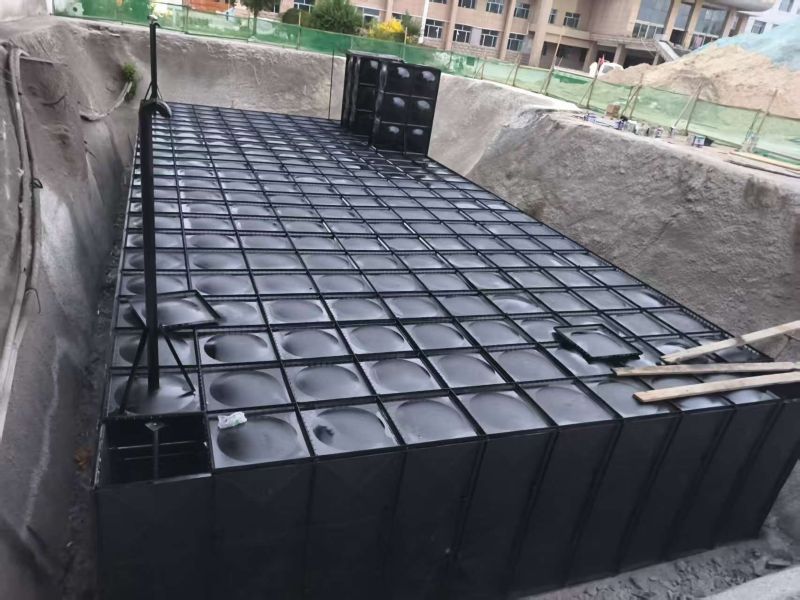
Underground water tank installation typically involves site excavation, base preparation, tank placement, backfilling, and connection to plumbing or pumping systems. Key steps include:
- Excavate the site to the required depth with allowances for base material and tank clearance.
- Prepare a stable, level base using sand, gravel, or concrete.
- Position the tank carefully to avoid damage during placement.
- Backfill around the tank using granular material in layers, compacting to provide uniform support.
- Connect inlet, outlet, overflow, and vent pipes according to design specifications.
- Conduct inspection and pressure testing before commissioning.
Professional installation ensures structural stability, leak prevention, and long-term performance.
Advantages Over Above-Ground Tanks
| Feature | Underground Water Tanks | Above-Ground Tanks |
|---|---|---|
| Space Utilization | Excellent | Requires surface area |
| Temperature Control | Stable | Exposed to sunlight |
| Environmental Protection | Protected | Exposed to weather |
| Aesthetics | Invisible | Visible structure |
| Load Resistance | Engineered for soil & traffic | Limited by wall strength |
Applications of Underground Water Tanks
Municipal Water Supply
Underground tanks store treated water or emergency reserves while conserving space and maintaining water quality.
Fire Protection Systems
They provide a secure, dedicated water source for fire suppression without compromising surface space.
Industrial and Process Water
Factories use underground tanks to store process water, cooling water, or treated effluent with minimal exposure and contamination risk.
Agricultural Irrigation
Underground tanks support large-scale irrigation by storing water close to fields while minimizing evaporation and protecting water quality.
Maintenance and Longevity
Proper maintenance involves periodic inspection of access hatches, pipes, and structural integrity. Because underground tanks are protected from UV exposure and environmental corrosion, they typically require less frequent maintenance than above-ground tanks.
Service life depends on material selection, installation quality, and local soil conditions. Fiberglass, polyethylene, and stainless steel underground tanks can last 20–50 years or more with correct installation and care.
Conclusion
Underground water tanks are an efficient, safe, and versatile solution for water storage in urban, industrial, and agricultural settings. By combining material selection, custom design, and professional installation, these tanks offer long-term reliability, discreet storage, and stable water quality.
When planning water storage projects where space is limited or aesthetics are important, underground water tanks provide a practical and durable option that meets both functional and regulatory requirements.
FAQ
What are underground water tanks made of?
They can be made from polyethylene, fiberglass, concrete, or stainless steel, depending on project requirements and site conditions.
Are underground water tanks suitable for potable water?
Yes, when manufactured with approved materials and installed properly, underground water tanks are safe for storing drinking water.
How are underground water tanks protected from soil pressure?
Tanks are designed with reinforced walls and properly compacted backfill to withstand soil loads and hydrostatic pressure safely.
Can underground water tanks be used for fire protection systems?
Yes, they are commonly used to provide a dedicated water source for fire suppression applications.
How long do underground water tanks typically last?
With proper installation, material selection, and maintenance, underground water tanks can last 20–50 years or more.