Table of Contents
Introduction
As urban spaces become increasingly crowded and environmental sustainability gains importance, underground water tanks have emerged as one of the most efficient solutions for water storage. These systems are designed to be installed below ground level, maximizing usable surface space while ensuring secure, long-term water storage. According to data from the International Water Association (IWA, 2024), underground water storage systems are being adopted by over 45% of new urban infrastructure projects worldwide, highlighting their growing significance in modern water management.
This article explores how underground water tanks work, their key advantages, applications across industries, and the engineering standards that ensure their safety and reliability.

What Is an Underground Water Tank?
An underground water tank is a sealed storage structure designed to be buried below the ground surface. It is typically made from reinforced concrete, fiberglass (FRP), polyethylene, or coated steel. These tanks store potable water, rainwater, or industrial process water securely while protecting it from external contamination, UV degradation, and temperature fluctuations.
By being installed below ground, these tanks effectively utilize vertical space, making them ideal for densely populated urban environments or commercial properties with limited surface area.
Structure and Design Features
Modern underground water tanks are built with several engineering considerations to ensure long-term performance:
- Reinforced Construction: Tanks are designed to withstand soil pressure and groundwater uplift, ensuring structural stability even under heavy load conditions.
- Leak-Proof Sealing: Advanced sealants and composite joints prevent water seepage and contamination.
- Ventilation and Overflow Systems: Designed to manage air pressure changes and prevent overflow during filling.
- Access Manholes and Monitoring Ports: Allow for easy inspection, cleaning, and sensor installation for smart monitoring.
- Anti-Floatation Anchors: In high water table areas, these prevent tanks from rising due to buoyancy.
According to the American Water Works Association (AWWA), proper installation and design can extend the life expectancy of underground water tanks beyond 40 years.
Key Advantages of Underground Water Tanks
1. Space Optimization
By placing the tank underground, valuable surface area remains available for other uses such as parking, landscaping, or building expansion. This is particularly advantageous for urban developments and commercial projects.
2. Protection from Environmental Factors
Being underground shields the tank from UV exposure, temperature fluctuations, and physical damage, extending its service life and maintaining consistent water quality.
3. Aesthetic and Environmental Benefits
Since the tank is not visible, it preserves landscape aesthetics. Additionally, it supports sustainable design by enabling rainwater harvesting and greywater recycling systems.
4. Temperature Stability
Underground tanks maintain a relatively constant temperature, reducing the risk of bacterial growth and water evaporation—crucial for potable and irrigation water storage.
5. Durability and Safety
Built with reinforced materials, these tanks are designed to handle external pressure and heavy loads, ensuring safety in both residential and industrial environments.
Applications Across Sectors
Underground water tanks serve multiple industries and infrastructure needs:
- Urban and Residential Buildings: For potable water storage, rainwater harvesting, and firefighting reserves.
- Commercial Complexes and Hotels: For HVAC systems, cooling water, and plumbing.
- Industrial Facilities: For process water, recycled water, and wastewater management.
- Agricultural Operations: For irrigation and livestock supply, particularly in arid regions.
- Disaster Preparedness Systems: To store emergency water supplies for droughts or natural disasters.
In developing economies, integrating underground tanks with smart sensors and IoT monitoring is becoming a standard feature for efficient water management.
Installation and Maintenance Guidelines
Proper installation is critical to ensure safety and performance. Below are best practices recommended by industry standards such as ISO 20672:2021 and AWWA D110:
- Site Preparation: Ensure stable soil conditions and proper drainage to prevent tank floating or collapse.
- Foundation: Use reinforced concrete bases or compacted sand to distribute load evenly.
- Backfilling: Employ uniform material layers to minimize uneven pressure.
- Waterproofing: Apply protective coatings or membranes to prevent groundwater intrusion.
- Inspection and Cleaning: Schedule periodic cleaning and inspection every 12–18 months.
Maintaining proper access points and installing monitoring sensors can further extend the tank’s lifespan and improve operational safety.
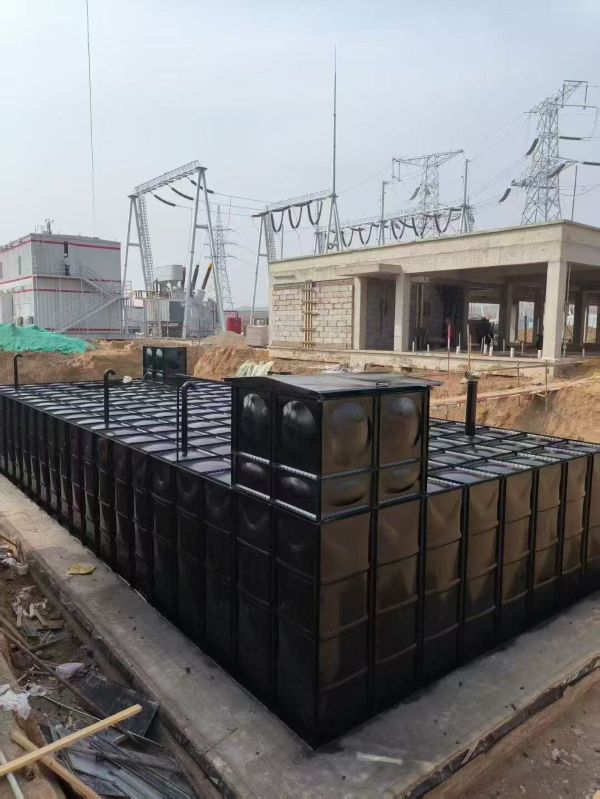
Comparison with Other Tank Types
| Feature / Tank Type | Underground Tank | Steel Tank | Enamel Tank | FRP Tank |
|---|---|---|---|---|
| Space Usage | Hidden, saves surface area | Requires surface space | Above-ground | Above-ground |
| Durability | Excellent (40+ years) | High | High | Moderate |
| Maintenance | Low | Medium | Low | Low |
| Temperature Stability | Excellent | Moderate | Good | Moderate |
| Aesthetic Impact | Invisible | Visible | Visible | Visible |
| Installation Cost | Medium | Medium | High | Low |
| Ideal Applications | Urban, industrial, irrigation | Industrial | Potable, municipal | Chemical, light industry |
Quality and Safety Standards
To ensure durability, underground water tanks must comply with specific design and safety standards:
- AWWA D110 / D115: Structural design for prestressed concrete and composite tanks
- NSF/ANSI 61: Certification for potable water safety
- ISO 20672:2021: Design and installation guidelines for buried water tanks
- ASTM C890: Load-bearing and soil pressure testing standards
Complying with these ensures the tank’s integrity under variable environmental and operational conditions.
Conclusion
Underground water tanks represent the future of efficient, space-conscious, and sustainable water management. Their ability to store large volumes securely while preserving above-ground space makes them indispensable for urban infrastructure and industrial operations. As cities continue to expand vertically and sustainability becomes a global priority, underground tanks will remain a cornerstone of advanced water storage systems.
FAQ
How long does an underground water tank last?
With proper installation, it can last 30–40 years or more.
Are underground water tanks safe for drinking water?
Yes, if built from certified materials and properly sealed according to NSF/ANSI 61 standards.
How often should underground tanks be cleaned?
Typically every 12–18 months, depending on usage and water quality.
Can they be used for both rainwater and industrial water?
Yes, they are suitable for various water types with proper treatment and filtration systems.
What is the main advantage compared to above-ground tanks?
They save space, protect water from contamination, and maintain stable temperature conditions year-round.