Table of Contents
Introduction
Choosing the right water storage material is essential for long-term performance, safety, and lifecycle cost. Two of the most widely used high-end solutions are stainless steel water tanks and enamel water tanks. Both offer excellent corrosion resistance and durability, but their structural behavior, manufacturing technology, application suitability, and maintenance requirements differ significantly.
In this professional comparison, we examine material properties, manufacturing processes, corrosion performance, structural strength, hygiene characteristics, installation considerations, maintenance, and real-world application scenarios. This information helps engineers, facility managers, and project planners make informed decisions based on application needs and long-term operational strategies.
Material Composition and Manufacturing Processes
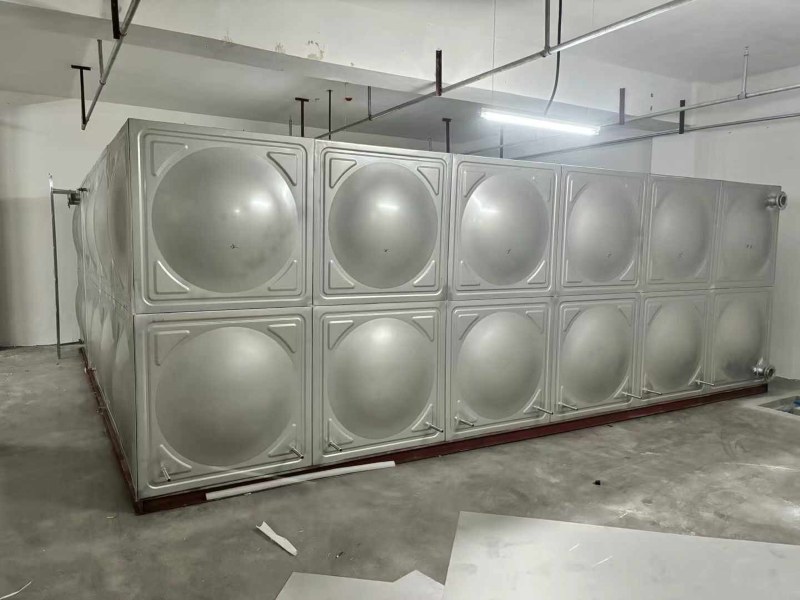
Stainless steel water tanks are fabricated using corrosion-resistant alloys such as SS304 or SS316, which contain chromium and other elements that form a passive oxide layer, protecting the steel from rust and chemical attack. This passive layer is continuous across the material, making stainless steel intrinsically resistant to corrosion without the need for additional coatings. According to stainless steel tank manufacturers and industry resources, stainless steel’s corrosion resistance and durability make it a preferred material for demanding environments, including coastal and chemically aggressive areas.
Enamel water tanks, also referred to as glass-fused-to-steel tanks, are manufactured by coating steel panels with a specially formulated enamel (a glass-based ceramic) and fusing it at high temperatures (approximately 820°C–930°C), creating a chemically bonded surface that combines the strength of steel with corrosion resistance and a smooth, non-porous interior. The glass enamel coating provides excellent chemical resistance across a wide pH range and outstanding hygiene characteristics because the smooth surface discourages scale and microbial growth.
Corrosion Resistance and Longevity
Stainless steel tanks exhibit very high resistance to corrosion due to the chromium-rich passive layer, which is stable in water and many industrial environments. This corrosion resistance contributes to longevity and minimal maintenance requirements in a variety of conditions, from municipal potable water to industrial process water storage.
Enamel water tanks also offer outstanding corrosion protection because the glass fused coating forms a non-reactive barrier that isolates steel from water and aggressive chemicals. This barrier protects against oxidation, corrosion, and chemical attack, and the inert glass surface resists microbial growth and scaling, reducing cleaning frequency and operational disruption. The corrosion resistance of enamel tanks has been recognized as superior to that of traditional painted or epoxy-coated steel options, with many installations surpassing 30 years of service life with minimal degradation.
Structural Strength and Load Behavior
Both stainless steel and enamel tanks depend on steel for structural load capacity, but their assembly methods differ. Stainless steel tanks can be fabricated as welded vessels or modular bolted systems, and high-grade alloys such as 316 or duplex steels provide excellent resistance to stress, pressure fluctuations, and external loads. These characteristics make stainless steel tanks suitable for both above-ground and underground installations.
Enamel tanks are most commonly assembled from modular glass-fused panels. While the enamel layer covers the steel surface, structural strength relies on the underlying steel and engineered distribution of hydrostatic and environmental loads via tank bases and support rods. Because enamel tanks use high-quality gasket systems and bolted assembly, they offer efficiency in large-capacity installations, flexibility in design, and ease of future expansion.
Hygiene, Water Quality, and Cleanability
A clean interior surface is crucial for potable water and food-grade applications. Stainless steel’s smooth, non-porous surface resists bacterial adhesion, does not leach impurities, and is easy to clean and disinfect. This makes stainless steel tanks ideal for drinking water systems, hospitals, food and beverage facilities, and high-purity industrial environments.
Enamel water tanks also provide excellent hygiene performance because the glass-fused surface is non-absorbent and resists biofilm, scale, and sediment accumulation. The smooth enamel interior facilitates cleaning and reduces the risk of microbial growth, supporting regulatory compliance in potable water and sensitive industrial applications.
Installation Flexibility and Construction Methods
Stainless steel tanks may be delivered pre-assembled or constructed on-site. Welded stainless steel installations require skilled fabrication and careful quality control, while modular tanks use pre-engineered panels bolted together, reducing dependence on extensive field welding.
Enamel water tanks are typically modular and assembled on-site using pre-fired glass-enamel panels, gaskets, and bolts. This panelized approach allows faster installation in constrained spaces, ease of logistics, and the potential for future expansion. Because enamel panels are factory-controlled and standardized, installation precision can improve quality and minimize on-site corrections.
Maintenance Requirements and Lifecycle Costs
Maintenance frequency and cost are key considerations for lifecycle planning. Stainless steel tanks generally require minimal long-term maintenance. Periodic cleaning, inspection of welds or joints, and occasional polishing may be sufficient to maintain performance. Stainless steel’s corrosion resistance contributes to reduced operational costs over the tank’s service life.
Enamel water tanks’ inert glass surface also demands minimal maintenance because corrosion and microbial adhesion are less likely. Routine inspections focus on gasket integrity, support rod tension, and structural connections rather than surface deterioration. Enamel tanks typically do not require field recoating, which can reduce maintenance resources and downtime.
Typical Applications and Suitability
Potable Water Supply
Stainless steel and enamel tanks can both be used for drinking water. Stainless steel is often prioritized in high-purity or food-sensitive environments due to its inherent corrosion resistance and non-reactivity, while enamel tanks are frequently selected for municipal water supply systems due to hygienic surfaces and modular scalability.
Industrial and Chemical Storage
Stainless steel is preferred where specialized chemical resistance, temperature tolerance, or high mechanical strength is required. Enamel tanks are suitable for industrial process water, aggressive waste streams, and environments demanding long-term corrosion resistance.
Fire Protection and Large-Capacity Storage
Enamel tanks’ modular panel construction and ease of on-site assembly make them attractive in large fire water reservoirs and urban municipal systems. Stainless steel also performs well, especially where aesthetics, hygiene, and long life are priorities.
Table: Stainless Steel vs Enamel Water Tanks Comparison
| Feature | Stainless Steel Water Tanks | Enamel Water Tanks |
|---|---|---|
| Corrosion Resistance | Very high, passive chromium oxide layer | Very high, glass-fused inert surface |
| Hygiene & Cleanability | Excellent, non-porous surface | Excellent, non-absorbent surface |
| Installation Flexibility | Prefabricated or modular welded | Modular bolted panel system |
| Structural Strength | High | High with engineered support |
| Maintenance Needs | Low | Low |
| Suitable for Large Capacities | Yes | Yes |

Environmental and Regulatory Considerations
Both tank types support sustainable design principles. Stainless steel is highly recyclable, often comprising a significant percentage of recycled material, reducing environmental impact. Enamel tanks’ steel panels and glass coating are also recyclable, and the modular design supports future reuse or relocation.
Compliance with local water storage, hygiene, and safety standards is essential, and both materials can meet stringent requirements for potable water, wastewater, fire protection, and industrial systems when properly engineered and installed.
Conclusion
Stainless steel and enamel water tanks are two premium options for long-term water storage, each with distinct strengths. Stainless steel tanks provide excellent corrosion resistance, hygienic performance, and minimal maintenance, making them ideal for potable water and high-purity environments. Enamel water tanks deliver outstanding corrosion and chemical resistance, modular flexibility, and low lifecycle maintenance costs, particularly in large municipal or industrial water applications.
Your final material choice should consider water quality, capacity needs, environmental conditions, and long-term operational goals. Both solutions, when integrated with well-designed water tank bases and support rods, can deliver reliable and durable performance over decades.
FAQ
What is the primary difference between stainless steel and enamel water tanks?
Stainless steel relies on the corrosion resistance of the alloy itself, while enamel tanks use a chemically bonded glass surface to protect steel from water and chemicals.
Which tank type is more suitable for potable water?
Both are suitable, but stainless steel is often preferred in high-hygiene or high-purity drinking water systems due to its inherent corrosion resistance.
Do enamel water tanks require more maintenance if damaged?
If the enamel coating is damaged, exposed steel may corrode more quickly, so careful inspection and immediate repair are important.
Can stainless steel tanks be used in aggressive industrial environments?
Yes, especially when using appropriate stainless grades such as 316 or higher, which resist chloride and chemical exposure.
Which tank type offers easier future expansion?
Enamel water tanks, with their modular bolted panel design, generally allow easier capacity expansion on site.