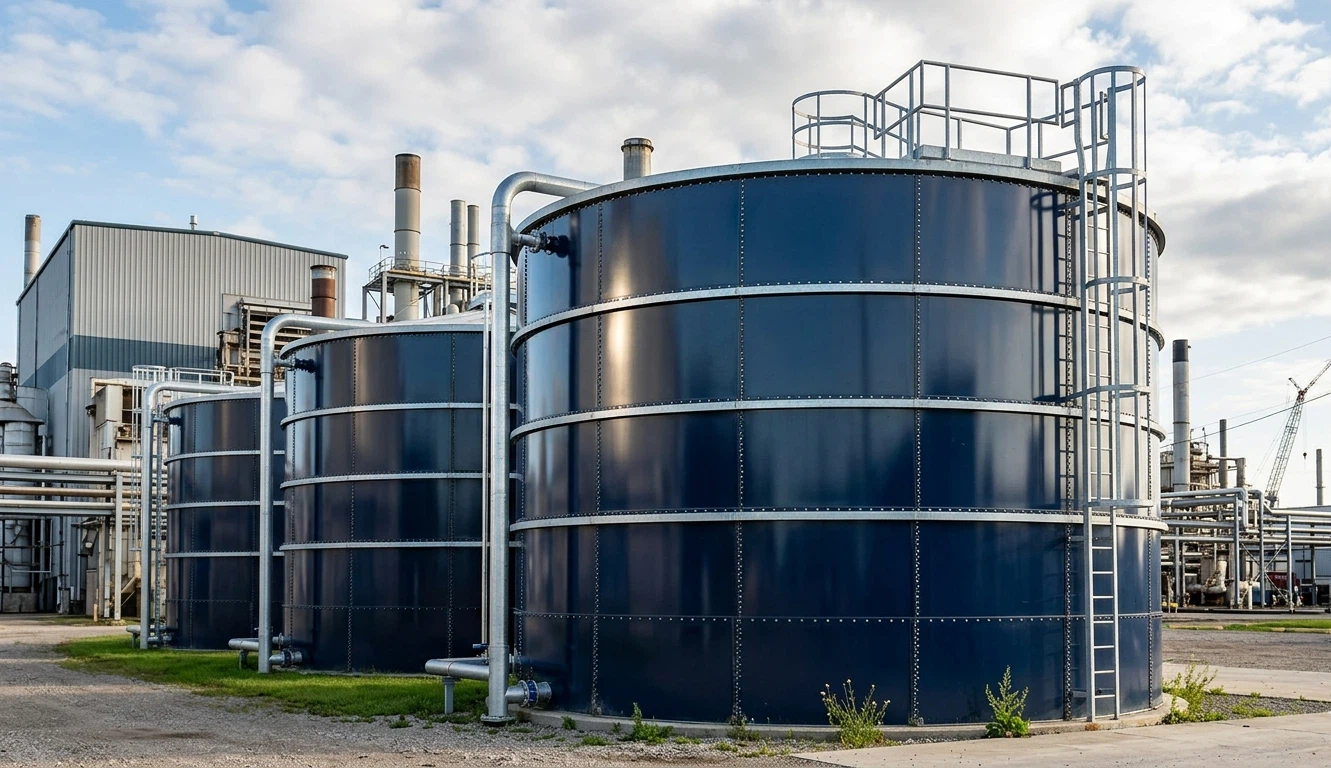
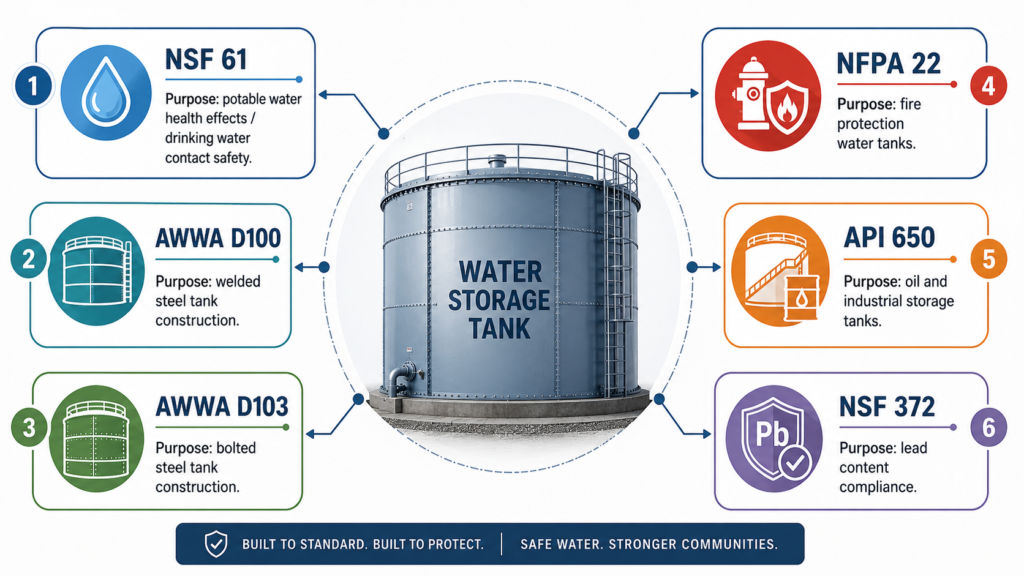
Water tank safety standards can be confusing because one project may mention NSF 61, AWWA D100, AWWA D103, AWWA D102, NFPA 22, NSF 372, and API 650 at the same time. The mistake is assuming they all prove the same thing.
Some standards focus on potable water health effects. Some focus on tank structure. Some cover coatings. Some apply to fire protection or oil storage. This guide explains how water tank safety standards work, where NSF 61 fits, and why AWWA or API 650 should not be treated as a substitute for potable water safety verification.
Оглавление
Why water tank safety standards are often misunderstood
The word “safe” can mean different things in tank projects.
For a structural engineer, safe may mean the tank can resist water load, wind, seismic forces, and foundation stress. For a water utility, safe may mean the tank does not introduce harmful contaminants into drinking water. For a fire protection designer, safe means the tank can deliver required water when a sprinkler or hydrant system needs it.
Good water tank safety standards planning starts by separating these risks:
- Structural safety
- Potable water contact safety
- Coating and corrosion protection
- Fire protection reliability
- Industrial liquid storage requirements
- Lead content control
- Inspection and documentation
The U.S. EPA’s Safe Drinking Water Act overview explains that EPA sets protective drinking water standards for more than 90 contaminants. That matters because potable water tanks are part of a larger drinking water safety chain, not just steel containers.
What NSF 61 really covers for potable water tanks
NSF 61 is often the most important reference when a tank stores drinking water. NSF describes NSF/ANSI/CAN 61 as an American National Standard that establishes minimum health-effects requirements for contaminants and impurities indirectly imparted to drinking water from products, components, and materials used in drinking water systems.
That wording is important. NSF 61 is not mainly about tank wall thickness, seismic design, or fire water capacity. It is about water-contact health effects.
For tanks, NSF 61 may involve:
- Internal coatings
- Liners
- Sealants
- Fittings
- Gaskets
- Tank panels
- Bolts or accessories in contact with water
- Other wetted surfaces
Under water tank safety standards, NSF 61 helps answer one specific question: can the water-contact materials be used in drinking water service?
For a deeper project-focused explanation, you can also refer to this guide on NSF 61 water tank potable water verification.
NSF 61 vs AWWA D100 and D103 for water tanks
This is one of the most common areas of confusion.
A simple way to understand it:
AWWA helps define how the tank is designed, fabricated, coated, erected, or inspected. NSF 61 helps verify the health effects of materials that touch drinking water.
So water tank safety standards should not be written as “AWWA or NSF.” In many potable water projects, the correct approach is “AWWA plus NSF 61,” depending on the application and local requirements.
| Question | NSF 61 | AWWA D100 / D103 |
|---|---|---|
| Main focus | Drinking water health effects | Tank design, fabrication, and construction |
| Typical concern | Chemical leaching from wetted materials | Structural and construction requirements |
| Potable water relevance | Directly relevant | Relevant, but not a full NSF 61 substitute |
| Can it replace the other? | No | No |
| Buyer takeaway | Check wetted material certification | Check tank engineering and construction compliance |
NSF 61 vs NSF 372 and the lead-free misunderstanding
NSF 372 is another standard that can cause confusion. Buyers sometimes assume “lead-free” means the same thing as full potable water safety.
It does not.
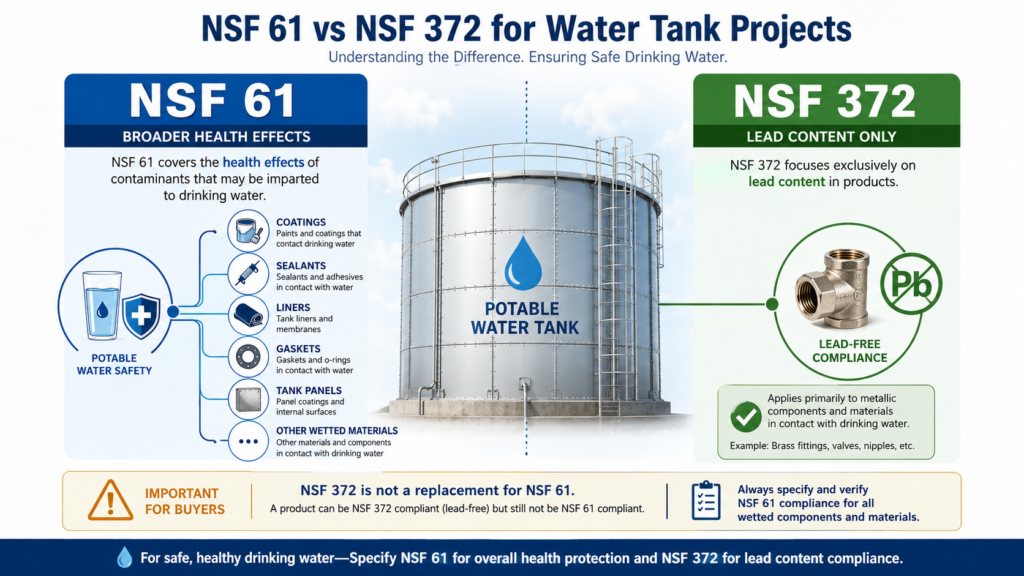
NSF 372 is much narrower because it focuses on lead content. NSF 61 is broader because it addresses health effects from contaminants that may be imparted to drinking water by system components and materials.
That distinction matters for water tank safety standards because a potable water tank may use many water-contact materials beyond metallic fittings. Coatings, sealants, liners, gaskets, and other wetted materials may need separate verification.
A practical buyer rule is simple: NSF 372 may help address lead-content concerns, but it should not be used as a blanket replacement for NSF 61 in potable water tank projects.
API 650 is not a drinking water tank standard
API 650 is a respected tank standard, but it is often misunderstood when it appears in water storage discussions.
API describes API Standard 650 as covering welded tanks for oil storage and supporting safety, sustainability, and environmental performance for oil storage tanks.
That does not make API 650 irrelevant to every tank discussion. It means buyers should not assume an API 650 tank is automatically suitable for potable water. API 650 is not designed to answer the same health-effects question as NSF 61.
For industrial storage, API 650 may be the right conversation. For potable water, water tank safety standards should confirm both engineering requirements and drinking water contact requirements.
NFPA 22 fire tanks are about emergency water reliability
NFPA 22 is important for fire protection tanks, but it is not the same as potable water certification.
NFPA states that НФПА 22 provides requirements for the design, construction, installation, and maintenance of tanks and accessory equipment that supply water for private fire protection. NFPA’s article on NFPA 22 and water storage tanks also explains its role in fire protection water tanks.
That means a fire tank may be safe for fire suppression service without being suitable for drinking water.
AWWA D102 and coating safety are not the same question
That makes D102 highly useful for corrosion control and coating specification.
However, coating system selection is not automatically the same as NSF 61 certification. For potable water, buyers should confirm whether the specific coating, liner, or wetted material is certified or accepted for drinking water contact in the project jurisdiction.
In other words, water tank safety standards may require both coating performance and health-effects verification.
Practical comparison of common tank standards
| Standard | Main Purpose | Best Fit | Does It Replace NSF 61? |
|---|---|---|---|
| NSF/ANSI/CAN 61 | Health effects of drinking water components | Potable water contact materials | No |
| AWWA D100 | Welded carbon steel water tanks | Welded municipal or water storage tanks | No |
| AWWA D103 | Factory-coated bolted carbon steel water tanks | Bolted water storage tanks | No |
| AWWA D102 | Coating steel water-storage tanks | Coating and recoating steel tanks | No |
| NSF/ANSI/CAN 372 | Lead content | Lead-free verification | No |
| НФПА 22 | Fire protection water tanks | Private fire protection systems | No |
| API 650 | Welded tanks for oil storage | Petroleum or industrial storage | No |
This table is the heart of water tank safety standards planning. The standards are not enemies. They answer different questions.
How to choose the right standard for your water tank project
Start with the water use.
For potable water, water tank safety standards should focus on NSF 61 for wetted materials, plus relevant tank construction and coating standards. Also check local plumbing codes, public health requirements, and project specifications.
For municipal water storage, combine AWWA tank standards with potable water contact requirements. Do not assume structural compliance automatically proves drinking water safety.
For fire protection, NFPA 22 may be central. If the tank also interacts with drinking water, review potable water requirements separately.
For industrial storage, standards such as API 650 may be relevant, depending on liquid type, temperature, pressure, and site regulation. But API 650 should not be treated as drinking water certification.
For coated steel tanks, AWWA D102 or D103 may guide the coating system, but NSF 61 still needs attention for water-contact health effects.
Common mistakes in tank standard specifications
Many problems happen before manufacturing begins.
Avoid these mistakes:
- Treating AWWA D100 or D103 as a substitute for NSF 61
- Treating NSF 372 as full potable water certification
- Using API 650 language for a drinking water tank without reviewing potable water requirements
- Forgetting gaskets, sealants, liners, coatings, and fittings
- Assuming one component certificate covers the whole tank system
- Ignoring local public health or plumbing code requirements
- Asking for “standard tank quality” without naming the required standard
Water tank safety standards should be written clearly in the project specification, not added after production.
Заключение
Water tank safety standards should never be treated as interchangeable labels. NSF 61, AWWA D100, AWWA D103, AWWA D102, NSF 372, NFPA 22, and API 650 all have value, but they do not answer the same question.
For potable water tanks, NSF 61 helps address health effects from wetted materials. AWWA standards help define tank construction and coating expectations. NFPA 22 belongs to fire protection. API 650 belongs to oil and industrial storage.
Часто задаваемые вопросы
Is NSF 61 required for potable water tanks?
It is commonly required or specified for products and materials that contact drinking water. Buyers should check local code, project specifications, and certification scope.
Is AWWA D103 the same as NSF 61?
No. AWWA D103 focuses on factory-coated bolted carbon steel tanks for water storage. NSF 61 focuses on health effects of drinking water system components.
Does NSF 372 replace NSF 61?
No. NSF 372 focuses on lead content. NSF 61 is broader and addresses health effects from drinking water system components and materials.
Can API 650 tanks be used for drinking water?
Not automatically. API 650 is for welded tanks for oil storage. Potable water use requires separate review of water-contact materials and applicable drinking water requirements.
What standard applies to fire water tanks?
NFPA 22 is the key standard for tanks supplying water for private fire protection. It does not replace potable water safety verification.
Which water tank safety standards matter most for potable water?
The most important water tank safety standards for potable water usually include NSF 61 for water-contact materials, plus applicable AWWA tank construction and coating standards.