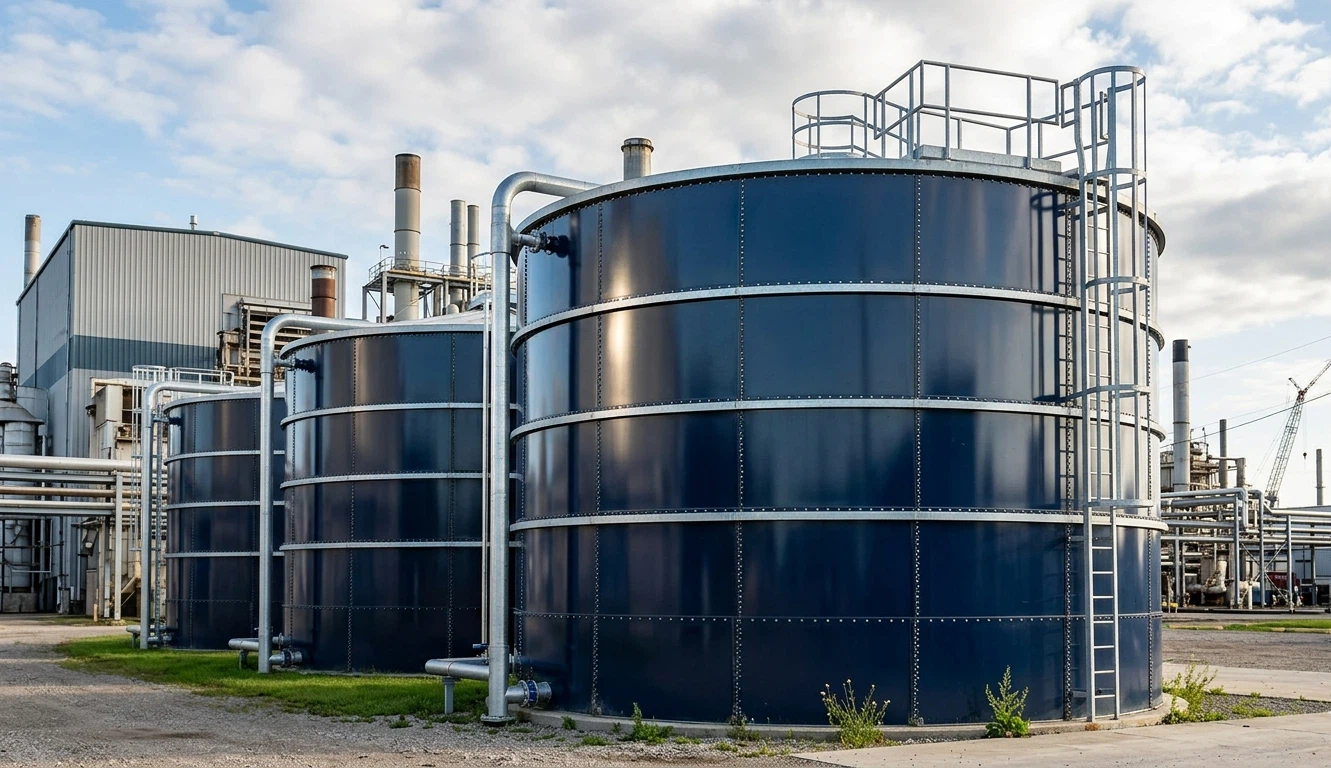
In the high-stakes environment of industrial fluid management, temperature fluctuations are more than just a minor inconvenience—they are a threat to operational continuity. Whether you are storing potable water, chemical reagents, or fire-suppression fluids, the integrity of your storage system is only as good as its thermal envelope. In 2026, the industry has moved beyond simple “wrapping” techniques toward integrated industrial tank insulation solutions that prioritize long-term durability over low initial costs.
Neglecting thermal management leads to two primary disasters: skyrocketing energy bills and the catastrophic failure of “frozen” infrastructure. For facilities operating in temperate or arctic climates, establishing a robust system for freeze protection is a non-negotiable safety requirement. This guide provides a deep-dive into the technical differences between Polyurethane and Mineral Wool, helping you determine the most efficient path for your facility.
Оглавление
Why Industrial Tank Insulation Prevents Process Failure
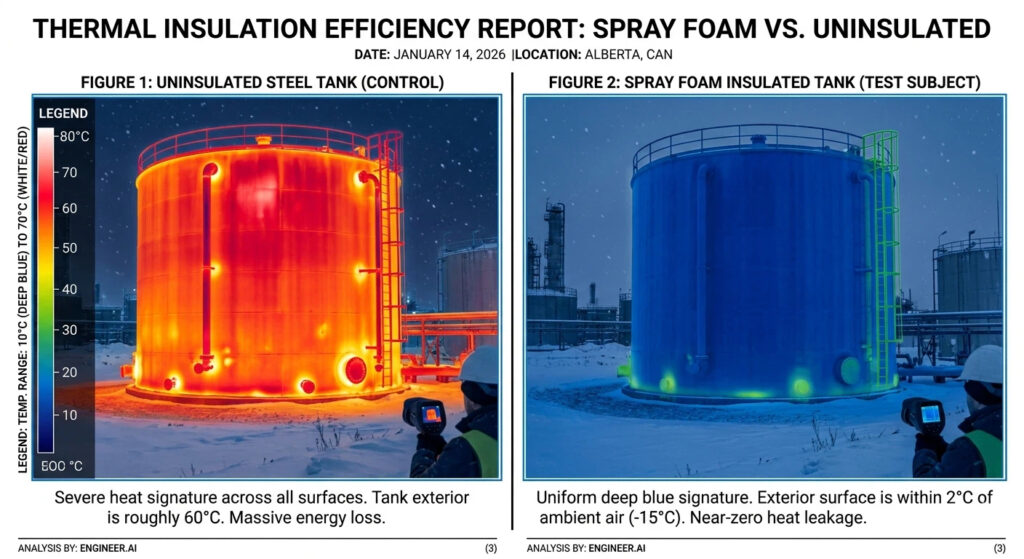
To understand why a tank loses heat, we must look at the mechanics of convection and conduction. An uninsulated steel tank acts as a massive heat sink, radiating energy into the atmosphere at an alarming rate. Effective industrial tank insulation works by creating a pressurized thermal barrier that minimizes the rate of heat transfer, keeping internal liquids within a safe “processing window.”
When designing a system for freeze protection, engineers must account for the “Static Hold Time.” This is the duration a tank can maintain its temperature above freezing during a power outage or heater failure. High-quality insulation significantly extends this window. According to the National Insulation Association (NIA), properly specified systems can reduce energy loss by over 90%, preventing the latent heat of water from dissipating into the cold night air.
Polyurethane Spray Foam vs. Mineral Wool Jackets
Choosing the right material for industrial tank insulation requires balancing R-value (thermal resistance), fire safety, and moisture management.
1.Rigid Closed-Cell Polyurethane (PU)
Polyurethane is widely considered the gold standard for cold-climate applications. It is usually applied as a spray-on foam that expands and bonds directly to the tank substrate.
- Thermal Efficiency: PU offers the highest R-value per inch of any common industrial material.
- Moisture Defense: Its closed-cell structure makes it inherently waterproof, preventing the “sponge effect” seen in fibrous materials.
- Seamless Application: By eliminating seams, it prevents air infiltration, which is a major cause of energy loss.
2.Mineral Wool (Rock Wool)
Mineral wool consists of spun volcanic rock fibers. It is typically installed as rigid boards or flexible blankets held in place by an outer metal cladding or “jacket.”
- Fire Performance: Mineral wool is non-combustible and can withstand temperatures exceeding 1,000°C, making it essential for high-heat industrial processes.
- Breathability: It allows the tank to “breathe,” which can be beneficial for specific chemical reactions that off-gas.
- The Risk: The primary drawback for industrial tank insulation is its vulnerability to moisture. If the outer cladding is breached, the wool absorbs water, leading to localized freezing and corrosion.
Best Methods to Insulate Above-Ground Steel Water Tanks
When managers ask about the best methods to insulate above-ground steel water tanks, the answer usually depends on the tank’s age and environmental exposure. For new installations, the “Sandwich Panel” approach is becoming increasingly popular. This involves pre-fabricated panels with a PU core and an aluminum exterior, which are bolted directly to the tank frame.
However, for retrofitting existing structures, the “Spray and Coat” method remains the most effective of the best methods to insulate above-ground steel water tanks. This process involves:
1.Surface Preparation: Sandblasting the steel to ensure a mechanical bond.
2.Foam Application: Spraying 2-3 inches of closed-cell foam to create a monolithic seal.
3.UV Topcoat: Applying a polyurea or elastomeric coating to protect the foam from sun degradation.
This method is particularly effective for freeze protection because it covers the “feet” or structural supports of the tank, which are often overlooked but act as major thermal bridges that pull heat out of the liquid.
Advanced Protection for Fiberglass Water Tank Systems
While steel is common, the industry is seeing a massive shift toward composite materials. A Fiberglass Water Tank offers a significant advantage: fiberglass itself has a much lower thermal conductivity than steel. This means that the industrial tank insulation layer doesn’t have to work as hard to maintain stable temperatures.
For those utilizing a Резервуар для воды из стекловолокна, the insulation can often be integrated into the tank wall during the filament winding process. This “factory-insulated” approach ensures there are no air gaps between the tank wall and the insulation, which is the number one cause of CUI (Corrosion Under Insulation) in steel systems. Using a Fiberglass Water Tank in highly corrosive or coastal environments provides a maintenance-free thermal solution that steel simply cannot match.
The Hidden Enemy of Industrial Tank Insulation
One of the most significant professional challenges in thermal management is Corrosion Under Insulation (CUI). This occurs when moisture becomes trapped between the insulation material and the tank wall. In steel tanks, this can lead to “pitting” that eventually causes the tank to leak or collapse.
By choosing closed-cell polyurethane, you eliminate the air gap where condensation forms. If you choose mineral wool, you must ensure that the outer metal jacket is inspected annually and that all rivets and seams are sealed with industrial-grade silicone.
Is High-Performance Insulation Worth the Cost?
In the current economic landscape of 2026, the ROI for industrial tank insulation is faster than ever. Rising energy costs mean that a system designed for maximum freeze protection can often pay for itself in under 24 months.
Consider a 100,000-gallon water tank in a northern climate. Without insulation, the immersion heaters might run 18 hours a day to prevent the surface from icing over. With 3 inches of spray foam, those same heaters may only cycle for 2 hours a day. Over a 10-year lifecycle, the savings in electricity and mechanical wear on the heaters far outweigh the initial capital expenditure of the insulation project.
Furthermore, many insurance providers now offer lower premiums for facilities that can prove their freeze protection systems meet certain R-value benchmarks, as this reduces the risk of massive water damage claims from burst tanks.
Closing Summary
Thermal management is no longer a “set it and forget it” task. As environmental standards become stricter and energy costs more volatile, the quality of your industrial tank insulation becomes a core component of your facility’s resilience.
By comparing the mechanical benefits of Polyurethane vs. Mineral Wool and implementing the best methods to insulate above-ground steel water tanks, you protect your assets from the silent destruction of the winter freeze. Whether you are upgrading an existing steel reservoir or investing in a state-of-the-art Резервуар для воды из стекловолокна, prioritize a seamless vapor barrier and high R-values to ensure your infrastructure remains operational for decades to come.
Часто задаваемые вопросы
What is the best R-value for industrial freeze protection?
For most temperate climates, an R-value of 14-20 is standard (about 2-3 inches of PU foam). In arctic conditions, R-30 or higher is required to prevent “ice-capping” on the liquid surface.
Can I use mineral wool for a tank that contains drinking water?
Yes, but the insulation must be on the exterior. It is one of the best methods to insulate above-ground steel water tanks for potable water because it does not affect the interior food-grade lining of the tank.
How long does spray foam industrial tank insulation last?
If the UV protective coating is maintained every 5–7 years, the underlying polyurethane foam can last 20–30 years without losing its thermal properties.
Is a Fiberglass Water Tank better for cold weather?
Yes. Because fiberglass is an insulator by nature, it retains heat better than steel. When combined with external industrial tank insulation, it offers the most energy-efficient storage solution currently available.