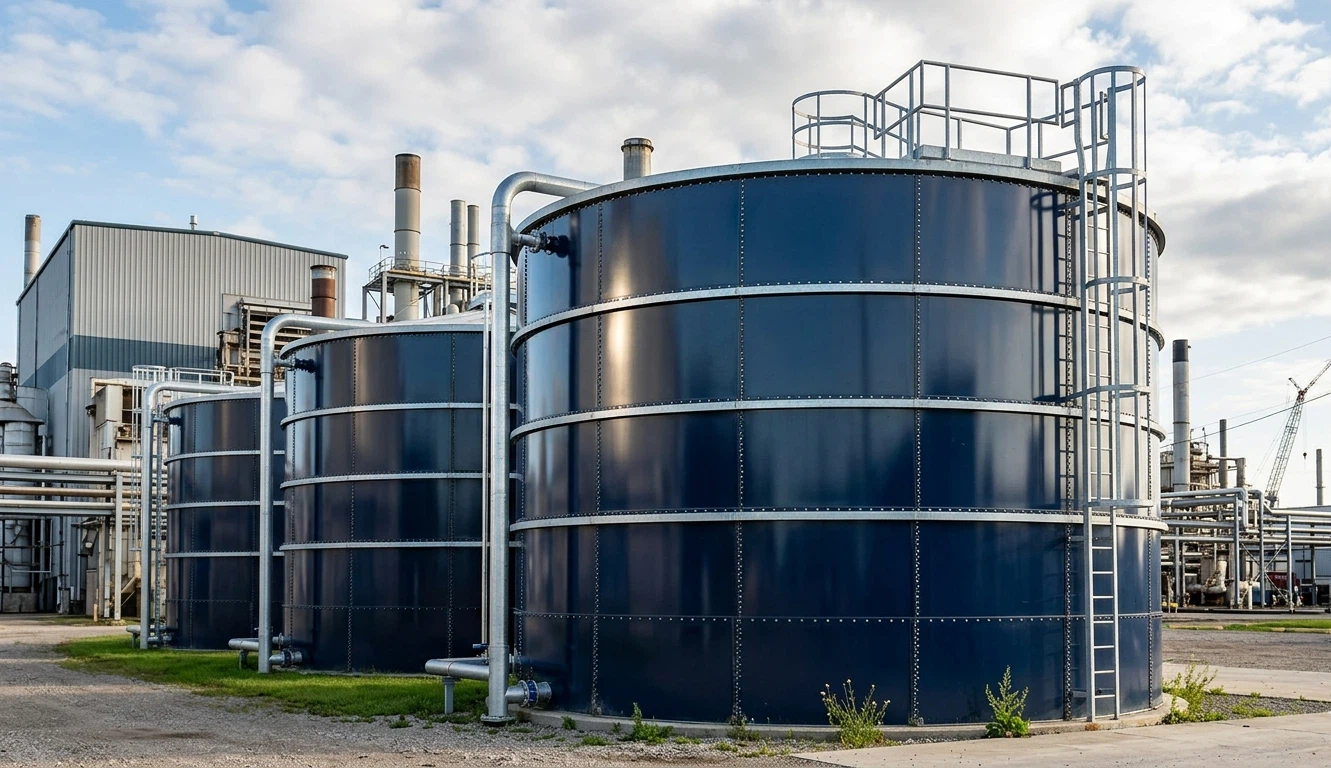
When the water temperature in your facility crosses the 60°C (140°F) threshold, standard liquid storage rules no longer apply. Chemical reaction rates double with every 10°C increase. If you pump 85°C process water into a standard carbon steel vessel with basic epoxy paint, the coating will blister, the rubber gaskets will melt, and the steel will begin to rust within months.
Specifying a high temperature industrial water tank requires engineering around three destructive forces: accelerated oxidation, thermal expansion mismatch, and seal degradation.
Here is exactly how to specify the shell, the lining, and the sealing components so your hot water storage tank survives industrial thermal cycling without catastrophic failure.
Оглавление
Why Do Standard Linings Fail in an Industrial Water Tank for Hot Water?
The primary killer of a hot water storage tank is not just the heat; it is the fluctuation of heat.
When a tank fills with near-boiling water and then empties, the steel shell expands and contracts. This is called thermal cycling. The problem arises because standard epoxy coatings and carbon steel have different Coefficients of Thermal Expansion (CTE).
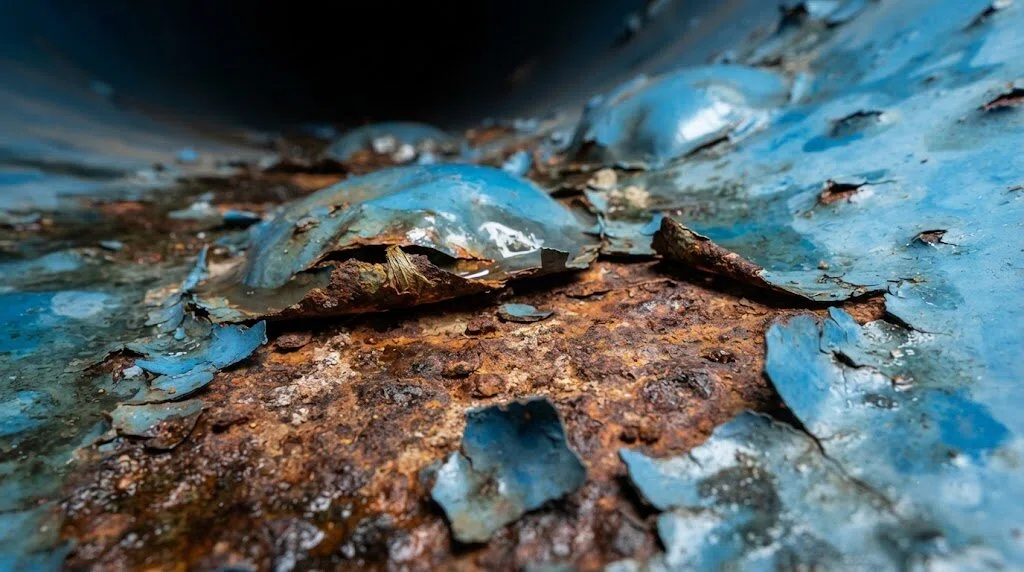
As the steel expands at one rate and the plastic-based epoxy expands at another, microscopic shear forces tear the bond between the two materials. The epoxy blisters, cracks, and peels off in sheets. Once the raw steel is exposed to hot, oxygenated water, corrosion accelerates rapidly. This rapid oxidation is explained by the Arrhenius equation, which dictates that heat drastically increases chemical reaction velocities.
Stopping this coating failure at the source is the single most critical step for industrial water tank leakage prevention.
Which High Temperature Water Storage Tank Material Survives Thermal Shock?
To bypass the peeling coating problem entirely, many engineers default to bare stainless steel.
Stainless steel grades 304 and 316L form a passive chromium oxide layer that naturally resists hot water corrosion without needing a separate painted lining. According to guidelines published by the British Stainless Steel Association on the selection of stainless steels for handling water, 316L is mandatory if your hot process water contains high chloride levels (above 50 ppm) to prevent stress corrosion cracking at elevated temperatures.
However, stainless steel requires a massive upfront capital expenditure. When evaluating your industrial water tank materials cost
, specifying a 30,000-gallon tank entirely in 316L might break the project budget. Therefore, identifying the exact chemical makeup of your process fluid is non-negotiable before you choose the right water storage tank based purely on metal grades.
Is an Enamel Water Tank Better Than Standard Epoxy?
If solid stainless steel is out of the budget, the engineering alternative is glass-fused-to-steel, commonly referred to as an enamel water tank.
Unlike epoxy, which is sprayed on and dried, enamel is a glass powder applied to specially prepared steel panels and fired in a furnace at over 850°C. At this temperature, the glass melts and chemically fuses with the steel.
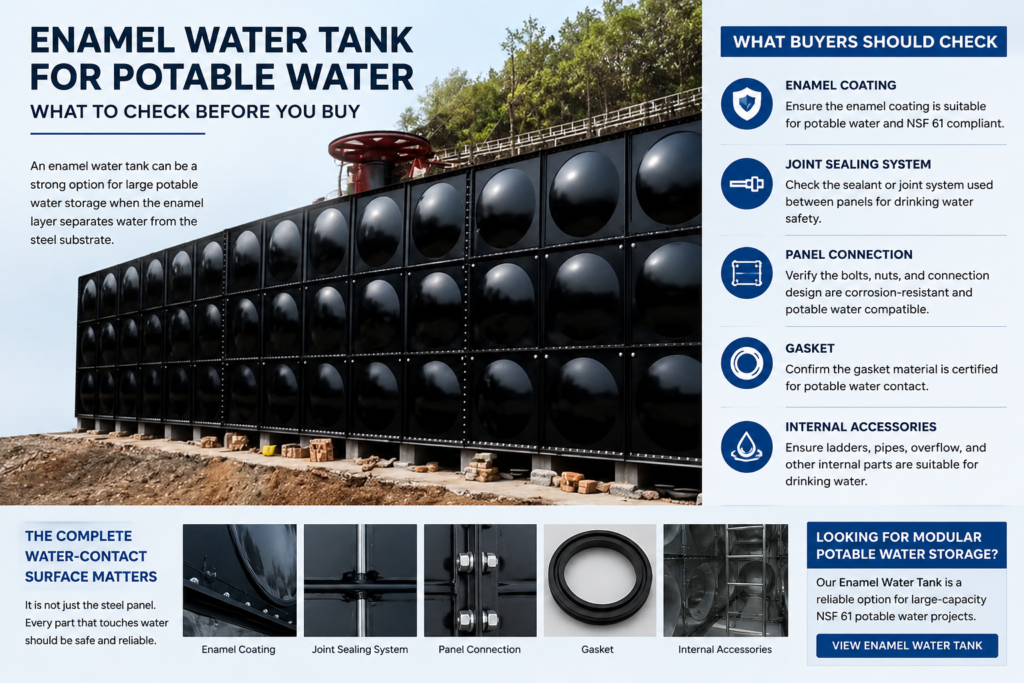
Because the enamel becomes an inorganic part of the steel substrate, its thermal expansion coefficient mirrors the steel perfectly. When the tank expands under a 90°C water load, the glass lining bends and expands with it rather than cracking. As discussed in maintenance teardowns by field technicians on commercial hot water tank failure threads on Reddit, tanks that rely on painted linings in boiler setups often fail at the seams within three years, whereas glass-lined vessels maintain internal integrity for decades.
How Do You Prevent Flange and Gasket Melting?
A tank lining is useless if the bolted joints leak. Tank seal aging is the most common failure point in high-temperature liquid storage.
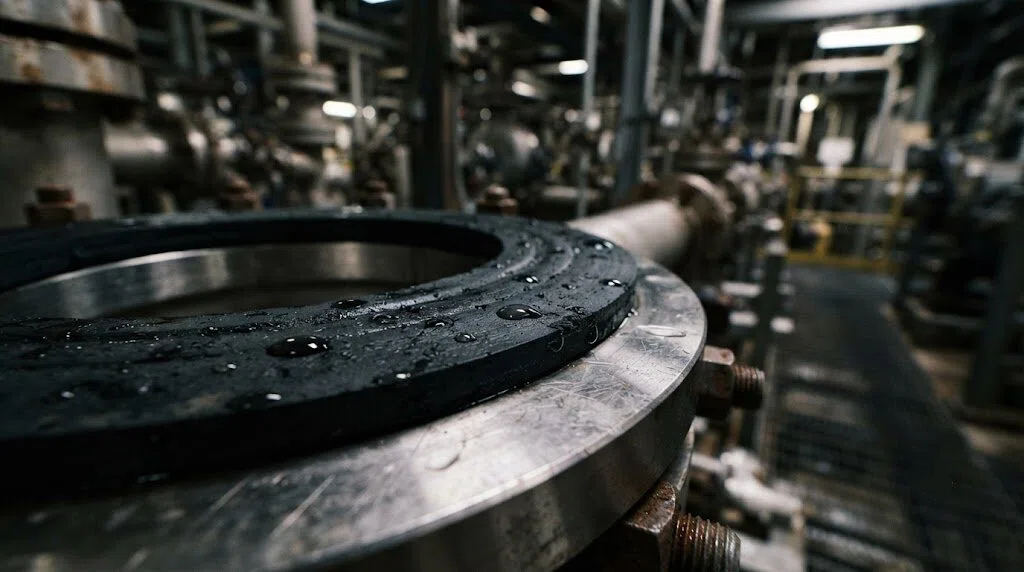
Standard Buna-N (Nitrile) rubber gaskets, which are shipped with most off-the-shelf cold water tanks, begin to harden and lose elasticity at around 80°C (176°F). Once the rubber hardens, it cannot compensate for the shifting of the steel panels during thermal expansion, causing immediate flange leaks.
To handle high-temperature process water, you must specify the correct elastomer:
- EPDM (Ethylene Propylene Diene Monomer): The absolute minimum standard for hot water. EPDM handles continuous temperatures up to 120°C (250°F) and resists degradation from steam.
- Viton (FKM): Required if your hot water contains harsh chemicals, hydrocarbons, or oils.
A technical breakdown of EPDM rubber properties and temperature limits by fluid sealing specialists confirms that EPDM maintains its memory (rebound elasticity) in boiling water far better than standard commercial rubbers. Always check the gasket spec sheet; do not assume the manufacturer included high-temp seals by default.
What Happens During Extreme Thermal Cycling in Commercial Heating?
The most aggressive environment for these vessels is in commercial boiler systems. A tank might sit at 40°C overnight and suddenly receive a massive influx of 95°C water during morning startup.
This drastic temperature delta causes violent expansion across the tank shell. For industrial water tanks for HVAC systems, the design must account for “thermal stratification”—where hot water sits at the top and cold water at the bottom, causing the steel cylinder to expand unevenly (creating a slight barrel shape).
If the tank is bolted rather than welded, the overlapping steel panels will slide against each other microscopically. If your tank lining is brittle epoxy, the overlapping joints will shear the paint off immediately. This is exactly why flexible mastic sealants and fused enamel or bare stainless steel are mandatory in heavy HVAC applications.
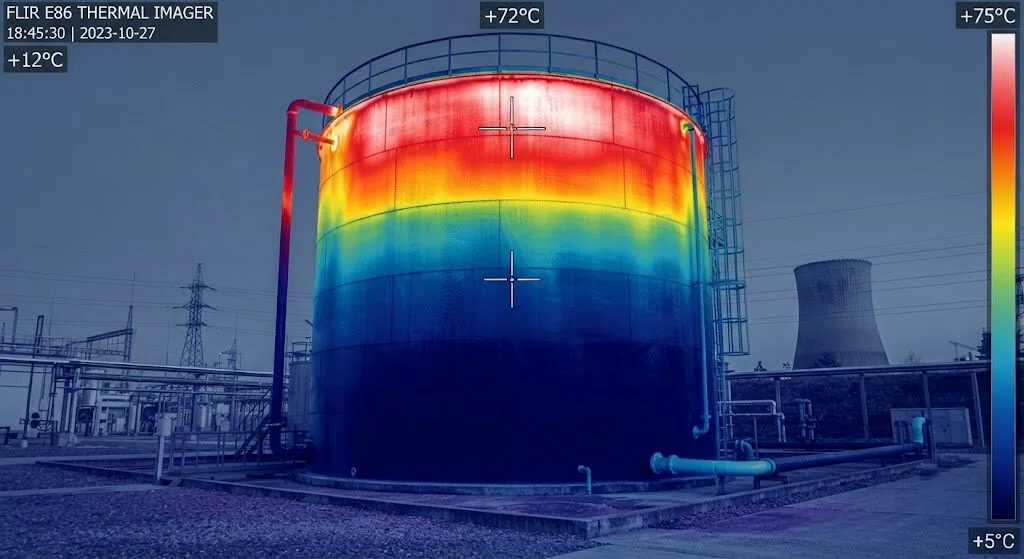
Procuring equipment for severe environments leaves no room for generic materials. A true high temperature industrial water tank relies on matching the thermal expansion of the shell to the lining and ensuring every bolt and gasket is rated for the absolute maximum temperature spike of your boiler system, not just the operating average. Verify your chloride levels, specify EPDM seals, and demand glass-fused-to-steel or stainless construction to eliminate downtime caused by coating failures.
Часто задаваемые вопросы
Can fiberglass (FRP) be used as a high temperature water storage tank material?
Yes, but only if manufactured with specific high-temperature resins. Standard polyester resins will deform and soften above 60°C. You must specify Novolac epoxy vinyl ester resins, which, according to the American Composites Manufacturers Association (ACMA), can maintain structural integrity in continuous liquid environments exceeding 100°C.
How thick should the insulation be for a 90°C water tank?
For industrial applications maintaining 90°C, a minimum of 50mm to 100mm (2 to 4 inches) of closed-cell polyurethane foam or mineral wool is required. The outer cladding should be an aluminum or galvanized steel jacket to protect the insulation from moisture ingress, which severely degrades its thermal resistance (R-value).
Why is my hot water tank rusting only at the water line?
The air-water interface inside the tank is where oxygen concentration is highest. In a hot environment, this highly oxygenated zone accelerates corrosion exponentially compared to the fully submerged sections of the tank. This makes specifying a flawless tank lining at the upper third of the vessel critical.