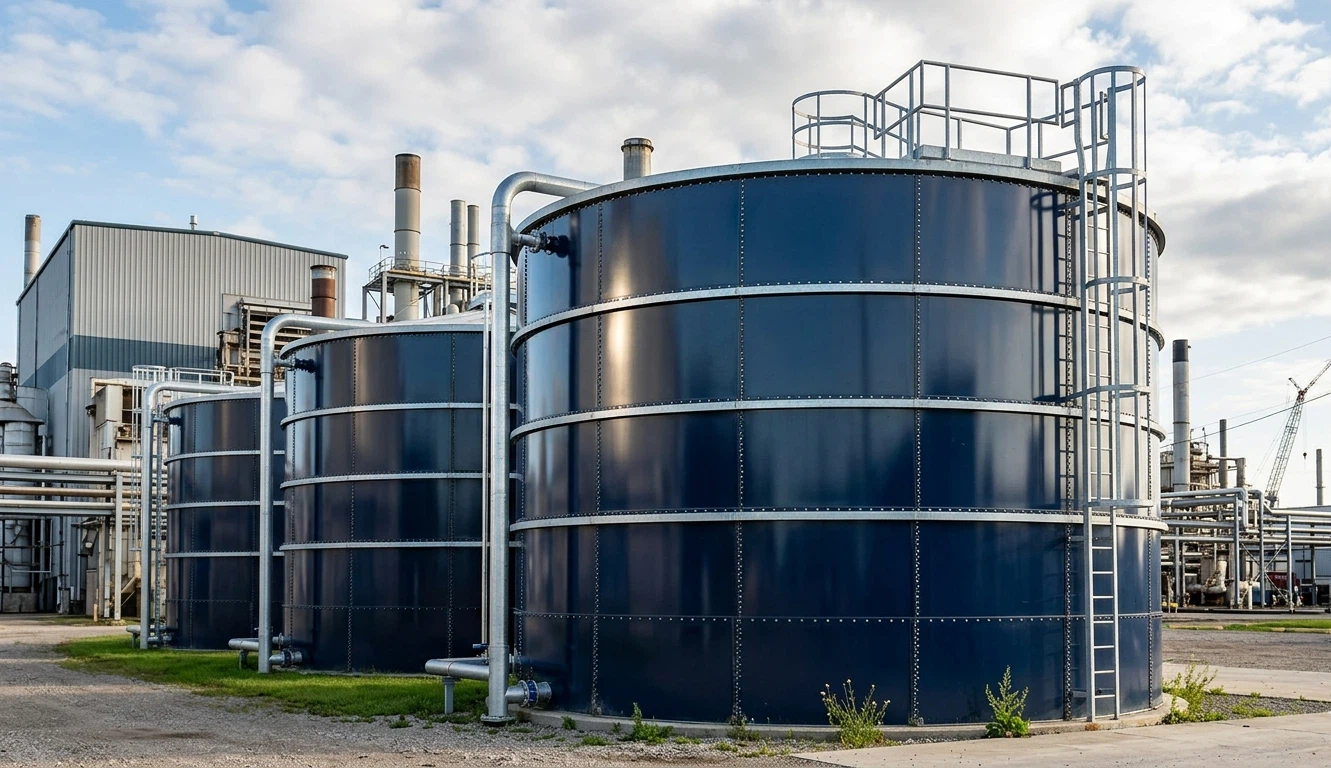
Shipping large water tanks overseas is not only a product-size problem. It is a landed-cost problem. A tank may have a competitive factory price, but once freight, container space, packaging, unloading, inland transport, and site handling are included, the final project cost can change quickly.
That is why flat-pack water tanks are becoming more relevant for international projects. Instead of shipping one large welded tank as a bulky finished unit, modular tank systems can be packed as panels, structural parts, gaskets, bolts, and accessories. These components are shipped compactly and assembled on site.
For buyers, the real value is not just “smaller packaging.” It is better container utilization, easier project-site delivery, and a more predictable cost structure for industrial, municipal, agricultural, and commercial water storage projects.
Оглавление
Why Shipping Cost Matters in Water Tank Procurement
Water tanks are often large-volume products, and volume is exactly what international freight charges punish. A welded or fully assembled tank can take up significant container space even when the actual material weight is not extreme.
UNCTAD’s Review of Maritime Transport 2024 reported that freight rates surged in 2024 due to rerouting, port congestion, and rising operating costs. For buyers importing bulky products, this makes shipping efficiency a direct procurement issue, not a secondary detail.
A purchasing team may compare two water tank quotations and choose the lower unit price. But if one tank ships as oversized cargo and another ships in compact modular panels, the final landed cost may be very different.
Buyer Insight: For water storage projects, compare cost per installed cubic meter—not only cost per tank. Freight, unloading, foundation conditions, installation labor, and maintenance access can all affect the real project cost.
What Makes a Water Tank Suitable for Flat-Pack Shipping?
Not every water tank is suitable for flat-pack logistics. The design must be modular from the beginning.
A flat-pack water tank usually depends on several design features:
- sectional panels
- bolted or assembled structure
- gasket or sealant system
- standardized accessories
- compact support frames
- protective packing for panels and coatings
- clear installation drawings
- site assembly capability
The key is that the tank must remain structurally reliable after assembly. A compact shipping format is only valuable if the final installed tank still performs safely in real water storage conditions.
For example, эмалированные резервуары для воды, stainless steel sectional tanks, galvanized panel tanks, and some GRP/FRP tanks can often be designed for modular transport. The panels can be stacked and protected, while bolts, gaskets, flanges, ladders, internal supports, and installation tools are packed separately.
This is different from simply disassembling a tank. A true modular water tank system is engineered so that shipping, installation, sealing, maintenance, and long-term performance work together.

Flat Pack Water Tanks vs Welded Tanks
Welded tanks and flat-pack water tanks both have valid applications. The better choice depends on project size, installation conditions, shipping distance, and site requirements.
A welded tank is often manufactured as a single body or large pre-fabricated section. It can be suitable for local projects, smaller volumes, or applications where factory welding and quick placement are preferred. But for export shipments, the large physical volume can create high freight cost and handling challenges.
A flat-pack water tank is shipped in components. The tank is assembled at the project site using panels, seals, bolts, and structural supports. This format is especially useful when the project is overseas, the tank capacity is large, or the site is difficult to access with oversized cargo.
The main difference is logistics flexibility.
Welded tanks may reduce site assembly work, but they often increase shipping volume. Flat-pack tanks require proper installation, but they usually improve container loading and project delivery efficiency.

How Modular Water Tank Design Reduces Global Shipping Costs
The biggest cost advantage comes from container utilization. Flat panels can often be stacked more efficiently than a round or rectangular assembled tank. Accessories can be grouped in smaller cartons or crates. Protective packaging can be designed around panel surfaces instead of empty internal tank space.
This can reduce:
- freight cost per tank
- freight cost per cubic meter of storage capacity
- container quantity
- warehouse footprint
- oversized cargo risk
- inland transport difficulty
- unloading and handling complexity
The World Bank’s Logistics Performance Index measures the speed and connectivity of international supply chains. For water tank buyers, this reinforces a practical point: a supplier’s ability to package, document, and ship efficiently can affect delivery reliability as much as the product itself.
A modular design also makes replacement parts easier to manage. If a panel, gasket, bolt set, or accessory is damaged or needs replacement later, it is much easier to ship a component than a complete tank body.
Project Scenarios Where Flat-Pack Tanks Make the Most Sense
Flat-pack water tanks are especially valuable in export-oriented and project-based applications.
In municipal water storage, large capacities are often required, and project sites may need tanks shipped in stages. Modular panels allow buyers to plan container loads and site assembly more flexibly.
In industrial water treatment, tanks may be used for process water, treated water, wastewater buffering, or fire reserve water. Compact shipping can reduce early project logistics pressure before the plant is fully operational.
In potable water projects, buyers also need to check water-contact materials, coatings, gaskets, and local approval requirements. Flat-pack design can help shipping, but the tank must still meet hygiene, sealing, and maintenance expectations.
In agricultural irrigation, remote farms or rural water projects often face limited road access. A modular tank system can be easier to move inland than a large pre-assembled tank.
In overseas construction projects, equipment, materials, and site facilities often arrive in phases. Flat-pack water tanks fit this environment because they can be shipped, stored, and assembled when the foundation and installation crew are ready.

How Buyers Should Evaluate a Flat Pack Water Tank
A good flat-pack design should reduce shipping cost without creating installation risk.
Before ordering, buyers should check these points:
1.Panel material:Confirm whether the tank uses enamel-coated steel, stainless steel, galvanized steel, GRP/FRP, or another material.
2.Coating and surface protection:For enamel tanks, check coating quality and panel protection during packing. For stainless steel tanks, check surface finish and handling protection.
3.Gasket and sealant system:The sealing system is critical because the tank is assembled on site. Ask about gasket material, compression method, and installation requirements.
4.Bolt connection design:Bolted joints must support long-term water pressure and installation accuracy.
5.Packaging method:Ask how panels, accessories, bolts, gaskets, and fragile surfaces are separated and protected.
6.Container loading plan:A professional supplier should be able to estimate container loading quantity and packing layout.
7.Installation documentation:Clear drawings, manuals, videos, and part labels reduce assembly errors.
8.After-sales support:Large tanks need spare parts, installation guidance, and maintenance advice.
For export packaging reliability, ASTM’s D4169 standard practice provides a guide for evaluating shipping units using test methods that represent real distribution conditions. ISTA’s test procedures also support package-performance thinking for transport and handling environments.
Pro Tip: Ask for both a product quotation and a shipping quotation. A tank that looks cheaper at the factory may not be cheaper after container loading, inland delivery, installation, and spare-part support are included.
Packaging Protection Still Matters
Flat-pack shipping does not mean weak packaging. In fact, panel tanks often need careful protection because scratches, bent corners, damaged coatings, or missing accessories can delay installation.
For enamel water tanks, panel surfaces should be protected to prevent coating damage during transport. For stainless steel tanks, surface scratches and deformation should be avoided. For gasketed systems, rubber or sealing materials should be packed away from sharp edges, oil, heat, and compression damage.
A strong packing plan should include:
- panel separation
- corner protection
- moisture control where needed
- labeled hardware kits
- accessory checklists
- clear crate or carton numbering
- loading diagrams
- spare fasteners
The U.S. EPA’s page on resources, waste, and emissions explains that sustainable materials management focuses on using resources efficiently across the life cycle. In tank export projects, compact packing, reduced damage, and better loading efficiency can support both cost control and material efficiency.
Future Trend
Flat pack water tanks will likely become more important as global buyers focus on landed cost, installation efficiency, and lifecycle value.
The next stage is not only flat packing. It is smarter modular design. Buyers will expect better panel standardization, clearer installation videos, digital packing lists, QR-code part identification, improved gasket systems, and more reliable container-loading documentation.
Suppliers who can support both engineering and logistics will have an advantage. A water tank is not only a storage product. For global projects, it is also a shipping unit, an installation system, and a long-term maintenance asset.
The most competitive suppliers will be able to answer three questions clearly:
- How much storage capacity fits into one container?
- How easy is the tank to assemble correctly on site?
- How well are the panels, seals, and accessories protected during shipment?
Заключение
Flat pack water tanks are not just a packaging idea. They are a practical export strategy for reducing global shipping costs while keeping water storage performance under control.
For water tank buyers, the real decision should be based on total project cost. A modular tank can reduce freight volume, improve container loading, simplify inland transport, and make spare parts easier to manage. But the design must still protect coatings, maintain sealing quality, and support correct on-site assembly.
If your project involves international shipping, large storage capacity, or difficult site access, flat-pack water tanks are worth serious consideration. The right supplier should help you compare tank type, panel material, packing method, container loading, installation requirements, and long-term maintenance before the order is finalized.
Часто задаваемые вопросы
What is a flat-pack water tank?
A flat-pack water tank is a modular tank shipped as panels, bolts, gaskets, supports, and accessories, then assembled on site.
Do flat-pack water tanks reduce shipping costs?
Yes, when modular panels improve container loading and reduce wasted shipping volume. The final saving depends on tank size, packing method, destination, and installation cost.
Are flat-pack tanks weaker than welded tanks?
Not necessarily. A properly engineered modular tank can perform reliably when panels, joints, gaskets, and supports are designed and installed correctly.
Which water tanks are suitable for flat-pack shipping?
Enamel water tanks, stainless steel sectional tanks, galvanized panel tanks, and some GRP/FRP tanks are commonly suitable for modular packing and export shipping.
What should buyers check before ordering?
Check material, coating, gasket system, bolt design, container loading plan, packaging protection, installation manual, and after-sales support.
Are flat-pack water tanks good for overseas projects?
Yes. They are often suitable for overseas municipal, industrial, agricultural, fire water, and construction projects where shipping volume and site handling matter.