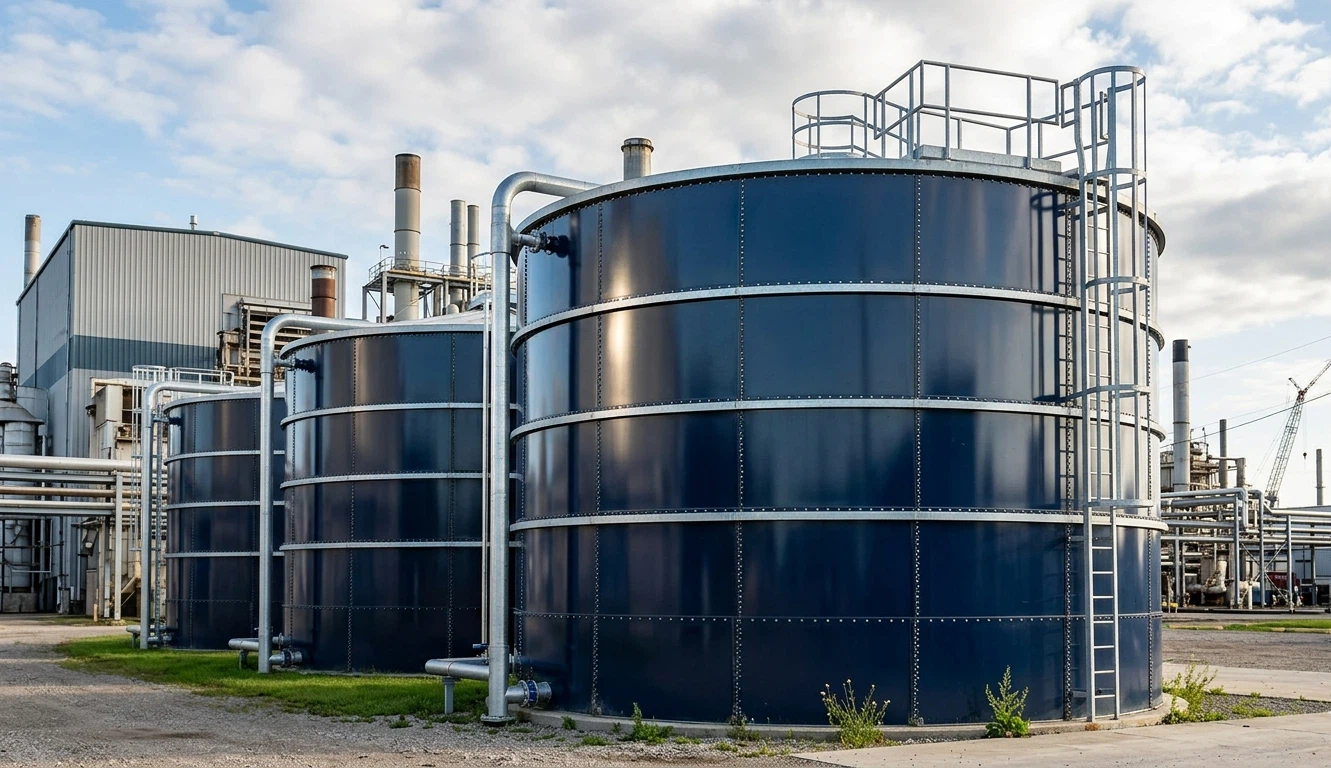
A Potable Water Tank is not just a container holding water. For drinking water projects, the wrong material, coating, gasket, or vent design can create long-term hygiene and compliance risks. This guide helps buyers compare enamel and stainless steel tanks, understand NSF 61 certification requirements, and avoid decisions based solely on price or volume.
Оглавление
Why Potable Water Tank material selection affects more than capacity
A Potable Water Tank must protect water quality, not just store a specific volume. Tank body, internal surfaces, gaskets, sealants, fittings, vents, manholes, and maintenance access are all critical.
The World Health Organization explains in its Guidelines for Drinking-water Quality that safe drinking water is managed through risk control from source to consumer. Storage tanks are part of this chain, serving as water-quality control points rather than passive containers.
Before approval, ask: Will this Potable Water Tank remain safe after installation, cleaning, weather exposure, water chemistry changes, and years of operation?
Enamel water tanks for potable water: where they fit best
Enamel tanks, also known as glass-fused-to-steel or glass-lined steel tanks, combine steel panel strength with a corrosion-resistant enamel layer. They are popular for municipal, industrial, agricultural, and backup water projects because panels can be shipped modularly and assembled onsite.
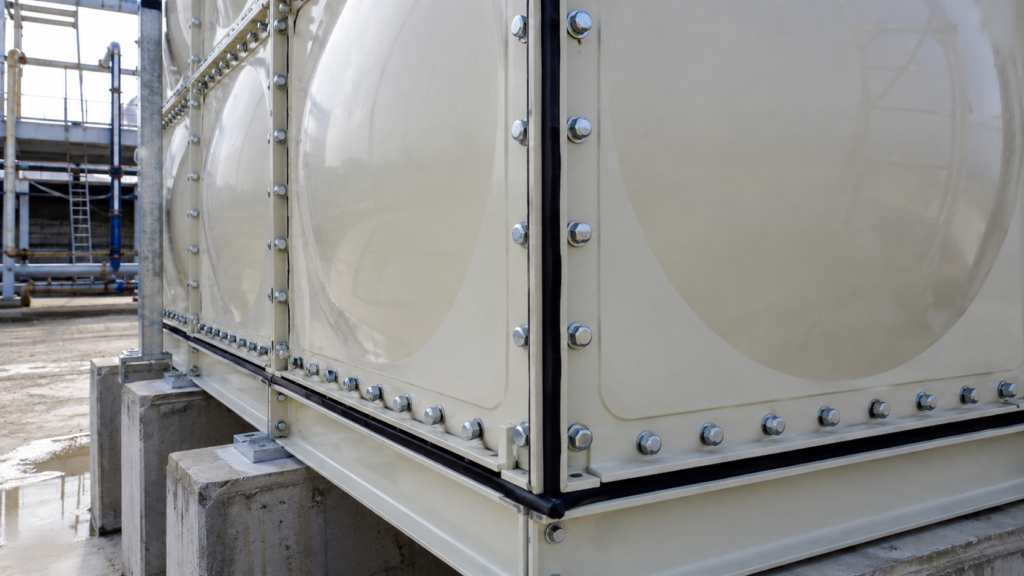
Despite the coating, buyers must inspect panel edges, bolt areas, gaskets, sealants, roof details, and internal accessories. A strong tank shell alone does not guarantee safe potable water if joints and fittings are not suitable.
When to choose enamel: large volume, modular construction, corrosion resistance, and practical installation in remote or space-limited sites.
Stainless steel tanks for potable water: why hygiene buyers prefer them
Stainless steel potable water tanks excel where hygiene, cleanability, and visible inspection matter. They fit hospitals, schools, commercial buildings, food facilities, and high-quality backup water systems.

Buyers should verify the grade (304/316), surface finish, welding quality, passivation, gasket material, and water-contact parts compliance. Stainless steel may appear inherently safe, but poorly executed welds, rough surfaces, or incompatible seals create risk.
Эмаль против резервуар для воды из нержавеющей стали for potable water
The best Potable Water Tank material depends on project conditions.
| Buyer question | Enamel water tank | Stainless steel water tank |
|---|---|---|
| Best fit | Large-capacity modular storage | Hygiene-sensitive facilities |
| Main strength | Steel structure plus corrosion-resistant coating | Cleanability and visible inspection |
| Key risk | Coating damage, joint sealing, gasket compatibility | Weld quality, surface finish, chloride corrosion |
| Installation style | Bolted panel assembly | Welded or panel assembly |
| Inspection focus | Coating, bolts, seams, roof, gaskets | Welds, passivation, fittings, gaskets |
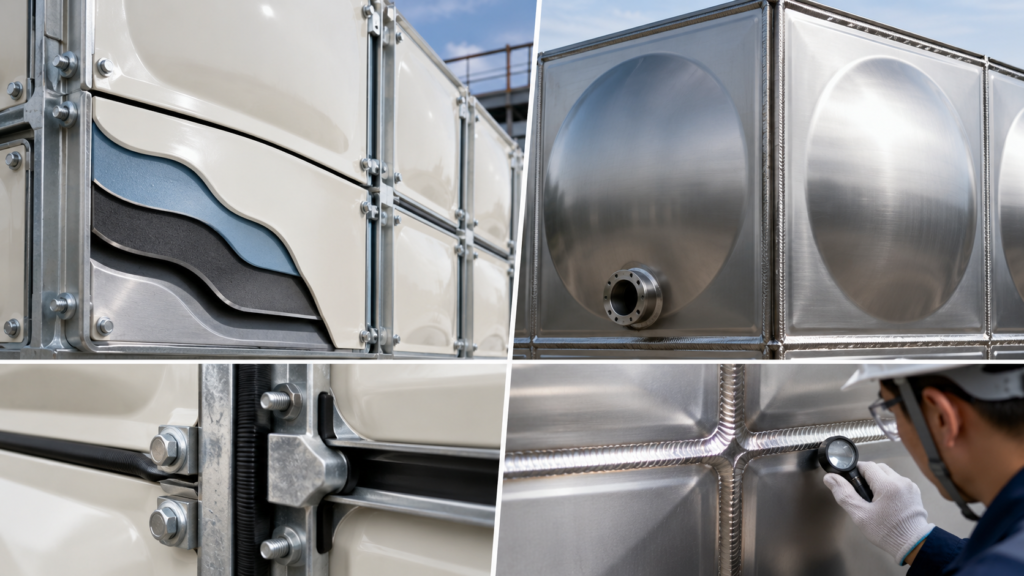
Smarter decisions consider water quality, site conditions, certification requirements, maintenance ability, and budget rather than “enamel or stainless steel.”
How NSF 61 changes the way buyers approve a Potable Water Tank
For enamel tanks, ensure internal coating, gaskets, sealants, bolt protection, and fittings are NSF 61 covered. For stainless steel tanks, check the full water-contact path, including seals, plastic parts, and valves.
Practical NSF 61 checks:
- Match certificate to exact product/component.
- Verify certification covers potable water contact.
- Confirm manufacturer or listed product in NSF Certified Drinking Water System Components database.
NSF 61 should not be confused with NSF 372, which focuses on lead content. Correctly reviewing the certification ensures all components meet drinking water safety standards.
For buyers who need a full certification review, our NSF 61 Water Tank Guide explains how to verify certification scope, water-contact components, and approval documents before purchasing a drinking water storage tank.
What to check before buying a potable water tank
Before signing a purchase order, review the complete water-contact path.
- For enamel: coating thickness, continuity, panel edges, bolt sealing, roof design, internal supports.
- For stainless steel: steel grade, welding method, surface finish, passivation, fitting materials.
For both tank types, check:
- Manhole cover and access hatch sealing
- Screened vents and overflow protection
- Drain design for cleaning
- Inlet/outlet positioning
- Gasket/sealant compatibility
- Cleaning and disinfection procedure
- Water sample testing
The CDC emphasizes safe emergency water storage, highlighting that all water-contact components matter.
Maintenance decides whether the tank stays safe
Poor maintenance can turn a compliant Potable Water Tank into a contamination risk. Sediment, loose covers, damaged screens, standing water, biological growth, and unclean access points compromise water safety.
Singapore’s PUB Water Storage Tanks guide highlights inspection, cleaning, disinfection, certification, and sample testing requirements.
Common approval mistakes
- Buying based only on capacity and price.
- Accepting “food grade” without documentation.
- Ignoring gaskets, sealants, and fittings.
- Treating stainless steel as automatically safe.
- Treating enamel coating as indestructible.
- Skipping post-installation water sample testing.
- Ignoring maintenance access in design.
Quick buyer checklist before project approval
- Does material match water chemistry?
- Is the tank suitable for potable water?
- Are coatings, gaskets, sealants, fittings documented?
- Is the certification scope clear?
- Can the tank be inspected and cleaned?
- Are vents, overflow, drains, access hatches protected?
- Is post-installation cleaning and testing planned?
- Are spare parts available for long-term maintenance?
Final thoughts
A Potable Water Tank should be selected through material review, NSF 61 certification verification, installation planning, and maintenance assessment. Enamel tanks suit large modular projects; stainless steel is ideal for hygiene-sensitive sites. Knowing what to check before approval ensures the tank is a safe, reliable part of the drinking water system.
Часто задаваемые вопросы
Is an enamel water tank safe for drinking water?
Yes, if coating, gaskets, sealants, fittings, and installation process comply with potable water standards.
Is stainless steel always better than enamel?
Not always. Stainless steel is hygienic, enamel may be better for large modular storage. Choice depends on project conditions.
Does every tank require NSF 61?
Depends on region/project. U.S. and Canada often require NSF/ANSI/CAN 61 for drinking water components.
How often should tanks be cleaned?
Frequency depends on rules, water quality, usage, and risk; schedule inspection, cleaning, and testing regularly.