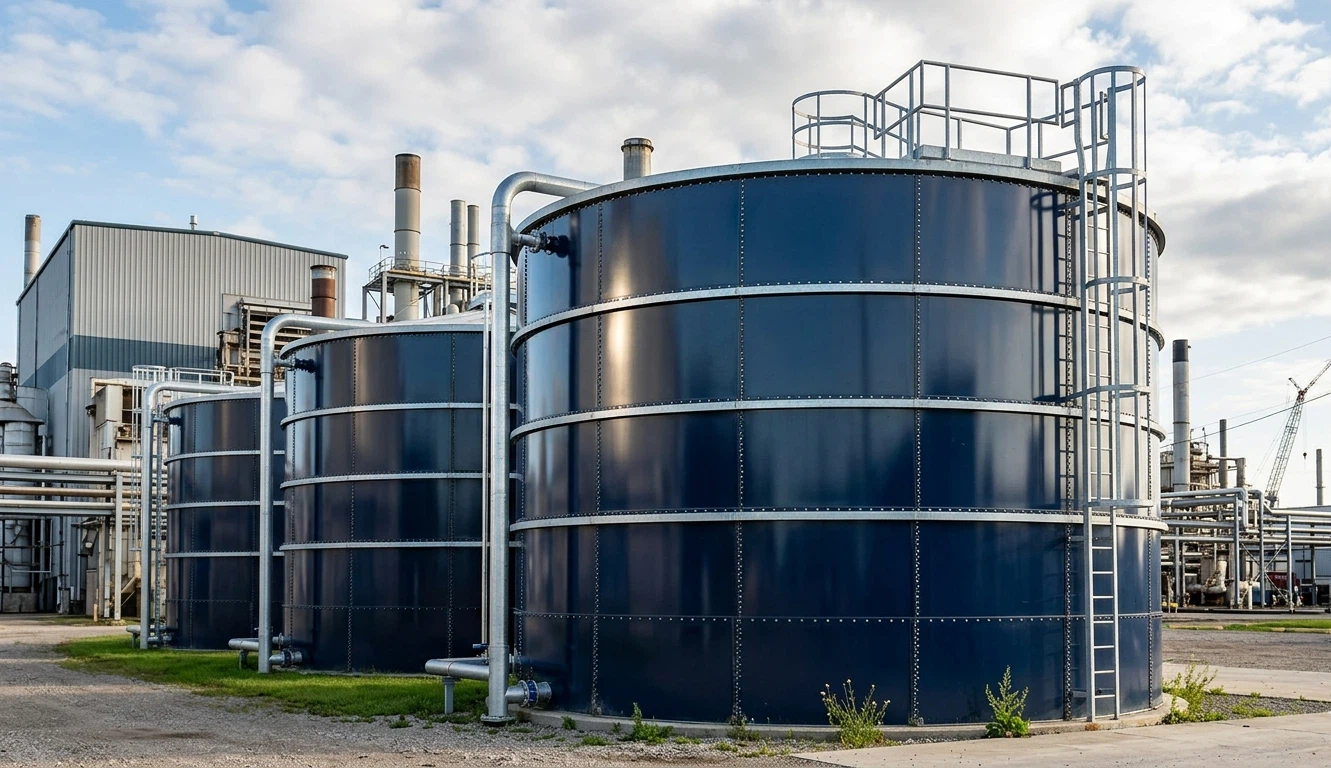
Managing an industrial steam system requires precise control over temperature, pressure, and water chemistry. The central hub for this thermal and chemical control is the boiler feed water tank.
It acts as the primary thermal buffer between the condensate return line and the boiler itself. Neglecting its structural design, elevation, or material selection inevitably leads to pump cavitation, severe dissolved oxygen corrosion, and massive energy waste across the plant.
This guide breaks down the engineering principles behind thermal storage, precise sizing calculations, and the critical material differences you need to know before upgrading your facility.
Оглавление
What is Boiler Feed Water Tank: Beyond Simple Storage
Facility managers frequently ask, what is boiler feed water tank exactly doing besides acting as a passive holding vessel? The reality is that this component is dynamic, not static.
It is the critical junction where cold makeup water meets high-temperature condensate return. This continuous mixing process is the absolute foundation of plant thermal storage.
By holding a reserve of water at elevated temperatures, the system drastically reduces the thermal shock exerted on the boiler’s steel components. Pumping cold water directly into a fired boiler causes severe contraction, which leads to tube sheet leaks and structural fatigue.
Furthermore, this vessel handles deaerator tank basics. Heating the water physically drives off dissolved oxygen and carbon dioxide gases. If these gases are pumped into the boiler, they cause rapid localized pitting corrosion.
According to the U.S. Department of Energy (DOE) industrial steam guidelines, effective feedwater management and heating can improve overall boiler efficiency by 1% for every 10°F rise in feedwater temperature. You can review the underlying thermal mathematics via the authoritative DOE Advanced Manufacturing Office Steam Systems.
Boiler Feed Water Tank Installation: Preventing Pump Cavitation
A poor boiler feed water tank installation guarantees premature feed pump failure. When handling near-boiling water, hydraulic physics work heavily against you.
The Net Positive Suction Head (NPSH) becomes the most critical engineering factor on the floor. Water near its boiling point will flash into steam if the pressure drops even slightly. If the vessel is not elevated sufficiently above the feed pumps, this pressure drop occurs right at the pump inlet.
This instantly creates cavitation. Steam bubbles implode violently against the pump impeller, stripping away metal and destroying the mechanical internals within months.
Standard industrial practice dictates elevating the vessel at least 15 to 20 feet above the pump suction centerline to provide adequate static head pressure. Furthermore, the structural supports must account for the dynamic operating weight of the vessel when fully flooded.
Seismic constraints and vibration isolation pads should be incorporated to protect the piping joints from mechanical stress. For comprehensive structural protocols, piping alignment tips, and base preparation, refer to our complete industrial water tank installation guide.
Sizing Enamel Steel Tanks for Boiler Feed Water
Accurate volume calculations dictate system stability. Sizing enamel steel tanks for boiler feed water requires determining your boiler’s maximum steaming rate and mapping out your condensate return percentage.
Industry standard engineering suggests a capacity that holds 45 to 60 minutes of feedwater at peak load. If the vessel is sized too small, sudden steam demands will drain the reserve rapidly. This starves the boiler and triggers disruptive low-water safety shutdowns.
Conversely, if the vessel is oversized, you waste massive amounts of burner fuel continuously maintaining the temperature of unnecessary excess water volume.
Accurate sizing also provides enough buffer time for operators to react to makeup water supply failures. A well-sized system acts as an insurance policy against unexpected municipal water pressure drops.
Getting this calculation right is the absolute foundation of energy efficiency in boiler feed water systems. Choosing the optimal boiler feed water tank capacity requires balancing peak load demands with available physical footprint to ensure burners fire smoothly rather than rapidly cycling on and off.
Feedwater Preheating & Thermal Efficiency
Introducing untreated, cold makeup water directly into the loop is an operational mistake. Feedwater preheating is mandatory for extending equipment lifespan and cutting heavy fuel costs.
Most modern industrial layouts utilize boiler feed tank steam injection preheating. A specialized sparge pipe is submerged near the bottom of the vessel, injecting low-pressure steam directly into the water volume.
This direct-contact heating elevates the temperature rapidly and violently strips out the remaining oxygen. This mechanical stripping process drastically reduces the need for expensive chemical oxygen scavengers, like sodium sulfite or hydrazine.
Lowering chemical consumption directly impacts the plant’s operational expenditure (OPEX) and reduces total dissolved solids (TDS) in the boiler. It establishes a highly stable thermal storage baseline before the water ever reaches the high-pressure feed pump, ensuring the boiler receives water that is already thermally pre-conditioned.
Enamel vs Stainless Steel for High Temperature Water Tanks
High temperatures, fluctuating dissolved oxygen levels, and continuous chemical dosing create a highly aggressive internal environment.
When evaluating Enamel vs Stainless steel for high temperature water tanks, plant engineers must look closely at long-term corrosion resistance. It is crucial to avoid standard bare carbon steel, as the rapid oxygen exchange will cause severe oxidation within weeks.
Corrosion resistance in hot water storage dictates the lifecycle costs of the entire mechanical room. If the vessel rusts, that iron oxide is pumped directly into the boiler, causing devastating insulating scale on the fire tubes.
An industrial Эмалированный резервуар для воды is an exceptionally cost-effective and resilient solution. The high-temperature glass-fused-to-steel firing process creates an impermeable, inert barrier. It handles extreme thermal cycling and high-chloride makeup water without the risk of stress corrosion cracking.
Alternatively, a heavy-duty Резервуар для воды из нержавеющей стали (typically manufactured from 316L or duplex alloys) offers unmatched durability and cleanability. This is the preferred specification for high-purity steam applications, such as pharmaceutical manufacturing or food processing plants.
Both premium material choices ensure the boiler feed water tank remains free of rust, pitting, and structural degradation throughout its operational lifecycle.

Proactive Boiler Feed Water Tank Maintenance
Even the highest-grade metallurgical materials require routine operational inspection.
Proper boiler feed water tank maintenance prevents catastrophic system shutdowns and extends the life of downstream equipment.
Operators must schedule annual interior inspections to physically check for chemical scale buildup at the waterline or coating degradation near the steam injection points. Steam sparge pipes should be carefully examined for erosion and proper steam distribution.
Electronic water level controllers, sight glasses, and temperature probes must be blown down and calibrated quarterly to prevent false readings.
For specific, material-based care protocols, review our stainless steel water tank maintenance manual, or consult our detailed guide on enamel water tanks maintenance.
Selecting the best boiler feed water tank for your plant is an investment in thermal reliability. Base your decision strictly on operating pressure, water chemistry, and peak load requirements.
Часто задаваемые вопросы
Why does my boiler feed water tank need to be elevated?
Elevation provides sufficient Net Positive Suction Head (NPSH). Because the water is close to its boiling point, the gravity head pressure prevents the hot water from flashing into destructive steam bubbles inside your pumps.
What is the ideal temperature for stored feedwater?
Typically, it is maintained between 180°F and 200°F (82°C to 93°C) for atmospheric vented vessels. This specific thermal range optimizes energy efficiency while helping to naturally drive off corrosive dissolved oxygen.
How often should we test the system’s water chemistry?
Testing should be conducted daily. Strictly monitoring dissolved oxygen, pH levels, and conductivity prevents hard scaling and active corrosion inside the vessel, protecting the entire downstream thermal loop.