Potable water tank compliance is not confirmed by one sentence on a supplier quotation. Before ordering, buyers need to know which documents to ask for, which wetted materials to verify, and which inspection points can affect project approval. This guide helps engineers, contractors, and procurement teams review NSF 61 tank documentation, drawings, gaskets, coatings, fittings, and delivery records before the tank reaches the site.
Table of Contents
What Does Potable Water Tank Compliance Really Mean?
Potable water tank compliance means the tank is suitable for storing water intended for human use, and that the materials touching that water can be reviewed against project health and safety requirements.
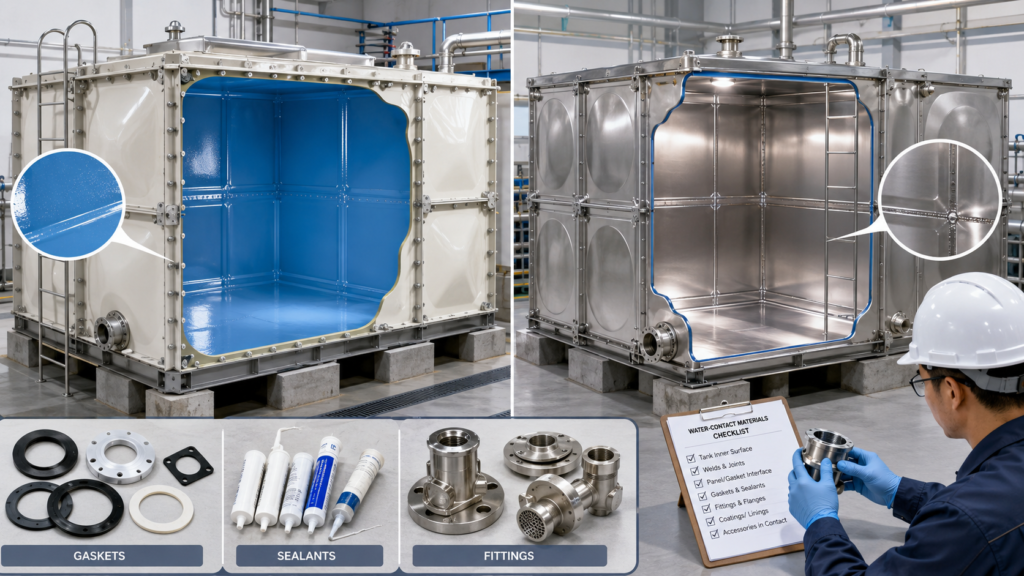
That includes more than the shell. It includes internal coating, lining, panel joints, gaskets, sealants, nozzles, manholes, vents, overflows, drains, and accessories exposed to stored water.
According to the NSF article on NSF/ANSI 61, the standard covers products and materials that contact drinking water, including protective barriers, joining and sealing materials, pipes, fittings, and mechanical devices. So buyers should never check the tank panel alone.
If you need the standard explained first, read this related guide on NSF 61 water tank verification before using this potable water tank compliance checklist.
Why Do Potable Water Tank Compliance Reviews Fail?
Potable water tank compliance often fails for simple reasons.
The certificate may cover one material, but the supplied tank may use different gaskets, sealants, or fittings. A supplier may also say “food grade” or “safe for drinking water,” but that does not prove NSF 61 tank documentation is complete.
Buyers should also be careful with stainless steel. Stainless steel is widely used for hygienic storage, but it does not automatically prove potable water tank compliance. Welds, surface finish, fittings, and sealing materials still need checking.
Which NSF 61 Tank Documentation Should Buyers Ask For?
Potable water tank compliance starts with documentation. A strong supplier should help buyers review the project requirements before production.
| Document | What to Check | Why It Matters |
|---|---|---|
| Certificate or compliance record | Manufacturer, model, material, scope | Prevents document mismatch |
| Tank drawing | Nozzles, hatches, internal parts | Confirms water-contact areas |
| Material list | Coating, gasket, sealant, fittings | Shows what touches stored water |
| Installation guide | Assembly, sealing, cleaning | Reduces site contamination risk |
| Maintenance guide | Inspection and cleaning interval | Supports long-term water quality |
The U.S. EPA provides a finished water storage tank inspection and cleaning checklist, covering tank components, photos, vents, drains, overflows, hatches, and roof areas.
The lesson is clear: potable water tank compliance should be reviewed as a system, not as a single label.
What Water-Contact Materials Must Be Checked?
The core question is simple: what will touch the water?
For enamel tanks, the inner glass-fused coating is the main contact surface. The enamel water tank page explains that enamel panels are produced by high-temperature bonding of glass coating and steel plate, giving the tank a smooth and corrosion-resistant inner surface.
For stainless steel tanks, the base material matters, but buyers should also review weld quality, surface finish, panel joints, and fittings. For projects where hygiene and cleanability are priorities, a stainless steel water tank can be suitable when the full water-contact system is documented.
Do not ignore gaskets and sealants. These small parts are common weak points in potable water tank requirements. If they are not suitable for drinking water service, the whole system may face questions during approval.
How Should Buyers Inspect Enamel and Stainless Steel Tanks?
For an enamel tank, check whether the coating surface is complete, clean, and protected during transport. Look closely at panel edges, bolt areas, and joint zones. Damage in these areas may affect long-term corrosion resistance and drinking water tank inspection results.
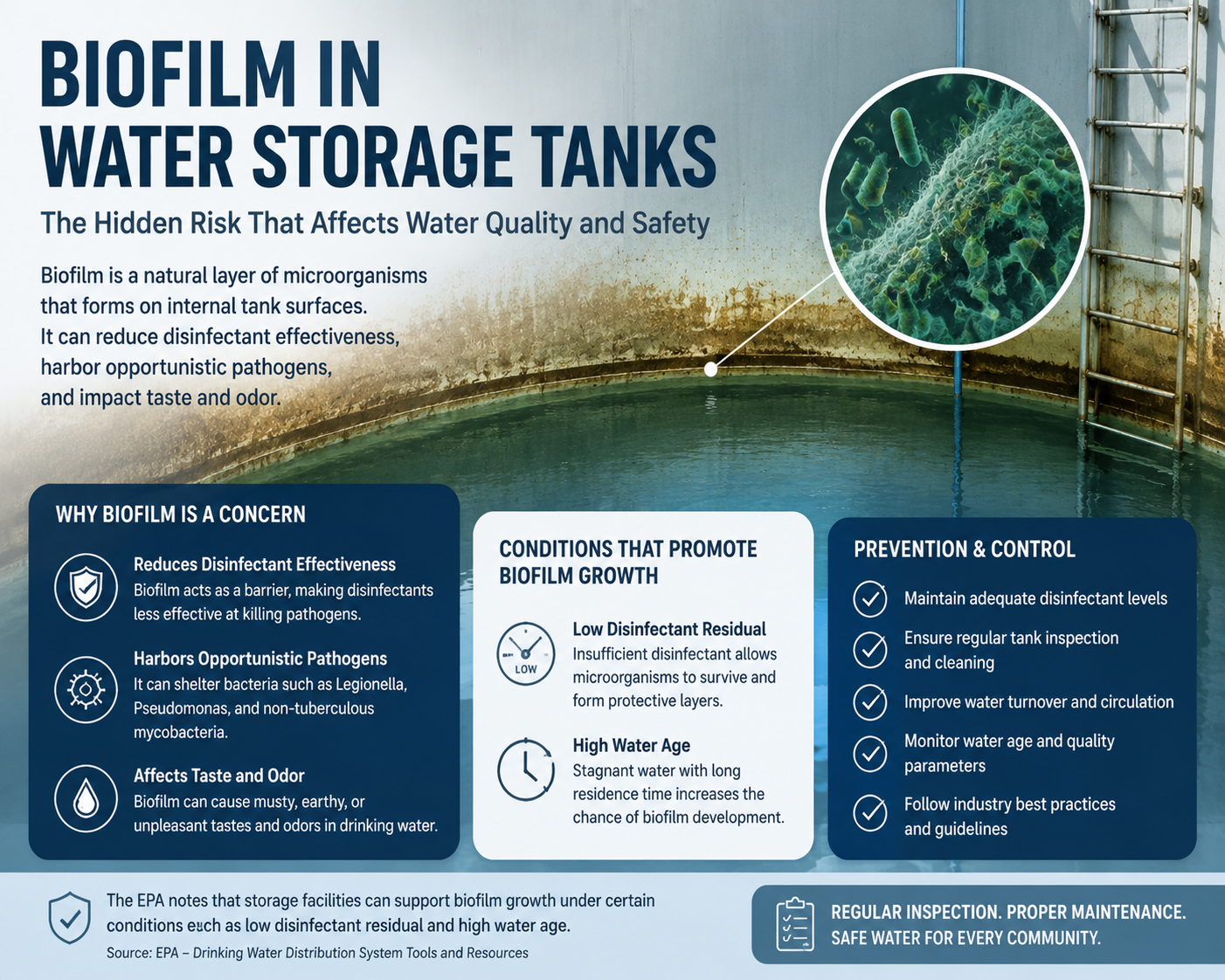
For a stainless steel tank, check weld seams, inner surface cleanliness, fittings, and surface treatment records when applicable. Poor fabrication can create crevices where residues or biofilm may remain.
The Water Research Foundation project on finished water storage facilities highlights that inspection and maintenance help avoid water quality problems linked to microbial contamination, coating degradation, failed screens, and avian contamination.
Potable water tank compliance should include purchase-stage review and practical inspection before installation.
What Should Be Checked Before Delivery?
Before the tank leaves the factory, buyers should request photos or inspection records for key areas.
Check the internal surface. It should be clean, free from visible contamination, and protected from shipping damage.
Check openings. Manholes, vents, overflows, and drains should match the approved drawing.
Check packing. Panels, accessories, gaskets, bolts, and fittings should be separated and protected to avoid scratches or contamination.
Illinois EPA states in its storage tank inspection and maintenance guidance that water storage tanks should generally be inspected at least every five years, or more often depending on local conditions. It also notes that disinfection and sampling may be required after a tank has been drained.
That is a useful reminder: potable water tank compliance continues through installation, cleaning, inspection, and maintenance.
Potable Water Tank Compliance Checklist Before Ordering
Use this practical potable water tank compliance checklist before confirming the order:
1.Confirm the tank is intended for potable water, not only process water.
2.Ask for NSF 61 tank documentation or relevant material records.
3.Match the certificate scope with the exact tank model and supplied components.
4.Review coatings, gaskets, sealants, fittings, and other water-contact materials.
5.Check tank drawings for nozzles, hatches, vents, overflows, and drains.
6.Ask how the tank should be cleaned or disinfected before service.
7.Confirm whether local approval requires extra testing.
8.Keep all documents for the contractor, consultant, or public authority.
The CDC’s article on creating and storing an emergency water supply recommends cleaning and sanitizing containers before use and keeping stored water away from toxic substances. Industrial tanks are different in scale, but the principle is the same: clean storage and protected contact surfaces matter.
Conclusion
Potable water tank compliance should be confirmed before the tank is ordered, not after it arrives on site. Buyers should review certificate scope, water-contact materials, drawings, gaskets, sealants, fittings, delivery inspection records, and maintenance guidance together. When the project involves an enamel water tank or stainless steel water tank, send the supplier your drawings and potable water requirements early, so the correct documentation can be prepared before approval. A simple potable water tank compliance file is easier to defend when every wetted component is checked before production.
FAQ
Is NSF 61 enough for potable water tank compliance?
No. NSF 61 is important, but potable water tank compliance also requires matching the certificate scope with the real tank model, wetted materials, gaskets, sealants, fittings, and project documents.
Does stainless steel automatically meet potable water tank requirements?
No. Stainless steel may be suitable for drinking water storage, but welds, inner surface finish, fittings, and sealing materials still need review.
What documents are needed for potable water tank approval?
Buyers usually need drawings, material lists, installation instructions, maintenance guidance, and NSF 61 tank documentation or other project-required records.
Are gaskets and sealants part of the compliance review?
Yes. If gaskets or sealants contact stored water, they should be checked as part of the water-contact system.
Which is better, enamel or stainless steel?
It depends on capacity, site conditions, approval documents, and maintenance needs. Enamel tanks suit modular large-capacity storage, while stainless steel tanks are often chosen where cleanability and hygienic appearance are priorities.