Table of Contents
Introduction
Water management is a cornerstone of efficient industrial operations. Whether it’s powering cooling systems, supporting manufacturing processes, or ensuring fire safety, having a reliable water storage system is critical. Industrial water tanks are at the heart of this system, providing storage solutions that can meet a wide range of operational needs. Selecting the right tank isn’t just about volume—it’s about durability, safety, compliance, and long-term efficiency.
In this article, we’ll explore the types of industrial water tanks, their specific applications, selection criteria, and expert insights to help you make informed decisions.
Understanding Industrial Water Tank Solutions
Industrial water tanks are large-scale containers engineered to store and manage water for various industrial applications. They are designed to handle diverse operational requirements, from high-capacity cooling systems to specialized chemical storage. These tanks are pivotal in:
- Cooling Systems: Supplying water for machinery and industrial processes, ensuring consistent thermal regulation.
- Firefighting Reserves: Maintaining an emergency water supply for fire suppression systems.
- Process Water Storage: Supporting manufacturing and processing operations in industries like food and beverage, chemicals, and pharmaceuticals.
- Emergency Water Supply: Acting as backup storage to ensure continuous operations during supply interruptions.
According to a 2023 report by the Industrial Water Systems Association (IWSA), facilities using appropriately sized water tanks can reduce downtime related to water shortages by up to 35%, demonstrating the operational importance of these solutions.
Types of Industrial Water Tanks
Industrial water tanks vary based on material, construction, and intended use. Understanding these differences is key to selecting the right solution.
1. Steel Water Tanks
Steel tanks are known for their strength and durability. They are ideal for large-scale storage where structural integrity is critical.
Advantages:
- High load-bearing capacity, suitable for large volumes.
- Resistant to mechanical impacts and harsh weather.
- Can be coated with protective layers to enhance lifespan.
Applications:
- Power plants and heavy industry facilities.
- Chemical processing operations.
- Large agricultural irrigation systems.
2. Stainless Steel Water Tanks
Stainless steel offers superior corrosion resistance, making it suitable for potable water or industrial liquids requiring purity.
Advantages:
- Excellent hygienic properties.
- Long lifespan with minimal maintenance.
- Highly resistant to chemical and environmental corrosion.
Applications:
- Food and beverage manufacturing.
- Pharmaceutical production.
- Water treatment facilities.
3. Enamel Water Tanks
Enamel water tanks feature a steel or metal base coated with a durable enamel layer, offering corrosion resistance and hygienic properties suitable for potable water storage.
Advantages:
- Corrosion-resistant surface.
- Easy to clean and maintain.
- Hygienic and suitable for drinking water.
Applications:
- Residential and commercial potable water storage.
- Food and beverage processing.
- Laboratories and medical facilities.
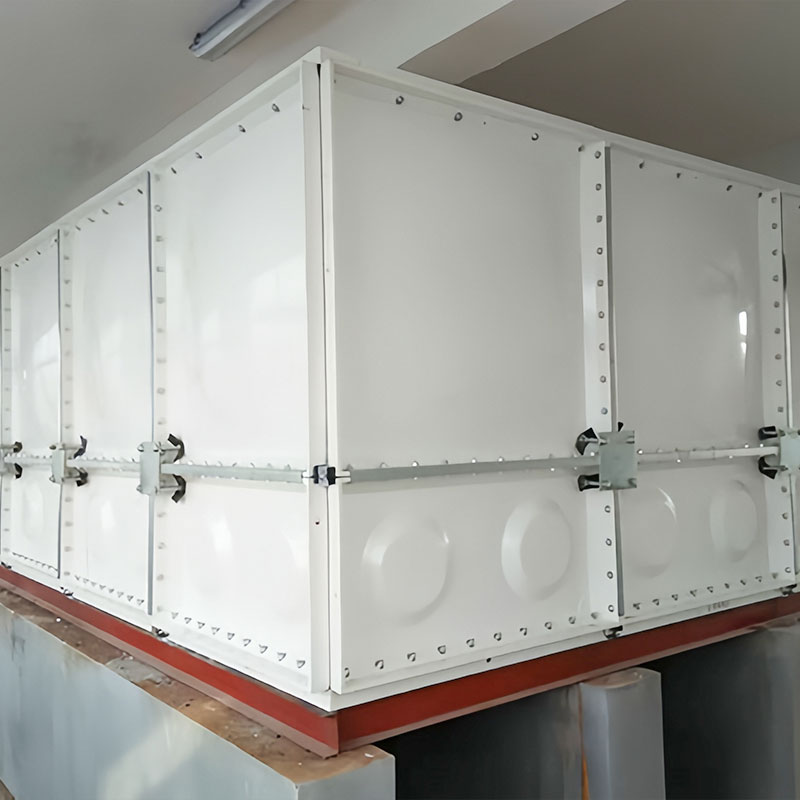
4. Fiberglass (FRP) Water Tanks
Fiberglass tanks are lightweight, corrosion-resistant, and versatile, suitable for chemical applications.
Advantages:
- Easy to transport and install.
- Resistant to corrosion from chemicals and environmental factors.
- It can be used in specialized storage applications.
Applications:
- Chemical processing plants.
- Water treatment operations.
- Industrial cooling systems.
5. Underground Water Tanks
Underground water tanks are designed for subterranean installation, conserving space while providing secure and reliable storage.
Advantages:
- Space-saving and unobtrusive.
- Protected from extreme weather and UV exposure.
- It can store large volumes safely.
Applications:
- Municipal water storage.
- Commercial and residential buildings.
- Rainwater harvesting and emergency supply systems.
Applications of Industrial Water Tanks
Industrial water tanks are not just about storing water—they support entire operational ecosystems. Their key applications include:
- Cooling Systems: Supplying water to maintain machinery and process temperatures.
- Fire Safety: Ensuring reliable access to water for emergency systems.
- Process Water: Storing water necessary for industrial processes such as chemical reactions or beverage production.
- Emergency Backup: Maintaining continuity of operations in case of municipal supply interruptions.
A study by the Global Water Storage Institute in 2022 highlighted that facilities integrating water tanks into both operational and safety systems saw a 25% improvement in operational resilience.

Table: Comparison of Industrial Water Tank Types
| Tank Type | Advantages | Ideal Applications | Estimated Lifespan |
|---|---|---|---|
| Steel | Strong, high-capacity, durable | Power plants, chemical industry | 15–20 years |
| Stainless Steel | Corrosion-resistant, hygienic | Food & beverage, pharmaceuticals | 25+ years |
| Enamel | Corrosion-resistant, hygienic, easy to clean | Potable water, food & beverage, labs | 20–25 years |
| Fiberglass (FRP) | Lightweight, corrosion-resistant | Chemical processing, water treatment | 20+ years |
| Underground | Space-saving, protected from the weather, large capacity | Municipal storage, commercial/residential buildings, rainwater harvesting | 25–30 years |
Key Considerations for Selecting Industrial Water Tank Solutions
Selecting the right industrial water tank solution requires attention to multiple factors:
- Capacity Requirements: Calculate based on peak water usage and potential emergency needs.
- Material Compatibility: Choose a material that matches the stored liquid to prevent contamination.
- Environmental Conditions: Consider temperature, chemical exposure, UV exposure, and load stress.
- Regulatory Compliance: Ensure the tank meets industry standards for safety, hygiene, and environmental regulations.
- Maintenance and Longevity: Evaluate ease of cleaning, inspection, and expected lifespan.
Expert insight: According to the 2023 IWSA guidelines, facilities that perform proactive material and environmental compatibility assessments experience 30% fewer maintenance-related disruptions.
Conclusion
Industrial water tanks are foundational components in industrial, municipal, and agricultural operations. Understanding the types, applications, and key selection criteria enables businesses to choose solutions that are efficient, safe, and cost-effective. By investing in the right tank type and maintaining it properly, organizations can ensure continuous operation, protect their processes, and maximize operational efficiency.
FAQ
How do I determine the right capacity for my industrial water tank?
Analyze your facility’s peak water demand, daily usage, and potential emergency needs. Consider future expansions as well.
Which water tank material is best for chemical storage?
Fiberglass tanks offer excellent chemical resistance, while stainless steel can handle many types of industrial liquids hygienically.
How often should industrial water tanks be maintained?
Inspect tanks at least quarterly, check for leaks, corrosion, and sediment buildup. Perform deep cleaning annually or as recommended by material type.
Can industrial water tanks be used for potable water?
Yes, stainless steel and properly coated fiberglass tanks are suitable for potable water storage, provided they meet local hygiene standards.
What factors impact the lifespan of a water tank?
Material quality, environmental conditions, usage patterns, and maintenance practices are the main determinants of tank longevity.