Table of Contents
Industrial water storage systems are critical infrastructure in factories, agricultural facilities, commercial buildings, and fire protection systems. Without proper Industrial water tank maintenance, these systems can suffer from corrosion, contamination, leakage, and structural failure.
This guide explains practical maintenance procedures, inspection schedules, regulatory considerations, and cost expectations to help facility managers and project engineers extend tank lifespan and ensure operational safety.
Why Industrial Water Tank Maintenance Is Essential
affects:
- Water quality and hygiene
- Structural integrity
- System reliability
- System reliability
- Long-term operating cost
According to the American Water Works Association (AWWA), regular inspection and maintenance significantly reduce structural failure risks in steel water tanks.
Reference: AWWA Steel Water Storage Tanks Standard D100
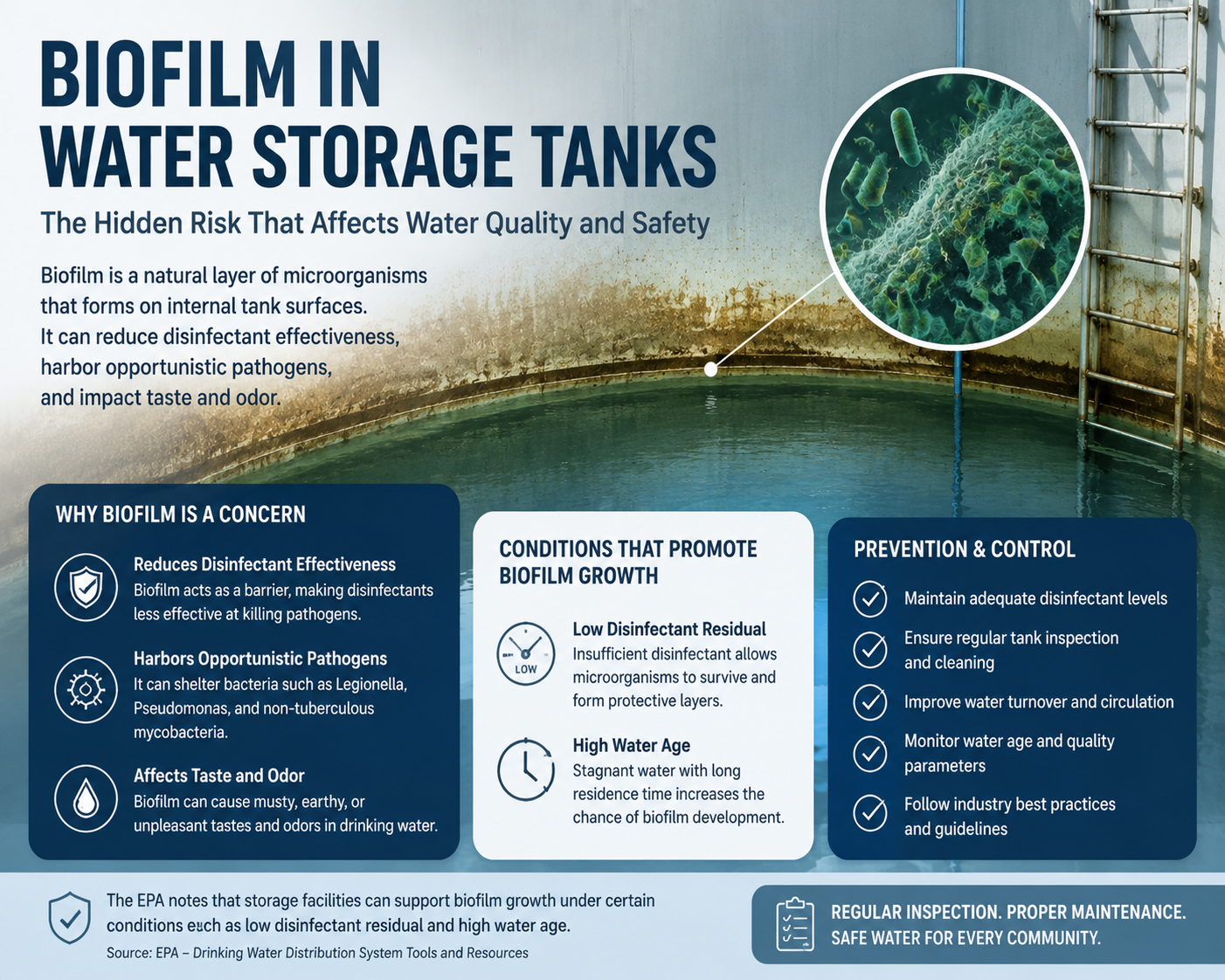
Neglecting maintenance often leads to accelerated corrosion, biofilm buildup, and internal coating degradation.
Core Components of Industrial Water Tank Maintenance
1.Visual Structural Inspection
- Exterior surface corrosion
- Weld seam integrity
- Foundation settlement
- Roof and vent condition
Inspection frequency:
- External: annually
- Internal: every 3–5 years (depending on application)
The National Fire Protection Association (NFPA 25) recommends periodic inspection for fire protection tanks to ensure readiness.
2.Internal Corrosion Monitoring
orrosion is the primary threat to tank longevity.
Maintenance teams should evaluate:
- Coating condition
- Rust scaling
- Cathodic protection systems
- Sediment accumulation
Steel water storage tanks used in humid or coastal environments require more frequent maintenance checks.
3.Leak Detection and Structural Integrity Testing
Common methods include:
- Hydrostatic testing
- Ultrasonic thickness testing
- Visual seam examination
- Pressure integrity checks
Early detection significantly lowers repair costs compared to emergency structural replacement.
4.Water Quality and Hygiene Control
Water contamination can occur due to:
- Microbial growth
- Sediment buildup
- Inadequate ventilation
- Infrequent cleaning
The World Health Organization (WHO) emphasizes safe water storage practices to prevent contamination.
Reference: WHO Guidelines for Drinking-water Quality
Regular maintenance of the water tank helps prevent the formation of biofilms and the growth of bacteria.
Recommended Industrial Water Tank Maintenance Schedule
Below is a practical maintenance timeline:
| Maintenance Task | Recommended Frequency |
| External visual inspection | Every 12 months |
| Internal inspection | Every 3–5 years |
| Cleaning and sediment removal | Every 1–3 years |
| Coating condition assessment | Every 5 years |
| Cathodic protection check | Annually |
Facilities with high water turnover may require adjusted schedules.
Industrial Water Tank Maintenance Checklist
A professional Industrial water tank maintenance checklist should include:
- Exterior corrosion inspection
- Foundation stability assessment
- Roof access safety check
- Internal liner evaluation
- Inlet/outlet valve inspection
- Drain functionality test
- Overflow system check
- Vent screen condition
- Leak testing
- Documentation record update
Maintaining documentation is essential for regulatory audits and insurance compliance.
Industrial Water Tank Maintenance Cost Breakdown
Maintenance cost depends on:
- Tank size
- Material (steel, FRP, stainless steel)
- Accessibility
- Geographic environment
- Labor cost
Average estimates:
- Small industrial tanks: $1,000–$3,000 annually
- Small industrial tanks: $1,000–$3,000 annually
Preventive maintenance is much more economical than undergoing structural replacements, which could cost tens of thousands of dollars.
Common Maintenance Mistakes to Avoid
1.Ignoring minor surface rust
2.Delaying internal inspections
3.Skipping cleaning cycles
4.Using improper chemical cleaning agents
5.Failing to document inspections
Many structural failures occur due to neglected preventive maintenance rather than design flaws.
How Maintenance Extends Industrial Water Tank Lifespan
Regular maintenance can extend its service life. Specifically, this is manifested as:
- Preventing corrosion penetration
- Protecting coatings
- Maintaining water quality
- Reducing structural stress
Properly maintained steel tanks can operate 25–40 years depending on environment and care level.
When to Repair vs Replace
Repair is recommended when:
- Corrosion is surface-level
- Structural thickness remains within tolerance
- Coating damage is localized
Replacement should be considered when:
- Structural wall thickness falls below safety margin
- Foundation settlement compromises stability
- Repeated leak repairs become frequent
Repeated leak repairs become frequent
Conclusion
Industrial water storage systems represent long-term infrastructure investments. Implementing a structured Industrial water tank maintenance program ensures operational reliability, regulatory compliance, and extended service life.
Facilities that prioritize preventive inspection, corrosion control, and cleaning schedules reduce risk and maintain system performance for decades.
Contact the experts to obtain a more professional solution.
Frequently Asked Questions
How often should Industrial water tank maintenance be performed?
External inspections annually; internal inspections every 3–5 years depending on usage.
What is included in Industrial water tank maintenance?
Inspection, cleaning, corrosion monitoring, leak testing, coating evaluation, and documentation.
Is Industrial water tank maintenance required by regulation?
Yes, especially for fire protection systems and potable water storage, depending on local codes.
Can maintenance reduce long-term cost?
Can maintenance reduce long-term cost?