Table of Contents
Introduction
Galvanized water tanks have long been used as a dependable solution for water storage in industrial, municipal, agricultural, and fire protection systems. By combining carbon steel strength with a zinc protective coating, these tanks provide a balance of mechanical durability and corrosion resistance that suits a wide range of operating environments.
As infrastructure projects increasingly demand reliable and long-lasting water storage systems, galvanized water tanks continue to play an important role, especially where structural strength, adaptability, and proven performance are required. This article provides a comprehensive overview of galvanized water tanks, including their working principles, structural design, applications, installation considerations, and long-term operation.
What Are Galvanized Water Tanks
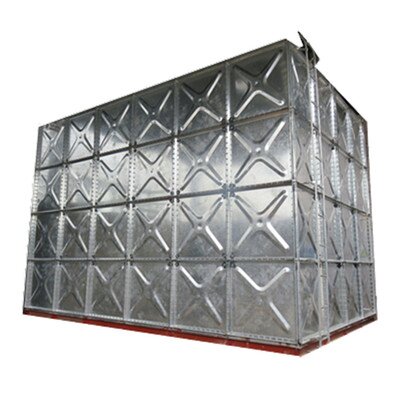
Galvanized water tanks are fabricated from steel panels or plates that are coated with zinc through hot-dip galvanization. The zinc layer acts as a protective barrier, reducing direct exposure of steel to moisture and oxygen, which slows corrosion over time.
These tanks can be configured as above-ground or underground systems and are often integrated with water tank bases and support rods to ensure stability under internal water pressure and external environmental loads. Compared with fiberglass or concrete tanks, galvanized tanks are valued for their structural rigidity and adaptability to different capacities and layouts.
How Galvanization Protects Water Tanks
Zinc Coating Mechanism
The zinc coating protects steel through both barrier protection and sacrificial action. Even if the surface is scratched, zinc corrodes preferentially, protecting the underlying steel.
Corrosion Resistance in Typical Environments
In neutral or mildly aggressive water conditions, galvanized coatings provide reliable corrosion resistance, making these tanks suitable for industrial water, fire water, and agricultural storage.
Service Life Considerations
The thickness of the zinc layer and environmental exposure determine service life. Proper design and installation significantly extend operational longevity.
Structural Design of Galvanized Water Tanks
Panel Construction and Load Distribution
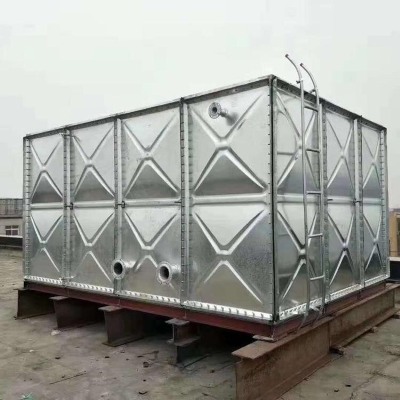
Many galvanized tanks use modular panel designs. This allows large capacities while maintaining structural consistency. Panels transfer loads through the tank structure to the base evenly.
Water Tank Bases and Support Rods
Bases provide uniform load transfer to the foundation, while support rods resist hydrostatic pressure and maintain panel alignment. These components are essential for large-capacity galvanized tanks.
Resistance to External Loads
Galvanized tanks are engineered to withstand wind loads, soil pressure in underground installations, and operational stresses in industrial environments.
Materials and Manufacturing Standards
Steel Selection
High-quality structural steel ensures sufficient tensile strength and impact resistance during operation and installation.
Hot-Dip Galvanization Process
Hot-dip galvanization creates a uniform zinc coating bonded to the steel surface, improving durability compared to sprayed or painted coatings.
Quality Control and Testing
Manufacturing processes typically include coating thickness inspection, structural testing, and leak checks to ensure performance consistency.
Installation Considerations
Foundation Preparation
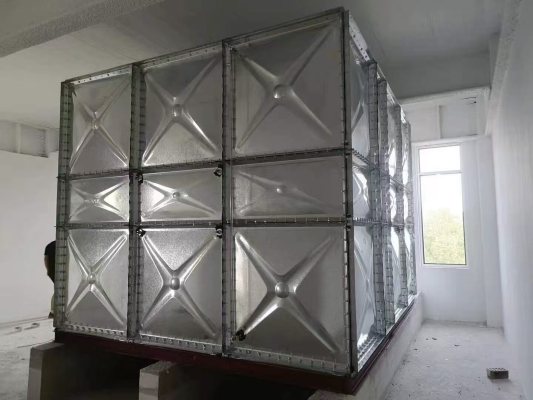
A stable and level foundation is critical. Reinforced concrete bases or prefabricated base systems prevent uneven settlement and structural stress.
Assembly and Alignment
Panel alignment and proper tightening of fasteners ensure structural integrity and leak prevention.
Integration with Piping Systems
Inlet, outlet, overflow, and drain connections must be correctly positioned and sealed to maintain operational reliability.
Applications of Galvanized Water Tanks
Industrial Water Storage
Galvanized tanks are commonly used in manufacturing facilities for process water, cooling water, and utility water storage.
Municipal and Community Systems
In municipal infrastructure, these tanks support non-potable water storage, emergency reserves, and service water supply.
Fire Protection Systems
Fire water storage requires robust and reliable tanks. Galvanized water tanks provide large-capacity solutions suitable for fire protection networks.
Agricultural and Irrigation Use
Farm irrigation systems rely on galvanized tanks for their strength, adaptability, and ability to operate in outdoor environments.
Maintenance and Operation
Routine Inspection
Periodic inspections focus on coating condition, fasteners, support rods, and base stability to detect early signs of wear.
Cleaning and Sediment Control
Industrial and agricultural applications may require periodic cleaning to remove sediment and maintain effective storage capacity.
Preventive Maintenance
Timely inspection and maintenance help preserve coating integrity and structural performance over time.
Comparison with Other Water Tank Types
Galvanized vs Stainless Steel Water Tanks
Stainless steel offers superior corrosion resistance and hygiene, while galvanized tanks provide high strength and cost-effective performance in non-potable applications.
Galvanized vs Enamel Water Tanks
Enamel tanks excel in long-term corrosion resistance and potable water use, whereas galvanized tanks are valued for structural robustness and adaptability.
Galvanized vs Fiberglass Water Tanks
Fiberglass tanks are lightweight and corrosion-resistant, while galvanized tanks offer greater mechanical strength for demanding environments.
Table: Galvanized Water Tanks Compared with Other Materials
| Tank Type | Corrosion Resistance | Structural Strength | Typical Applications | Key Advantage |
|---|---|---|---|---|
| Galvanized Steel | Medium to High | High | Industrial, fire, agriculture | Strong and adaptable |
| Stainless Steel | Very High | High | Potable water, chemical | Hygienic and durable |
| Enamel-Coated Steel | Very High | High | Municipal, potable water | Long service life |
| Fiberglass | Very High | Medium | Irrigation, chemical | Lightweight |
| Reinforced Concrete | Medium | Very High | Large municipal | High load capacity |
Environmental and Regulatory Considerations
Environmental Impact
Galvanized steel is recyclable, and long service life reduces material replacement and waste.
Compliance with Standards
Design and installation must meet local structural, water storage, and safety regulations, especially for fire protection systems.
Conclusion
Galvanized water tanks remain a practical and reliable solution for industrial, municipal, agricultural, and fire protection water storage. Their structural strength, proven corrosion protection, and compatibility with engineered bases and support rods make them suitable for demanding applications. When properly designed, installed, and maintained, galvanized water tanks deliver consistent performance over long service periods.
FAQ
What are galvanized water tanks mainly used for?
They are commonly used for industrial water, fire protection, agricultural irrigation, and non-potable municipal storage.
Are galvanized water tanks suitable for drinking water?
They are typically used for non-potable water. For potable water, stainless steel or enamel-coated tanks are often preferred.
How does galvanization protect the tank?
The zinc coating provides a protective barrier and sacrificial corrosion protection for the steel.
Do galvanized water tanks require support rods?
Yes, especially in large-capacity or modular tanks, support rods help resist internal water pressure and maintain structural stability.
How often should galvanized water tanks be inspected?
Routine inspections are recommended annually or according to operational conditions and regulatory requirements.
Need a Reliable Galvanized Water Tank Solution?
If you are planning an industrial, agricultural, or fire protection water storage project, our team can help you select the right galvanized water tank design, foundation, and support system. Contact us today to build a durable and dependable water storage solution.