Table of Contents
Introduction
In modern industrial and commercial infrastructure, FRP water tanks—short for Fiberglass Reinforced Plastic—have become a preferred solution for safe and efficient water storage. Their unique combination of strength, light weight, and exceptional chemical resistance makes them ideal for diverse applications ranging from municipal water supply to industrial processing and wastewater treatment.
According to a 2024 report by Market Research Future (MRFR), the global FRP tank market continues to expand steadily, driven by growing demand in the chemical, wastewater, and construction sectors. As industries increasingly focus on durability and environmental sustainability, FRP tanks stand out for their performance and long service life.

What Is an FRP Water Tank?
An FRP water tank is a composite structure made from reinforced fiberglass and resin. The resin serves as a binding matrix that provides chemical resistance and waterproofing, while the fiberglass reinforcement ensures strength and rigidity. This engineering synergy results in a lightweight yet robust tank that performs reliably in challenging environments.
FRP tanks can be molded into various shapes and sizes—ranging from small modular units to massive industrial reservoirs. Their panel-based construction makes them easy to transport and assemble on-site, which is particularly advantageous for remote or space-limited projects.
Manufacturing Process and Material Technology
The manufacturing of FRP water tanks involves several precision-engineered stages to ensure consistent quality and mechanical performance:
- Material Selection: High-quality fiberglass and thermosetting resins such as epoxy or polyester are chosen based on the storage medium and environmental conditions.
- Lamination and Molding: Multiple layers of fiberglass mat are impregnated with resin and shaped using methods like hand lay-up or filament winding to achieve the desired strength.
- Curing Process: Controlled temperature and pressure curing ensure uniform bonding and eliminate air pockets.
- Finishing and Testing: The surface is coated for UV protection and inspected through hydrostatic and adhesion tests to verify leak-proof performance.
The result is a corrosion-resistant, high-strength storage solution that combines longevity with operational reliability.
Key Advantages of FRP Water Tanks
1. Lightweight Yet Structurally Strong
FRP tanks are up to 70% lighter than traditional steel tanks, significantly reducing structural load on buildings and simplifying installation logistics. Despite their lightness, they exhibit outstanding mechanical strength and rigidity.
2. Excellent Corrosion and Chemical Resistance
The non-metallic structure makes FRP tanks immune to rust, oxidation, and chemical degradation. They perform exceptionally well in environments exposed to saltwater, acids, or industrial effluents.
3. Easy Installation and Minimal Maintenance
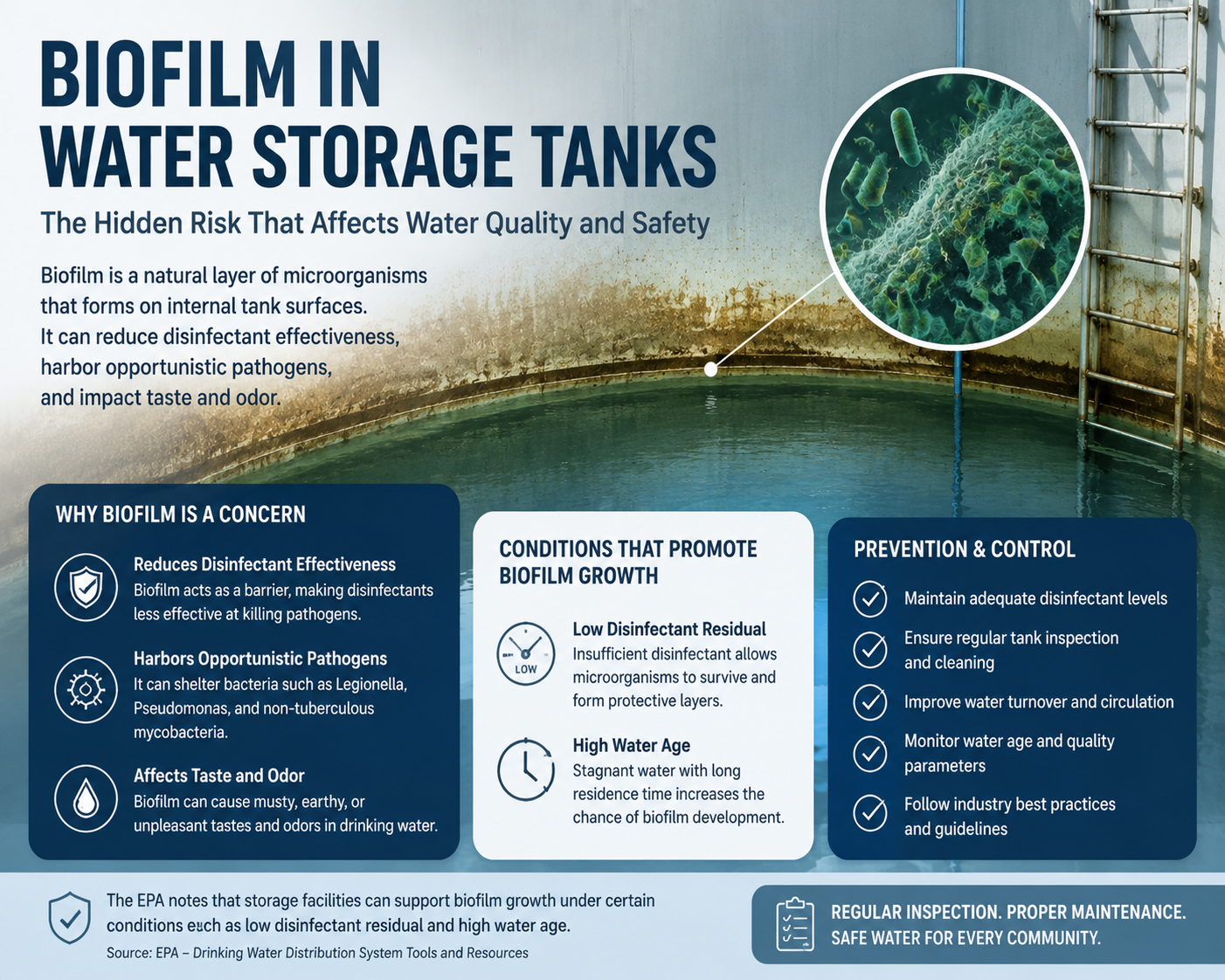
FRP tanks are designed for modular assembly, allowing quick installation without heavy equipment. The smooth inner surface resists sediment buildup and biofilm formation, making routine cleaning simple and efficient.
4. Long Service Life
When properly installed, FRP water tanks can operate effectively for 20 to 30 years. Their UV-resistant coatings and high tensile strength ensure stability even in demanding outdoor or industrial environments.
5. Hygienic and Environmentally Safe
The non-porous internal surface prevents bacterial growth and water contamination. FRP tanks are compliant with NSF/ANSI 61 standards for potable water, ensuring safety and cleanliness for both domestic and industrial applications.
Applications of FRP Water Tanks
FRP water tanks are widely used across industries for their adaptability and superior material properties:
- Municipal and Community Water Systems: Safe storage of potable water for distribution networks.
- Industrial Facilities: Storage of process water, cooling water, and chemical solutions.
- Wastewater and Desalination Plants: Corrosion-resistant containment for aggressive fluids.
- Agriculture and Irrigation: Reliable storage for irrigation and livestock water.
- Fire Safety Systems: High-capacity emergency reserves for firefighting in industrial complexes.
The ability to customize FRP tanks to specific project needs makes them an ideal fit for modern water management systems.
Technical Comparison: FRP vs Other Tank Types
| Feature / Tank Type | FRP Water Tank | Steel Tank | Enamel Tank | Plastic Tank |
|---|---|---|---|---|
| Weight | Very Light | Heavy | Heavy | Light |
| Corrosion Resistance | Excellent | Moderate | Excellent | Good |
| Maintenance Needs | Low | High | Low | Medium |
| Service Life | 20–30 years | 15–20 years | 25–30 years | 10–15 years |
| Chemical Resistance | Excellent | Low | Good | Moderate |
| Installation Ease | Easy | Moderate | Complex | Easy |
| Ideal Applications | Industrial, Chemical, Wastewater | Industrial | Potable, Municipal | Residential |
This table highlights why FRP tanks are increasingly chosen for projects demanding high corrosion resistance, flexibility, and reliability in operation.

Safety Standards and Quality Certifications
To ensure safety and consistency, FRP water tanks must meet internationally recognized standards, such as:
- ASTM D3299 – Filament-wound FRP tanks for industrial liquids
- ASTM D4097 – Contact-molded FRP storage tanks
- NSF/ANSI 61 – Drinking water system component safety
- ISO 14692 – FRP systems for industrial applications
Compliance with these standards ensures structural integrity, chemical stability, and suitability for potable and industrial water applications.
Case Study: FRP Tanks in a Coastal Industrial Plant
In 2022, a coastal industrial facility replaced its corroded steel tanks with FRP storage systems. The site’s high humidity and salt-laden air had previously caused rapid degradation of metal structures. After installing several 3,000 m³ FRP tanks, the facility achieved stable operation and significantly reduced unplanned maintenance downtime. The tanks remained in perfect condition after continuous exposure to harsh marine conditions for over two years, proving their reliability and environmental resilience.
Conclusion
FRP water tanks offer a modern, dependable, and environmentally sound solution for a wide variety of water storage needs. Combining structural strength with low maintenance and exceptional corrosion resistance, they are well-suited to industrial, municipal, and agricultural applications. Their hygienic design and long operational life make them a sustainable choice for future water infrastructure.
FAQ
What is the typical lifespan of an FRP water tank?
Between 20 and 30 years, depending on installation quality and operating environment.
Are FRP tanks suitable for drinking water?
Yes, when manufactured with certified materials compliant with NSF/ANSI 61 standards.
Can FRP tanks handle corrosive chemicals?
Yes. FRP tanks are ideal for acids, alkalis, and saline liquids.
How often should FRP tanks be inspected?
Regular inspection every 12–18 months is recommended to ensure long-term performance.
Can FRP tanks be installed outdoors?
Yes. UV-stabilized coatings protect them from sunlight and temperature fluctuations.