Table of Contents
Introduction
As industrial facilities, commercial buildings, and municipal water systems seek water storage solutions that balance strength, durability, and cost-effectiveness, FRP water tanks (Fiberglass Reinforced Plastic tanks) have become a preferred choice worldwide. FRP tanks combine excellent corrosion resistance, lightweight construction, and flexible design, making them suitable for potable water, industrial process water, wastewater treatment, and chemical storage. According to a 2024 report from MarketsandMarkets, the global FRP tank industry continues to grow steadily due to increased investments in water management infrastructure and stricter regulations on corrosion-resistant materials.
FRP tanks stand out for their ability to withstand harsh environments, including high humidity, coastal regions, and chemical exposure. Their modularity, long service life, and minimal maintenance requirements allow industrial users to significantly reduce operational downtime and long-term costs.

What Is an FRP Water Tank
An FRP water tank is a composite storage tank made from fiberglass reinforced with polymer resin. The combination of glass fibers and high-strength resin forms a lightweight but extremely durable structure that resists corrosion, rust, and microbial growth. FRP tanks can be molded into various shapes and sizes or assembled from modular panels, making them adaptable to different installation environments.
These tanks are widely used in industrial water systems, HVAC cooling systems, fire protection networks, and areas where metal tanks may corrode or where installation space is limited.
Types of FRP Water Tanks
1. Modular FRP Panel Water Tanks
- Prefabricated panels assembled on-site.
- Ideal for installation in confined or elevated spaces.
- Easy to transport and suitable for large projects.
2. Vertical Cylindrical FRP Tanks
- Typically used for industrial liquids and chemical storage.
- High structural integrity and customizable capacity.
3. Horizontal FRP Tanks
- Used in underground or space-restricted areas.
- Reinforced to withstand soil pressure and long-term load.
4. FRP Sectional Water Tanks
- Large tank volumes constructed from multiple FRP sections.
- Suitable for municipal or industrial water storage systems requiring flexibility.
Advantages of FRP Water Tanks
Corrosion Resistance
FRP is inherently resistant to rust, chemical corrosion, and environmental degradation. This makes these tanks particularly effective for storing aggressive liquids, treated water, or saline water.
Lightweight and Easy to Install
Compared with steel or concrete tanks, FRP tanks are significantly lighter, reducing transportation and installation costs. Their modular design also allows easy assembly in rooftops, basements, and restricted areas.
High Durability and Strength
Despite their lightweight structure, FRP tanks provide excellent mechanical strength and withstand external environmental stress, including temperature changes and seismic activity.
Low Maintenance Requirements
FRP tanks do not require painting, anti-corrosion coating, or frequent chemical cleaning, lowering long-term maintenance needs.
Hygienic and Safe for Potable Water
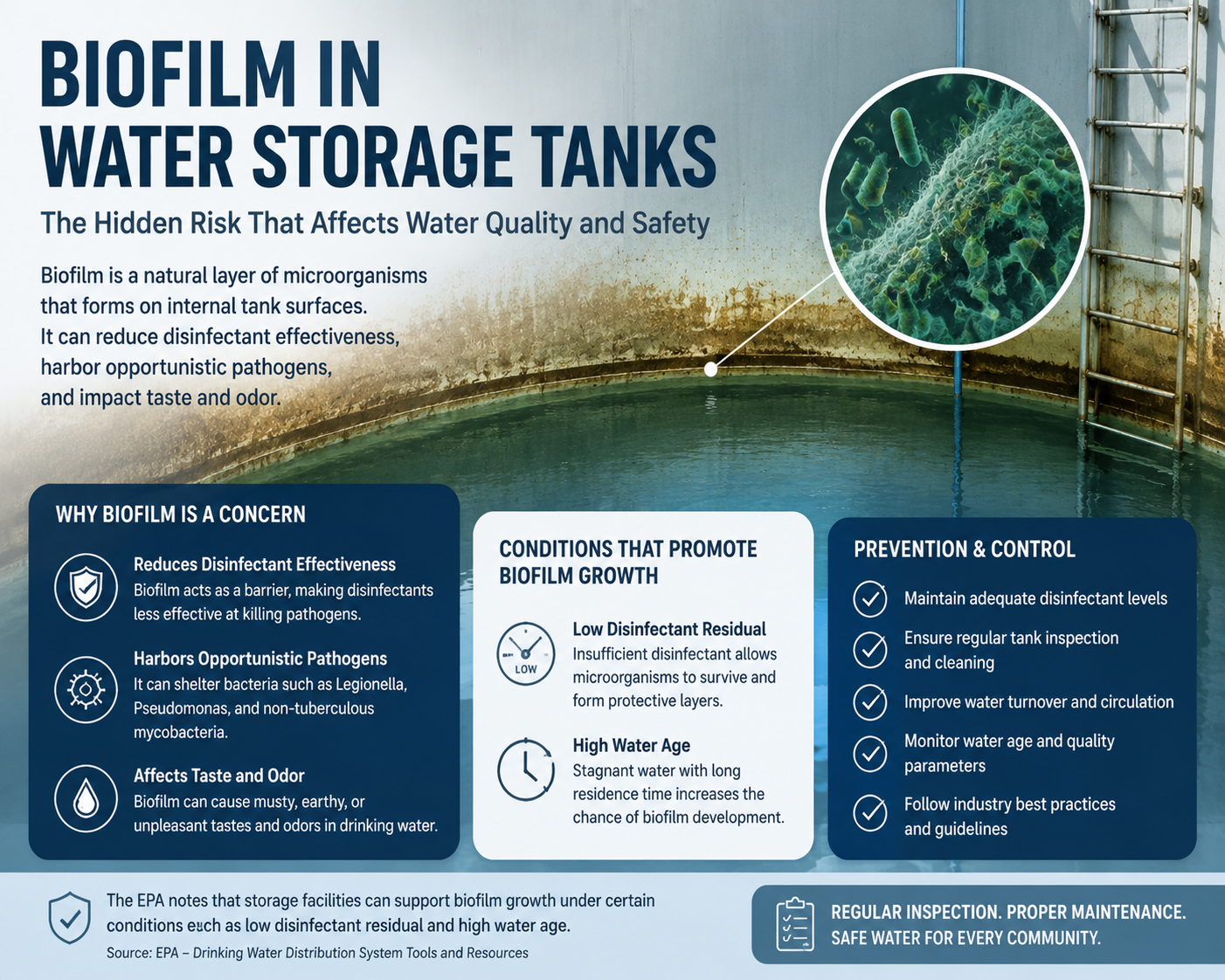
The interior surface can be manufactured to meet food-grade and drinking water standards, preventing bacterial growth and contamination.

Applications of FRP Water Tanks
- HVAC and Cooling Systems – cooling towers, chilled water storage, and HVAC equipment.
- Municipal Drinking Water Systems – hygienic and long-lasting potable water storage.
- Industrial Process Water – corrosive liquids, treated water, and production fluids.
- Wastewater Treatment – FRP tanks resist chemical reactions common in wastewater systems.
- Fire Protection Systems – reliable water storage for emergency and industrial fire systems.
- Agriculture and Irrigation – lightweight tanks for crop irrigation and livestock water storage.
Technical Comparison: FRP vs Other Water Tanks
| Feature / Tank Type | FRP Tank | Stainless Steel Tank | Galvanized Tank | Enamel Tank |
|---|---|---|---|---|
| Corrosion Resistance | Excellent | Excellent | Good | Excellent |
| Structural Strength | Medium to High | Very High | High | High |
| Maintenance Needs | Low | Low | Low | Low |
| Weight | Lightweight | Heavy | Medium | Medium |
| Lifespan | 20–25 years | 30–50 years | 20–30 years | 25–40 years |
| Installation Flexibility | Very High | Moderate | Moderate | Moderate |
| Ideal Applications | Industrial, HVAC, Wastewater | Food, Pharma, Industrial | Industrial | Municipal, Food |
This table illustrates FRP tanks’ superior corrosion resistance and installation versatility, making them especially suitable for industries requiring rapid installation and long-term reliability.
Manufacturing and Quality Standards
High-quality FRP water tanks follow strict engineering guidelines and global standards, including:
- ISO 9001 – Manufacturing quality assurance.
- ISO 28765 – Design and construction standards for FRP and coated tanks.
- NSF/ANSI 61 – Certification for potable water safety.
- ASTM D3299 / D4097 – Standards for filament-wound and custom-contact molded FRP tanks.
Manufacturing typically involves filament winding, hand lay-up, or molded panel construction. Each tank undergoes pressure testing, leak testing, and resin-fiber ratio verification to ensure long-term structural stability.
Maintenance Guidelines
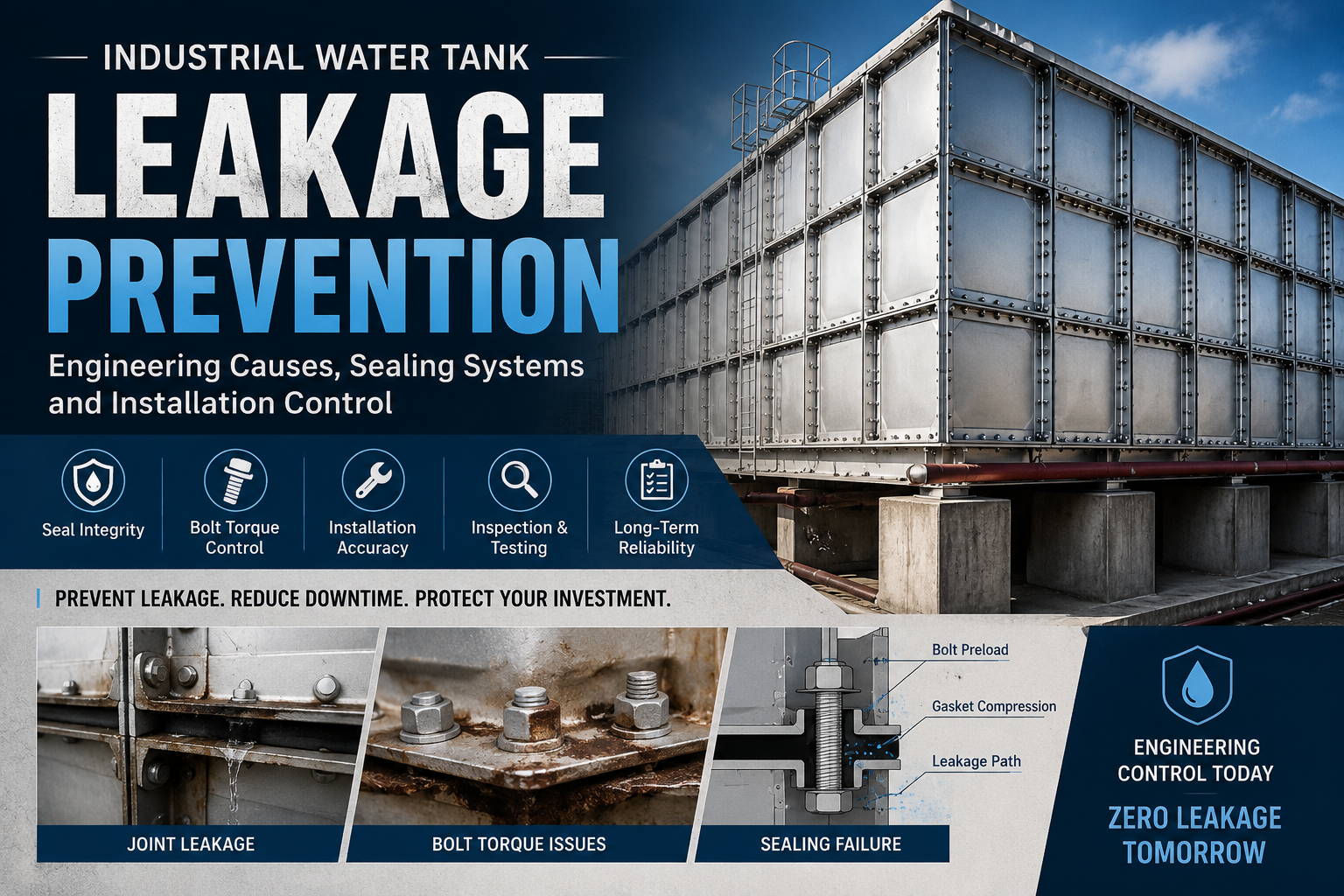
Routine maintenance includes visual inspections for cracks, UV damage, or joint wear. Cleaning should be done with mild detergents to maintain hygiene. Periodic checks of bolts, gaskets, and panel alignment ensure structural integrity, especially for modular FRP tanks. FRP tanks should also be protected from sharp impacts or heavy mechanical loads to avoid surface damage.

Case Study: FRP Tanks in Cooling Water Systems
A manufacturing facility in Malaysia installed multiple FRP sectional water tanks for HVAC and cooling tower operations. After several years of use, the tanks demonstrated excellent corrosion resistance despite constant exposure to chemically treated cooling water. Their modular design allowed easy capacity expansion when the facility upgraded its cooling system, proving FRP tanks’ high adaptability and performance under industrial conditions.
Conclusion
FRP water tanks offer a lightweight, corrosion-resistant, and highly adaptable solution for various water storage needs. Their durability, hygiene, and installation flexibility make them suitable for municipal, industrial, HVAC, and agricultural applications. By selecting certified FRP tanks from reliable manufacturers, organizations can ensure long-term, safe, and cost-effective water storage performance.
FAQ
How long do FRP water tanks last?
Typically 20–25 years depending on installation environment and maintenance.
Are FRP tanks safe for drinking water?
Yes, when manufactured to NSF/ANSI 61 or similar potable water standards.
Are FRP tanks suitable for rooftop installation?
Yes, their lightweight design makes them ideal for rooftops or high-level installations.
Do FRP tanks require frequent maintenance?
No, maintenance requirements are minimal compared with steel or concrete tanks.