When procuring industrial water storage tank materials, facility managers face a landscape of conflicting specifications. From chemical processing plants to municipal water grids, the debate usually boils down to one comparison: FRP vs Stainless Steel water storage tanks.
Both materials offer distinct advantages for fluid containment. However, selecting the wrong substrate leads to accelerated degradation, contaminated supplies, and catastrophic budget overruns. Evaluating FRP vs Stainless Steel water storage tanks requires looking past the initial quote and analyzing the specific chemical, environmental, and regulatory demands of your project.
Here is the objective engineering breakdown of both materials to help you finalize your procurement decision.
Table of Contents
Core Material Breakdown
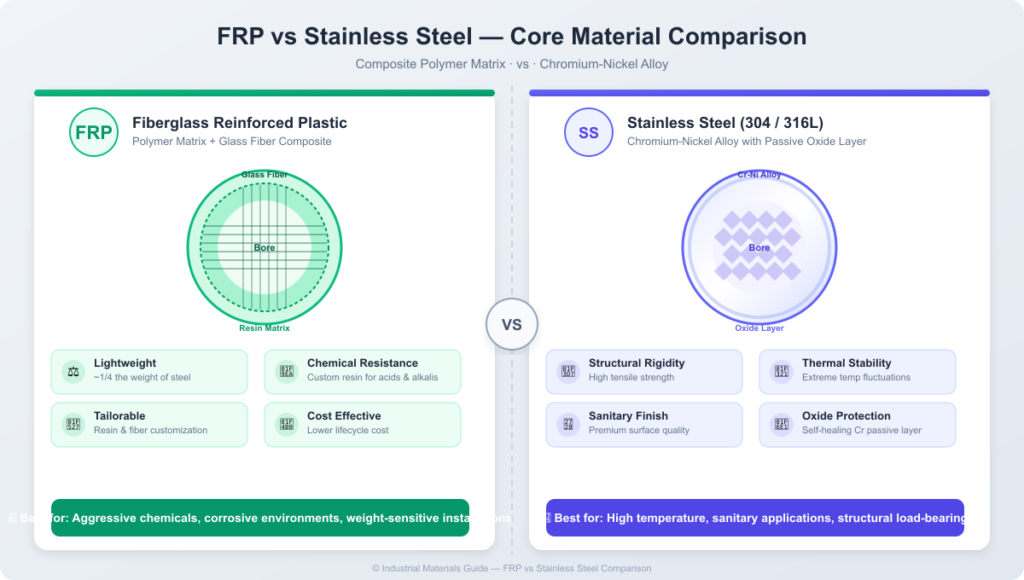
Fiberglass Reinforced Plastic (FRP) is a composite material. It relies on a polymer matrix reinforced with glass fibers. This combination creates a lightweight structure with exceptional chemical resistance. FRP manufacturers can tailor the interior resin to handle specific acidic or alkaline fluids, making it highly versatile for aggressive industrial liquids.
Stainless steel, specifically grades 304 and 316L, relies on chromium and nickel alloys. This metallic structure creates a passive oxide layer that naturally resists oxidation. It is structurally rigid, handles extreme temperature fluctuations without warping, and offers a premium, sanitary surface finish.
Water Tank Corrosion Resistance: The Ultimate Test
When engineers compare FRP vs Stainless Steel water storage tanks, corrosion is the primary battlefield.
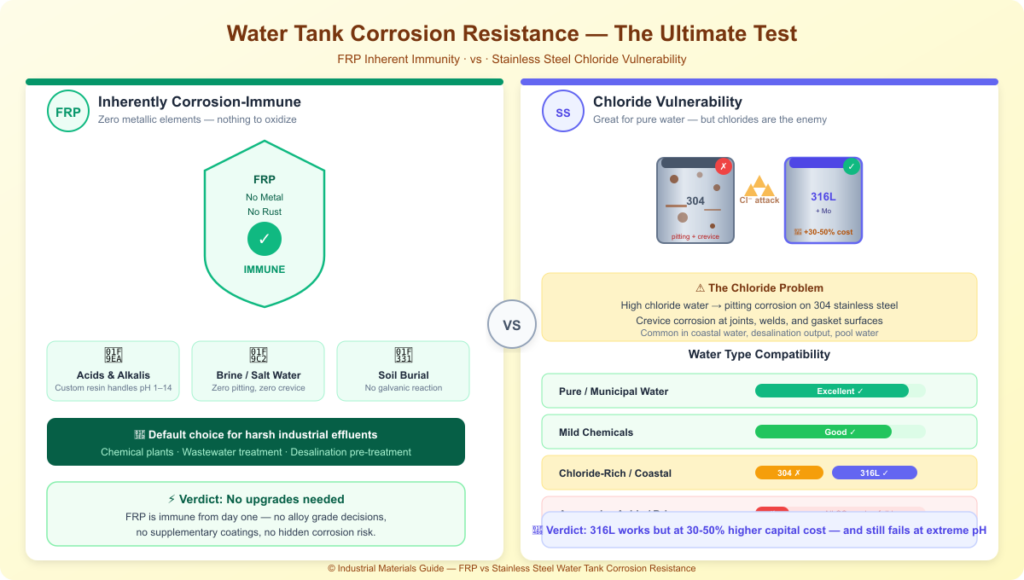
FRP is inherently immune to rust. Because it contains no metallic elements, it will not oxidize when exposed to water, soil, or highly reactive chemicals. This makes FRP the default choice for storing harsh industrial effluents, brine, or acidic compounds.
Stainless steel offers excellent water tank corrosion resistance against pure water and mild chemicals. However, it has a documented weakness: chlorides. If your water source contains high chloride levels, standard 304 stainless steel will suffer from pitting and crevice corrosion. Upgrading to 316L adds molybdenum to resist chlorides, but it significantly increases the capital cost.
Potable Water Storage Regulations: Safety First
Storing drinking water involves strict compliance. Specifying FRP vs Stainless Steel water storage tanks for drinking water means navigating local and international health codes.
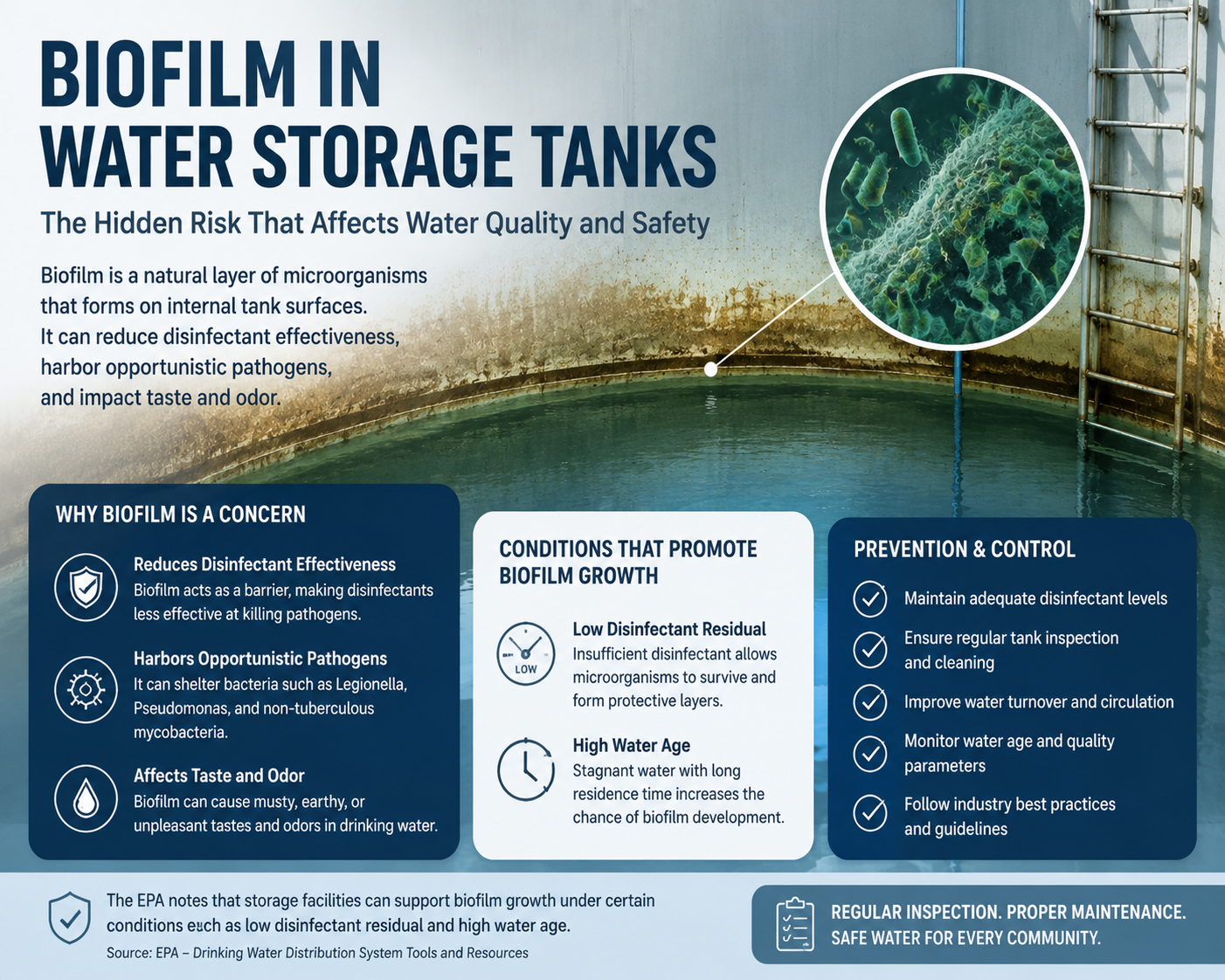
Stainless steel is the gold standard for sanitation. Its non-porous surface prevents bacterial adhesion and algae growth. It naturally complies with the most stringent potable water storage regulations, including FDA and European food-grade standards. Hospitals, food processing plants, and breweries almost exclusively rely on stainless steel.
FRP can absolutely be used for potable water, provided it uses a specific food-grade resin. The tank must carry explicit NSF/ANSI 61 compliance certification. Without this specific resin, standard FRP can leach styrene into the drinking water, causing severe health hazards and failing regulatory inspections.
Surviving Extreme Environments
External environmental factors destroy tanks just as quickly as the fluids inside them. This makes the choice between FRP vs Stainless Steel water storage tanks in marine setups critical.
What is the best water storage tank material for coastal environments? Due to airborne salt spray, standard steel degrades rapidly. FRP excels here, as the salty air cannot rust the fiberglass exterior. However, FRP is susceptible to UV degradation. Over a decade of intense sunlight, the exterior resin can experience “fiber bloom.” Applying a polyurethane UV-protective topcoat is mandatory for outdoor FRP tanks.
Stainless steel (specifically 316L) handles UV exposure flawlessly. It will not degrade, crack, or become brittle under the sun. It also withstands freezing temperatures and seismic activity better than the more rigid fiberglass structures.
The Third Option: Bolted Steel Water Tanks
Sometimes the conversation shifts beyond just FRP vs Stainless Steel water storage tanks to include logistical alternatives.
If your facility has tight access restrictions, delivering a factory-welded steel tank or a massive molded FRP tank might be physically impossible. In these scenarios, bolted steel water tanks present a hybrid solution. These tanks are shipped as flat, glass-fused-to-steel panels and assembled on-site with heavy-duty gaskets and bolts. They offer the strength of steel with superior interior coatings, bridging the gap for difficult installations.
Maintenance and Total Cost of Ownership
Procurement teams must carefully calculate the maintenance cost of stainless steel vs fiberglass water tanks.
The maintenance reality of FRP vs Stainless Steel water storage tanks becomes obvious after year five. Stainless steel requires very little maintenance. Routine visual inspections and periodic sediment flushing are usually sufficient. If damage occurs, a certified welder can repair stainless steel on-site.
FRP requires a more involved maintenance schedule. The interior gel coat must be inspected for micro-cracking or blistering. Repairing FRP requires grinding down the fiberglass and reapplying resins, a specialized process that requires strict temperature and humidity controls to cure properly.
When analyzing the lifecycle of FRP vs Stainless Steel water storage tanks, upfront pricing varies. FRP is generally 20% to 30% cheaper than premium 316L stainless steel initially.
However, what is the lifespan of an FRP water storage tank? A well-maintained FRP unit lasts 20 to 25 years. A high-quality stainless steel tank can easily exceed 40 to 50 years. The long-term ROI of FRP vs Stainless Steel water storage tanks depends heavily on whether your facility plans for a 20-year horizon or a 50-year legacy.
Moving to the Next Phase: Sizing and Site Planning
Once you finalize your decision regarding FRP vs Stainless Steel water storage tanks, the next critical phase is calculating the required volume and footprint. Material strength means nothing if the tank is undersized for your peak flow rates or lacks the proper foundation engineering.
To ensure your new system meets your operational demands, head over to our comprehensive guide on Choosing the Right Water Storage Tank to learn how to calculate capacity, manage footprint restrictions, and design the optimal base for your chosen material.
Your final verdict on FRP vs Stainless Steel water storage tanks comes down to the fluid composition. If you are dealing with harsh chemicals, coastal air, and a tight initial budget, specify FRP. If you demand pristine potable water sanitation, extreme temperature tolerance, and a multi-generational lifespan, invest in stainless steel.
FAQ
Can FRP handle high-temperature liquids?
Yes, but it requires high-temperature vinyl ester resins. Standard FRP is rated for ambient temperatures. For continuous fluids exceeding 150°F (65°C), stainless steel is the safer structural choice.
Which is faster to install, FRP vs Stainless Steel water storage tanks?
FRP is significantly lighter, requiring smaller cranes and smaller concrete foundation pads. Factory-built FRP tanks can be dropped into place and piped in a single day.
Do stainless steel tanks require internal coatings?
No. The bare metal provides the necessary corrosion resistance through its passive oxide layer, eliminating the risk of coating delamination over time.