Fire Water Tank Maintenance is not just a compliance task — it is a critical safeguard that ensures water is available the moment a suppression system demands it. In industrial facilities, warehouses, manufacturing plants, and commercial complexes, the fire water tank sits quietly in the background. Yet its reliability directly affects life safety, property protection, and operational continuity.
When maintenance is delayed or poorly documented, small issues such as sediment buildup or corroded fittings can escalate into system failure. A structured and realistic maintenance plan prevents that risk.
Why Fire Water Storage Reliability Matters
A fire water tank is part of a broader fire suppression infrastructure that includes pumps, control valves, alarms, and sprinkler or hydrant networks. If the tank cannot deliver clean, sufficient water at the required flow rate, the entire system performance is compromised.
Regular Fire Water Tank Maintenance helps:
- Preserve required water volume capacity
- Prevent internal corrosion and coating failure
- Avoid suction blockages caused by sediment
- Maintain pump prime and pressure stability
- Meet insurance and regulatory audit expectations

Fire Water Tank Maintenance Inspection Schedule
An effective Fire Water Tank Maintenance program follows a structured inspection frequency. Facility managers should assign responsibility clearly and document every activity.
Monthly Checks
- Visual exterior inspection for leaks or structural deformation
- Check water level indicators and alarm signals
- Confirm access hatches are secure
- Verify no external contamination sources nearby
Quarterly Checks
- Inspect valves for operational integrity
- Exercise isolation valves to prevent seizure
- Examine overflow and drain lines
- Review pump suction strainers
Annual Internal Inspection
- Conduct internal visual inspection
- Measure sediment accumulation depth
- Inspect internal coatings and liners
- Check anchor bolts, roof structure, and support members
- Test water circulation and pump integration
A documented fire water tank inspection checklist ensures no step is overlooked.
Common Risks Identified During Fire Water Tank Maintenance
Even well-designed industrial water tanks develop issues over time. The most common findings include:
Sediment Accumulation
Sediment settles at the bottom of the tank and can block suction strainers. This reduces effective flow rate during emergencies.
A proper fire water tank sediment removal procedure should be performed annually or as required based on water quality.
Corrosion and Coating Deterioration
Steel tanks are particularly vulnerable if protective coatings degrade. Corrosion weakens structural integrity and contaminates water.
Routine Fire Water Tank Maintenance includes coating inspection and touch-up repair.
Valve Seizure or Leakage
Infrequently operated valves may seize. A structured fire water tank valve maintenance schedule reduces this risk by requiring periodic cycling and lubrication.
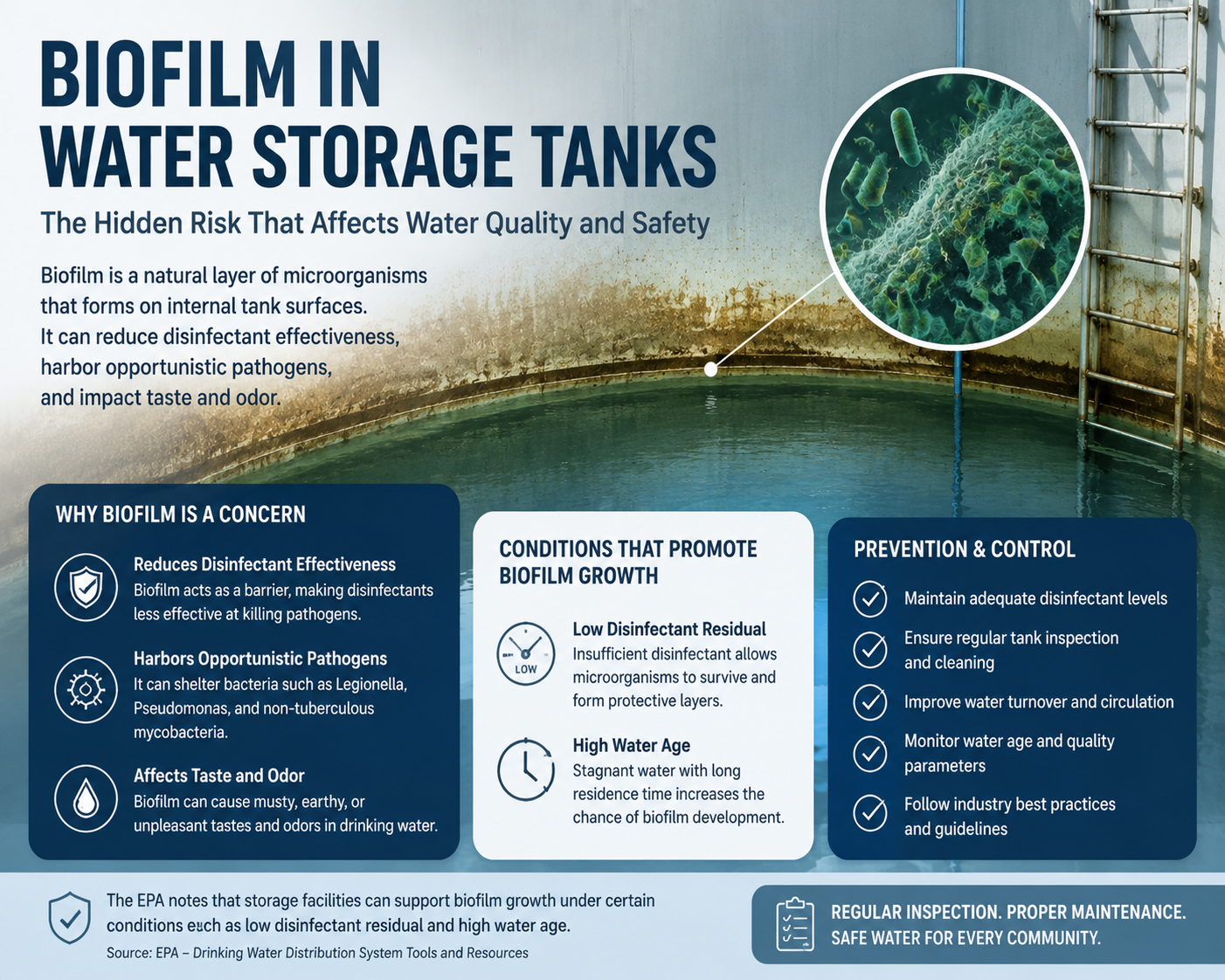
Microbial Growth
In warmer climates, stagnant water promotes algae or bacterial growth. This affects water clarity and may interfere with pump strainers.
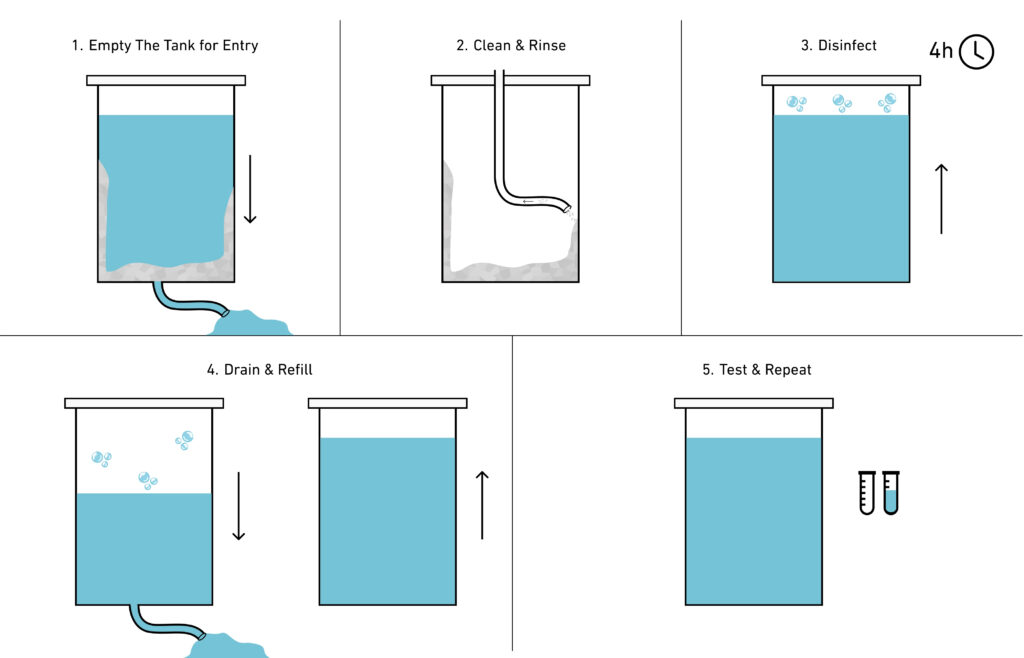
Cleaning and Sediment Management
Cleaning is often the most neglected part of Fire Water Tank Maintenance. However, it is one of the most impactful preventive measures.
Recommended Process:
1.Isolate the tank from active system components
2.Drain water in controlled stages
3.Remove sediment using vacuum or pump extraction
4.Wash interior surfaces with approved cleaning solutions
5.Inspect structural components before refilling
6.Refill gradually while monitoring pump integration
Facilities located in areas with high mineral content should evaluate cleaning frequency more often than the standard annual schedule.
Compliance and Standards Considerations
Fire water storage systems are typically governed by regional fire protection standards. In North America, guidance is often aligned with NFPA water storage tank requirements. Other regions follow similar codes adapted to local building regulations.
Fire Water Tank Maintenance documentation should include:
- Inspection dates
- Responsible personnel
- Identified deficiencies
- Corrective actions taken
- Photographic records
These records support audits, insurance reviews, and regulatory inspections.
Integrating Maintenance with Pump System Readiness
The tank does not operate alone. It must function seamlessly with fire pumps and distribution networks.
During Fire Water Tank Maintenance, teams should:
- Test pump suction pressure
- Confirm priming systems are operational
- Verify no air ingress into suction lines
- Monitor pressure stabilization during flow tests
A partially clogged suction line can reduce discharge pressure during real emergencies. Testing under simulated load conditions is strongly recommended.
Reducing Long-Term Operational Risk
A preventive maintenance strategy costs significantly less than emergency repair or system failure. Industrial facilities that adopt structured Fire Water Tank Maintenance programs typically experience:
- Lower emergency repair frequency
- Reduced corrosion-related replacement costs
- Improved insurance compliance ratings
- Extended tank service life
Even older tanks can remain reliable if inspections and cleaning are consistent.
Practical Maintenance Planning for Facility Managers
To make Fire Water Tank Maintenance manageable:
1.Create a digital maintenance logbook
2.Assign responsible personnel per inspection phase
3.Establish a recurring calendar schedule
4.Partner with certified inspection professionals annually
5.Maintain spare valve seals and essential repair kits
Consistency is more important than complexity. A simple, repeatable process ensures reliability.
Conclusion
Fire Water Tank Maintenance is a disciplined process built on inspection, cleaning, documentation, and system testing. For facility managers, it represents more than routine upkeep — it is a proactive investment in safety, compliance, and operational continuity.
When tanks are maintained systematically, pumps perform as designed, flow rates remain stable, and facilities are better prepared for the unexpected. A well-executed maintenance plan turns a passive storage structure into a dependable first line of defense.
For more information on industrial water tank maintenance, please click here.