This fire water tank inspection checklist helps industrial facilities maintain compliance and readiness by aligning day-to-day ITM activities with NFPA 22 and NFPA 25.
industrial fire water tank don’t “stay compliant” just because they were designed correctly. Most issues that cause audit findings, insurance pushback, or unreliable fire water supply happen after commissioning—during daily operations, seasonal changes, and minor maintenance that wasn’t documented.
This guide turns standards into a field-ready ITM (Inspection, Testing, and Maintenance) workflow, bridging:
- NFPA 22 (tank requirements across design, construction, installation, and maintenance)
- and NFPA 25 (baseline ITM for water-based fire protection systems).
Note: Always follow the edition adopted in your jurisdiction and the AHJ (Authority Having Jurisdiction). This article is a practical guide, not legal advice.
Table of Contents
Fire Water Tank Inspection Checklist: Quarterly Exterior Walkdown
1) NFPA 22 vs NFPA 25 — how they work together
Think of it this way:
- NFPA 22 tells you what a compliant tank system should be and what components/installation/maintenance considerations must be addressed.
- NFPA 25 tells you how to keep the system reliable over time through periodic inspection, testing, maintenance, and recordkeeping.
For owners and EPCs, the winning combination is:
- Compliant design + correct submittals (NFPA 22 mindset)
- Repeatable ITM plan + records (NFPA 25 mindset)
If you still need help with selection/sizing and core compliance items, start here: NFPA 22 Compliance Guide: Industrial Fire Water Tanks 2026 (NFPA 22 Compliance Guide: Industrial Fire Water Tanks 2025).
The practical ITM checklist (by component)
Use this as your “walkdown route” checklist. For each item, log:
- Date / inspector / condition (OK / Monitor / Repair)
- Photo evidence (when anything changes)
- Corrective action + closure date
A) Water level & water quality
- Verify water level matches normal operating range
- Confirm any water level alarm is functional and signals correctly
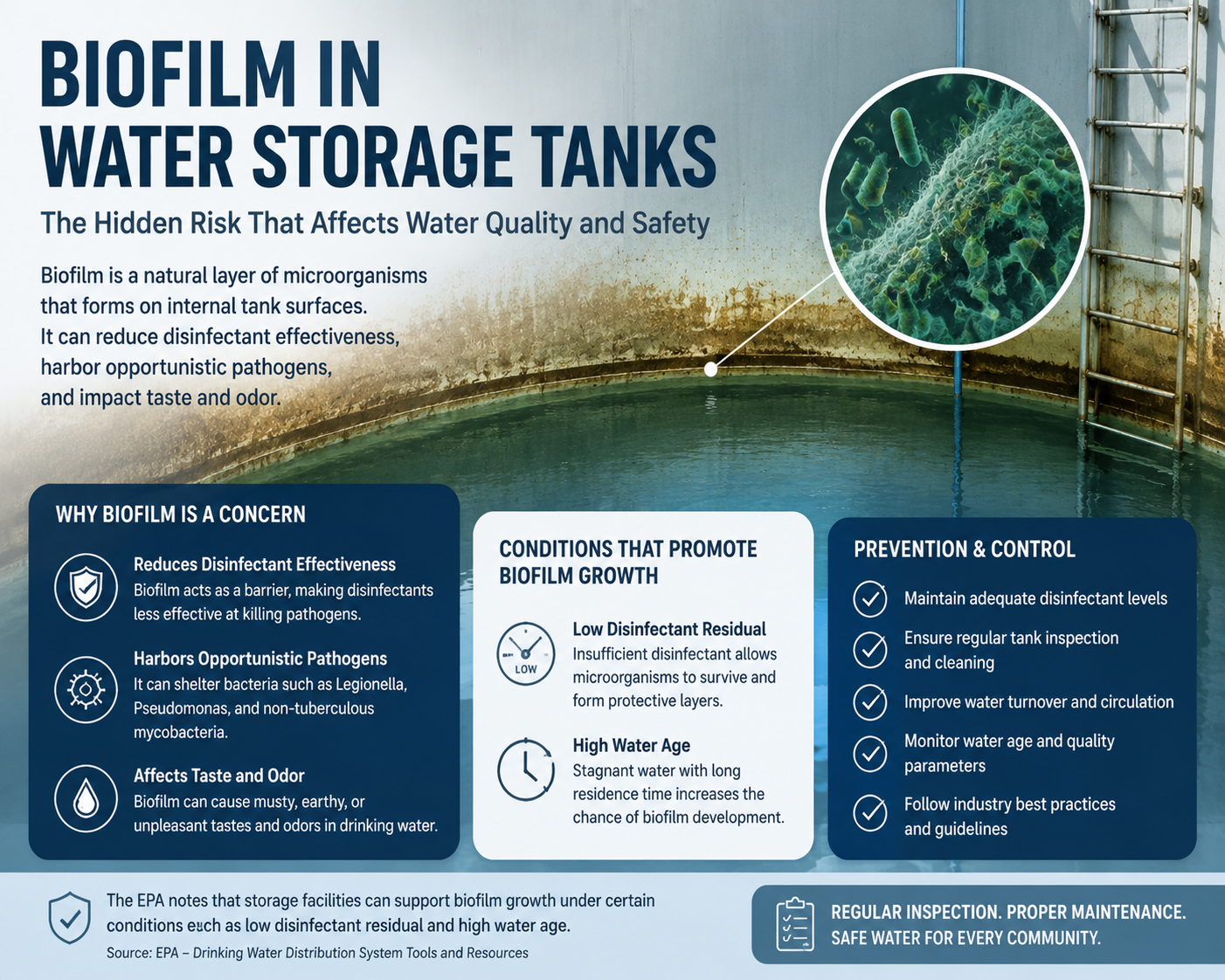
- Check for abnormal odor, visible debris, or discoloration (triggers interior inspection planning)
Typical frequencies commonly referenced for tank-related checks include monthly/quarterly water level verification depending on supervision/monitoring.
B) Tank exterior, shell, roof, foundation
- Walk the perimeter: leaks, weeping seams, corrosion, coating damage
- Check roof conditions: ponding water, damaged panels, loose fasteners
- Look for foundation settlement signs (uneven gaps, door misalignment, unusual piping stress)
NFPA 25-based summaries commonly point to quarterly exterior tank inspection as a minimum practice baseline.
C) Access & safety (ladders, platforms, catwalks)
- Ladders and cages: loose hardware, corrosion, missing safety components
- Platforms/handrails: structural integrity, slip hazards
- Clear signage and safe access for responders/maintenance
(These are explicitly listed in many NFPA 25-based tank inspection summaries as quarterly items.)
D) Vents, overflow, strainers, and insect screens
This is a high-failure area in real plants.
- Confirm vent paths are clear (no nests, ice blockage, paint clogging)
- Confirm screens/strainers are intact and clean
- Overflow discharge path unobstructed
E) Valves, suction piping, and appurtenances
- Verify valve position, locks/seals, and supervisory status
- Check for external leaks around packing/gaskets
- Confirm accessibility and identification signage
NFPA 25 references valve inspection/testing with frequency (Inspection according to Fire Water Tank Inspection Checklist)depending on supervision method (sealed/locked/supervised).
F) Freeze protection (global projects — don’t skip this)
If you ship globally, cold-weather failures are a major reputational risk.
- Verify heaters/insulation are intact
- Confirm low-temperature alarms work
- Check for ice formation at vents/overflow outlets
- Confirm seasonal procedures (prior to cold season)
Risk advisory guidance often calls for more frequent checks during cold weather, especially where temperature is a concern.
3) ITM frequency table (field-friendly summary)
Exact schedules depend on adopted edition + AHJ + monitoring level. But as a practical baseline, NFPA 25-based tank summaries frequently include items such as:
- Water level: monthly or quarterly (depending on supervised alarms/monitoring)
- Exterior tank / support structure / ladders / surrounding area: quarterly
- Painted/coated surfaces & expansion joints: annually
- Interior inspection: every 3 years (no corrosion protection) or 5 years (with corrosion protection)
Tip for owners: if your site has continuous monitoring (level/temperature), many programs reduce manual check frequency—but you still need documented evidence.
4) Documentation that passes audits (what owners and insurers actually want)
Good ITM is 50% inspection and 50% records.
Minimum record set (recommended)
- Commissioning/acceptance records (baseline)
- ITM logs (inspection/test/maintenance)
- Corrective action reports (with photos)
- Updated drawings / equipment list / spare parts list
- Manufacturer O&M package (manuals, datasheets)
Many training/owner-facing materials referencing NFPA 25 emphasize that records must be available to the AHJ and retained based on the standard’s retention rule (commonly summarized as keep records for one year after the next required activity of that type).
5) Common failure points (and how to prevent them)
Here are issues that routinely show up during inspections:
- Blocked vents/overflow → implement a seasonal cleaning/check routine
- Corrosion under insulation / coating holidays → annual coating review + targeted repairs
- Unsupervised or mis-set valves → lock/supervise + signage + periodic verification
- Missing or inconsistent records → one standard template + one shared storage location
- Cold-weather damage → pre-winter checklist + alarm verification + heater test
6) What to request from a tank manufacturer (helps your buyers worldwide)
As a buyer/EPC, asking for these up front reduces lifetime risk:
- Submittal drawings + accessory list (vents, overflow, level indication, ladders, platforms)
- Coating system spec and repair procedure
- Corrosion protection approach (and how it affects interior inspection interval planning)
- Installation QA/QC checklist and commissioning support
- Spare parts recommendations (gaskets, screens, level devices, fasteners)
Q1: How often should a fire water tank be inspected?
A: Common programs reference quarterly exterior inspections and periodic interior inspections (3 years or 5 years depending on corrosion protection), but always follow the edition adopted locally and the AHJ requirements.
Q2: What causes the most inspection failures?
A: Vents/overflows blocked, corrosion/coating failure, valve supervision issues, and missing documentation.
Q3: Do we need a third-party inspection?
A: Many owners use qualified contractors for interior inspections and specialized testing. NFPA-related materials also emphasize ITM should be performed by qualified personnel acceptable to the AHJ
Q4: What documents should be ready for AHJ/insurance reviews?
A: ITM logs, corrective actions, commissioning baseline, O&M package, and up-to-date drawings/equipment lists.