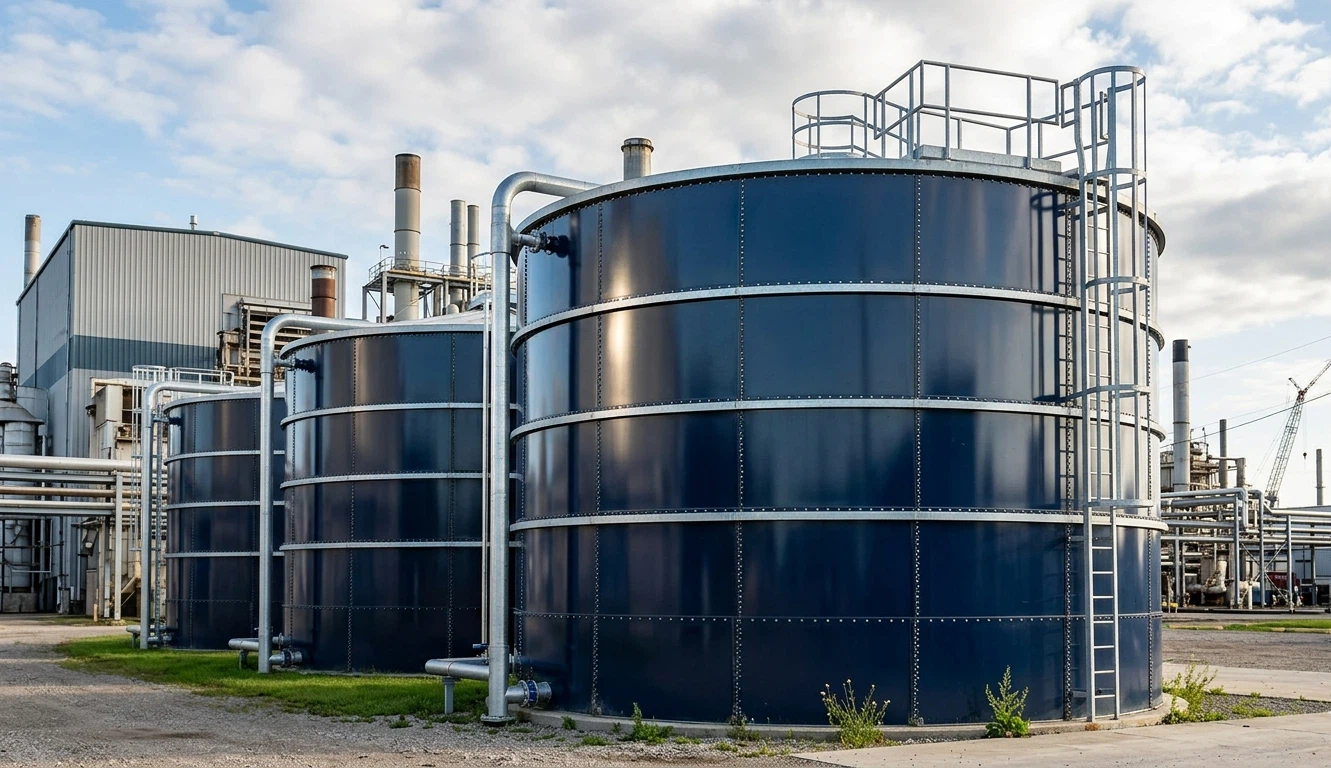
A newly installed water tank may look clean, but appearance says very little about what is actually inside.
Dust from fabrication, transportation debris, welding residues, protective coatings, packaging particles, and contaminants introduced during installation can all remain in the system. If these materials enter the drinking water supply, they can affect water quality from day one.
That is why potable water tank cleaning before commissioning is considered a standard practice across municipal, commercial, and industrial water systems. Organizations such as the WHO and AWWA emphasize that new drinking water storage facilities should be inspected, cleaned, disinfected, and verified before entering service.
جدول المحتويات
Why Is Cleaning a New Water Tank Necessary if It Has Never Been Used?
This is one of the most common questions raised during commissioning.
The assumption is simple:
New equals clean.
In practice, that assumption is often wrong.
A tank may spend weeks or months moving between fabrication, storage, shipping, installation, and final connection. During that process, contaminants can accumulate even when the tank remains sealed.
Common findings during post-installation inspections include:
- Metal shavings
- Welding slag
- Dust and sand
- Packaging materials
- Sealant residue
- Construction debris
- Surface oils from handling
What Can Be Found Inside a Newly Installed Potable Water Tank?
Physical Contaminants
These are usually the easiest to identify:
- Dust
- Sand
- Rust particles
- Metal fragments
- Plastic packaging remnants
Chemical Residues
Depending on the tank material and fabrication process, there may be:
- Protective oils
- Cleaning agents
- Coating residues
- Sealant traces
Biological Risks
Even short-term exposure during installation can introduce microorganisms.
For that reason, a new water tank commissioning procedure should always include cleaning and sanitation steps.
What Should Be Checked Before Cleaning Starts?
Before beginning potable water tank cleaning, conduct a pre-commissioning inspection.
This step often prevents problems that cleaning alone cannot solve.
Inspection Checklist
✓ Interior surfaces free from visible defects
✓ Access hatches sealed correctly
✓ Inlet and outlet connections completed
✓ Drain valves operational
✓ Vent screens installed
✓ Overflow protection verified
✓ Internal coatings fully cured
✓ No standing water inside the tank
Potable Water Tank Cleaning Procedure: Step-by-Step
The exact process depends on tank size, material, and local regulations.
However, most systems follow the same general sequence.
Step 1: Remove Loose Debris
Before introducing water, remove visible contamination.
This may include:
- Vacuum cleaning
- Sweeping
- Wiping accessible surfaces
The objective is to eliminate loose particles that would otherwise circulate during flushing.
Step 2: Initial Tank Flushing Before Use
The next stage is tank flushing before use.
Clean potable water is introduced and circulated through the system.
The flushing process helps remove:
- Dust
- Fine particles
- Installation residue
- Remaining fabrication debris
Large tanks often require multiple flush cycles.
Step 3: Surface Cleaning
If contamination is significant, surfaces may be cleaned using approved detergents or mechanical methods.
Special attention should be given to:
- Weld seams
- Corners
- Roof supports
- Access openings
After cleaning, the tank should be thoroughly rinsed.
Step 4: Final Inspection
Before disinfection begins:
- Surfaces should be visibly clean
- Drainage should be complete
- No debris should remain
Only then should the sanitation process proceed.
How Is a Potable Water Tank Disinfected Before Service?
Cleaning removes contaminants.
Disinfection reduces microbial risks.
These are not the same process.
A proper water tank chlorination procedure generally includes:
1.Filling the tank with treated water
2.Introducing chlorine at the specified concentration
3.Maintaining required contact time
4.Draining the disinfected water
5.Performing final rinsing
The exact concentration and exposure period should follow applicable local regulations and engineering specifications.
How Long Should Flushing and Disinfection Take?
There is no universal answer.
The duration depends on:
- Tank volume
- Pipe length
- Water turnover rate
- Chlorine concentration
- Regulatory requirements
For larger municipal systems, the process may take several days.
For smaller commercial installations, it may be completed within a single commissioning cycle.
The critical point is verification—not speed.
Rushing the process often creates long-term water quality issues.
What Mistakes Are Common During Potable Water Tank Cleaning?
Most startup contamination problems can be traced back to a handful of avoidable mistakes.
Skipping Disinfection
Some contractors perform flushing only.
Flushing removes particles but does not provide microbial control.
Ignoring Connected Piping
A perfectly cleaned tank can still become contaminated through untreated pipework.
Insufficient Contact Time
Chlorination is only effective when the disinfectant remains in contact with surfaces long enough.
Failing to Verify Water Quality
Without testing, there is no objective evidence that the system is ready.
Assuming Factory-Clean Means Service-Ready
Manufacturing cleanliness and potable water sanitation are not the same thing.
A successful startup begins long before the first gallon of water enters the system. Proper potable water tank cleaning helps remove construction debris, reduce contamination risks, support regulatory compliance, and establish a safer drinking water environment from day one. When inspection, flushing, disinfection, and verification are performed correctly, a new storage system enters service with far fewer operational surprises and a much lower risk of water quality complaints.
التعليمات
Do new potable water tanks need cleaning before use?
Yes. New tanks may contain debris, residue, and contaminants introduced during manufacturing, transportation, or installation.
Is flushing alone enough?
Usually not. Flushing removes particles, but disinfection is typically required before potable service.
What disinfectant is commonly used?
Chlorine-based disinfectants are widely used in potable water systems because they are effective and recognized by industry standards.
How can I verify the tank is ready for service?
Visual inspection, chlorine residual testing, and water quality testing are commonly used verification methods.
Can a clean-looking tank still be contaminated?
Yes. Many contaminants are microscopic and cannot be identified through visual inspection alone.