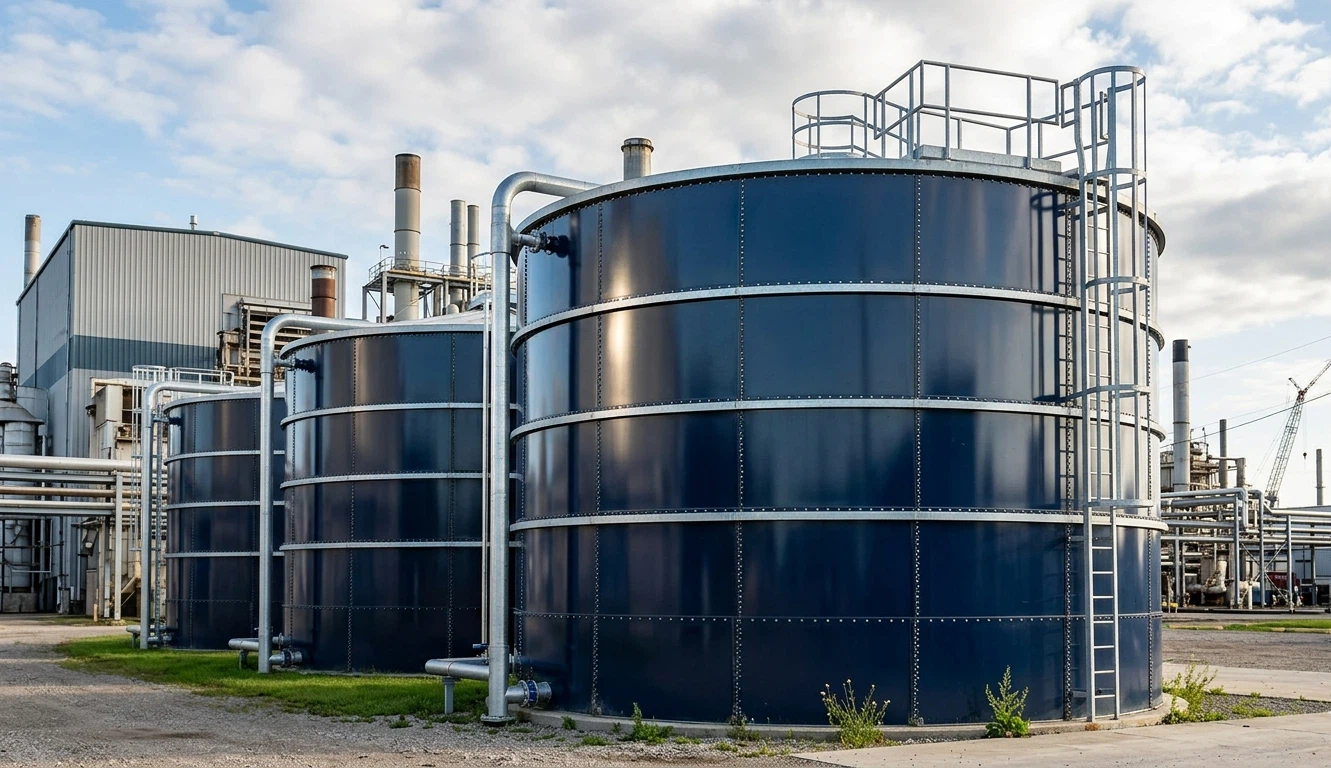
In the high-stakes environment of global mineral extraction, water is as critical as the ore itself. However, for project managers and engineers in arid mining regions, the challenge isn’t just finding water—it’s storing it without the infrastructure failing prematurely. Whether you are managing a copper mine in the Andes or an iron ore site in Western Australia, the choice of Mining water storage material dictates your long-term operational costs and site safety.
The dilemma often boils down to a technical crossroad: Galvanized steel or Porcelain Enamel? One offers rugged, cost-effective reliability for raw water, while the other provides near-total chemical immunity for aggressive fluids. Selecting the wrong Mining water storage solution can lead to catastrophic tank wall failure, environmental fines, and the halting of critical haul road maintenance.
جدول المحتويات
PM10 Dust Control Compliance
Remote sites operate under a microscope of environmental regulation. Reliable Mining water storage systems are the primary defense against air quality violations. Dust suppression is not just about keeping the air clear for workers; it is about PM10 dust control compliance. If your storage system fails, your water trucks stop. When the trucks stop, particulate matter (PM10) levels spike, triggering automatic sensors that can lead to immediate site shutdowns by regulatory agencies.
To maintain continuous corrosion-resistant water storage for haul road dust suppression, engineers must look beyond the initial purchase price. You are not just buying a container; you are investing in a Mining water storage system that must withstand high-mineral-content water, extreme UV exposure, and the mechanical vibration of nearby heavy blasting.
Galvanized Steel: The Workhorse of Raw Water Storage
For many remote site infrastructure projects, Large capacity galvanized tanks for mining dust control are the preferred choice. The hot-dip galvanized coating provides a metallurgical bond between the zinc and the steel, creating a “sacrificial” layer. If the Mining water storage tank is scratched by flying debris or during a rapid site relocation, the zinc will corrode instead of the underlying steel, effectively “healing” the wound.
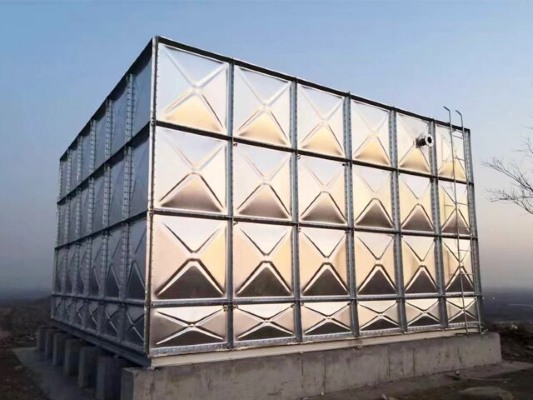
This material is exceptionally well-suited for raw water or well water with a neutral pH. According to the جمعية المجلفنين الأمريكية (AGA), hot-dip galvanizing can provide decades of maintenance-free service in most atmospheric conditions. However, the limits of this Mining water storage type are tested when mines begin using recycled process water storage. When water becomes highly acidic or contains high concentrations of chlorides, the zinc layer can be stripped away faster than anticipated, leading to localized pitting.
Enamel Solutions: Engineering for Chemical Resilience
When the water chemistry is “aggressive”—common in gold and lithium mining where tailings water is recycled—Enamel water tanks for harsh mineral processing environments become the technical standard. Often referred to as Glass-Fused-to-Steel (GFS), this technology utilizes a porcelain enamel lining that is fused to the steel at temperatures exceeding 800°C.
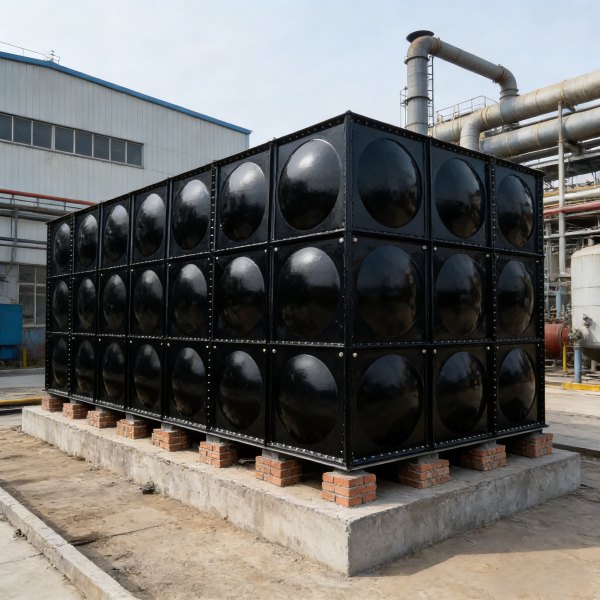
The result is a Mining water storage surface that possesses the chemical resistance of glass but the structural strength of steel. Unlike zinc, which reacts to its environment, enamel is chemically inert. It does not react with high-pH flotation chemicals or low-pH acidic mine drainage. For procurement teams focusing on a Mining water storage strategy with a 30-year lifecycle, enamel eliminates the need for internal sacrificial anodes or frequent recoating projects that plague traditional welded tanks. This makes it an ideal Mining water storage choice for handling mineral-rich slurries and chemical byproducts.
Rapid Deployment for Remote Sites: Logistics and Scalability
In the mining sector, time is a non-renewable resource. Rapid deployment mining water storage for remote sites relies on modular designs that can be shipped in high-density bundles. In remote regions where heavy-lift cranes and specialized welding crews are unavailable, the ability to assemble a 500,000-gallon Mining water storage unit using local labor and basic hydraulic jacks is a massive advantage for project timelines.
This modularity also supports bulk scalability. As a mine expands and its haul road maintenance requirements grow, modular Mining water storage systems can often be expanded by adding additional rings of panels to the bottom, increasing capacity without requiring a completely new footprint or massive capital expenditure for new foundations.
Technical Selection Matrix: Galvanized مقابل المينا
| Technical Metric | Hot-Dip Galvanized Tanks | Porcelain Enamel (GFS) Tanks |
| Best Water Type | Raw Water / Non-Corrosive Well Water | Process Water / Tailings / Acidic Water |
| Coating Thickness | 85-100 Microns (Typical) | 200-400 Microns (Dual Sided) |
| pH Tolerance Range | 6.0 – 9.0 | 2.0 – 13.0 |
| Abrasion Resistance | Moderate (Metallic) | Extreme (Harder than Steel) |
| Site Prep Requirement | Minimal / Compacted Earth or Concrete | Precision Concrete Ring Beam |
| Customization Level | High (Size and Fittings) | Extreme (Specific Linings for Chemicals) |
Analyzing Long-Term ROI
While the initial procurement cost of Large capacity galvanized tanks for mining dust control is generally lower, the Total Cost of Ownership (TCO) changes when dealing with recycled process water storage. Frequent testing of the zinc layer thickness and the potential for premature replacement can make a cheaper Mining water storage tank more expensive over a 10-year period.
Modern Mining water storage strategies prioritize “maintenance-free” windows. By selecting enamel solutions, a mine reduces its specialized labor requirements. In remote sites, flying in a repair crew can cost more than the repair parts themselves. Choosing the right material at the design phase is essentially a form of insurance against future logistical nightmares.
Ensuring Structural Integrity in High-Stakes Mining
Every Mining water storage unit must account for the specific gravity of the fluid it holds. Mineral-rich water is often denser than standard municipal water. Professional customized fabrication ensures that the lower rings of the tank have the necessary tensile strength to handle these increased loads.
Furthermore, in earthquake-prone mining regions or areas with high wind loads, the structural engineering must be site-specific. This is where the value of a professional supplier is truly tested—not in the selling of the steel, but in the engineering of a Mining water storage system to survive the specific stressors of your lease area.
Summary
Ultimately, your Mining water storage strategy should be dictated by your water analysis. If you are strictly managing raw water for haul road dust suppression in a non-corrosive environment, galvanized steel offers the best balance of cost and speed. However, if your operation involves high-chemical process water or extreme longevity requirements, the enamel solution is the only way to guarantee PM10 dust control compliance and operational continuity.
For further technical reading on corrosion rates in industrial environments, consult the AMPP (formerly NACE) standards for protective coatings in the mining industry. By prioritizing the right Mining water storage material today, you prevent the costly “dust control failures” of tomorrow.
التعليمات
Can a galvanized tank be upgraded to handle corrosive water later?
It is difficult. You can add a PVC liner, but this introduces a new failure point. It is more efficient to select an enamel Mining water storage lining from the start if the water chemistry is uncertain.
How fast is “rapid deployment” for a 1,000 m³ tank?
Depending on site prep, a trained crew of 6-8 can typically assemble a modular Mining water storage tank of this size in 10 to 14 days, significantly faster than field-welded alternatives.
Do these tanks require special foundations in remote desert areas?
Many arid mining regions allow for a simple ring-beam foundation. This reduces the bulk material (concrete) needed at the site, lowering logistics costs for your Mining water storage project.
What is the average lifespan of an enamel tank in a mine?
With proper site-specific engineering, a glass-fused-to-steel tank can easily exceed a 30-year design life, even when handling aggressive mineral slurries.