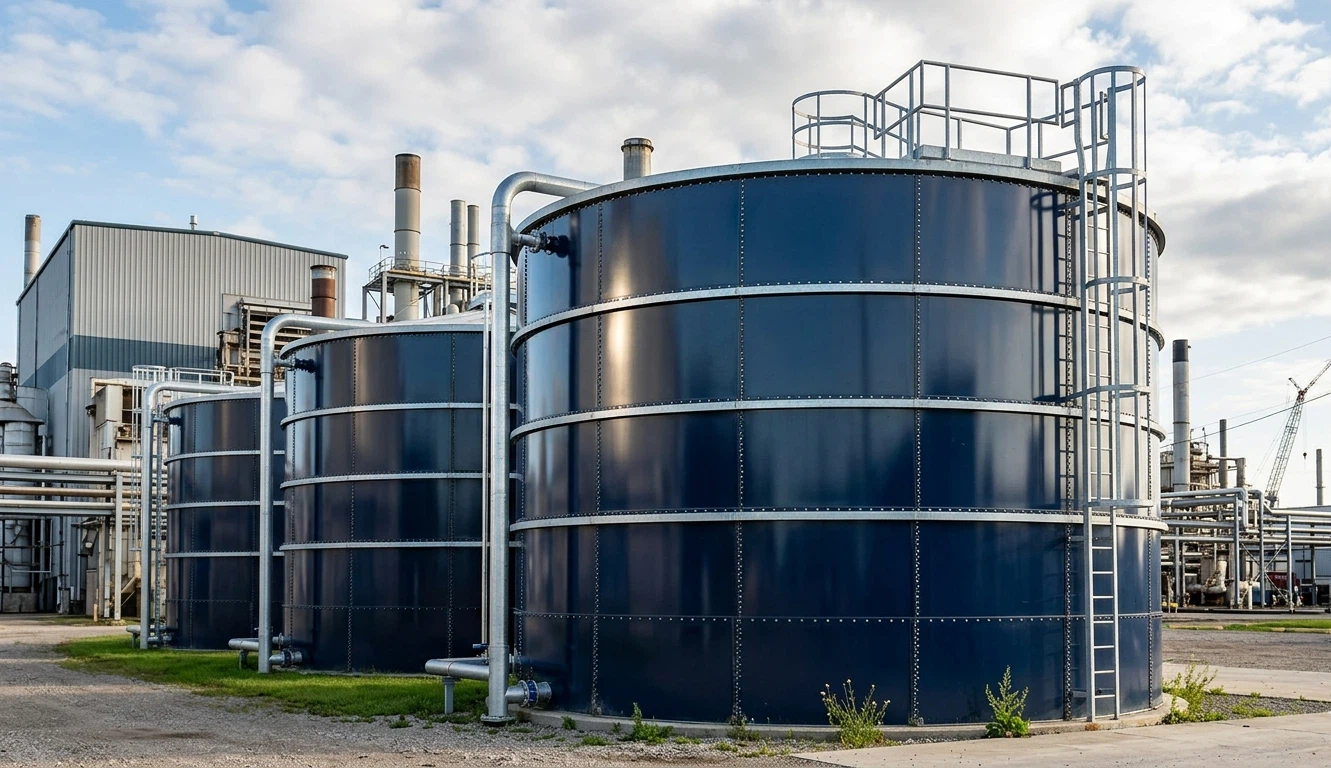
In the industrial landscape of 2026, water security is synonymous with operational continuity. Whether for fire suppression, chemical processing, or potable storage, choosing the best industrial water tank is a decision that impacts both safety and long-term ROI. For plant managers, the challenge is no longer just finding a container, but selecting a high-performance industrial tank system comparison that aligns with evolving environmental and structural standards.
Selecting the best industrial water tank requires more than a glance at the price tag. It demands an understanding of fluid dynamics, material resistance, and seismic compliance. As factories scale, the reliance on factory water storage tanks becomes critical, making the initial engineering choice a cornerstone of the facility’s infrastructure.
جدول المحتويات
Key Selection Criteria for Modern Facilities
When determining which industrial water tank is best?, engineers must prioritize the “Triple-C” framework: Compliance, Capacity, and Chemistry. A tank that stores deionized water for electronics manufacturing has vastly different requirements than a heavy duty water tanks unit designed for municipal fire backup.
First, identify your regulatory environment. In North America and Europe, adherence to AWWA (American Water Works Association) or الرابطة الوطنية للحماية من الحرائق 22 standards is non-negotiable for fire protection. Furthermore, the best industrial water tank in 2026 must now integrate with smart monitoring systems to track leak detection and water quality in real-time.
Capacity Planning: Beyond Peak Demand
Effective capacity planning involves more than calculating daily usage. It requires a “Buffer Analysis.” For most mid-to-large scale operations, the best industrial water tanks for factories are sized to handle 120% of peak demand plus the required fire flow duration.
If your facility is expanding, modular factory water storage tanks offer the best scalability. Bolted steel designs, for instance, allow for height extensions or diameter increases with minimal downtime. This flexibility is a core reason why bolted systems often win in an industrial tank system comparison for growing industrial parks.
Material Recommendations: GRP vs. Steel vs. Concrete
Material science has significantly advanced the durability of heavy duty water tanks. The best industrial water tank for your site depends heavily on the “Total Cost of Ownership” (TCO), which includes maintenance over a 20-year lifecycle.
1.Bolted Galvanized Steel: Often cited as the best industrial water tank for fire protection due to its rapid installation and cost-effectiveness.
2.GRP (Glass Reinforced Plastic): Excellent for corrosive environments or potable water, as it is immune to oxidation.
3.الفولاذ المقاوم للصدأ (304/316): The gold standard for food-grade or high-purity water applications, though the initial cost of new golf cart style investment is higher.
Industrial Tank System Comparison: 2026 Performance Matrix
To simplify the decision-making process, we have compiled an industrial water tanks comparison guide based on the most common factory requirements.
| ميزة | Bolted Steel (HDG) | GRP Modular | الفولاذ المقاوم للصدأ |
| Max Capacity | 10,000m³+ | 5,000m³ | 3,000m³ |
| مقاومة التآكل | Moderate (Requires Liner) | High (Inherent) | عالية جدًا |
| سرعة التركيب | Fast (2-4 weeks) | معتدل | Slow (Welding) |
| الحاجة إلى الصيانة | Low (Internal Liner) | منخفض جدًا | الحد الأدنى |
| Compliance | AWWA, NFPA 22 | WRAS, ايزو | NSF/ANSI 61 |
Data Source: American Water Works Association (AWWA) Standards
Cost vs. Performance: The 20-Year Horizon
If you are asking which industrial water tank is best? based solely on initial quote, you might be overlooking massive future expenses. A heavy duty water tanks purchase should be amortized over its expected service life.
For example, while concrete tanks have the highest initial labor cost, they may last 50 years. Conversely, the best industrial water tank for a leasehold factory might be a modular GRP system that can be dismantled and relocated. In current industrial tank system comparison audits, bolted steel with a high-grade EPDM liner remains the most balanced option for general manufacturing.
Installation Considerations and Site Prep
The best industrial water tanks for factories are only as good as their foundation. Soil bearing capacity must be verified by a geotechnical engineer before the first bolt is tightened. For heavy duty water tanks, the foundation usually consists of a reinforced concrete ring beam or a full structural slab.
Furthermore, consider the “Access Footprint.” Many factory water storage tanks require crane access during assembly. If your site is congested, a modular panel tank that can be moved through standard doorways might be the best industrial water tank for your specific constraints.
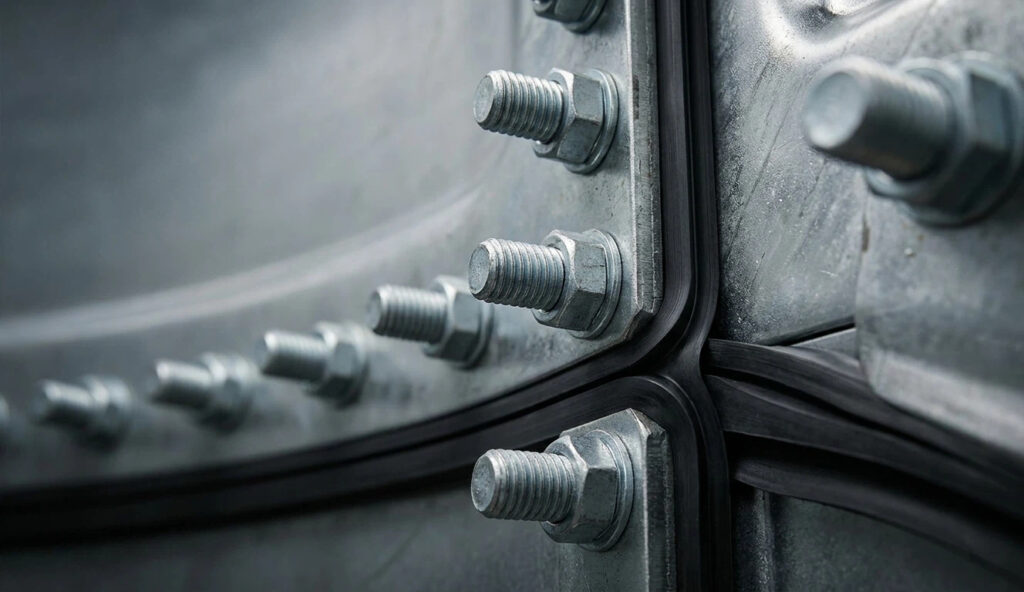
Why Testing Standards Matter
A critical part of any industrial water tanks comparison guide is the verification of welding and sealing. In 2026, vacuum box testing and ultrasonic thickness gauging are standard for high-capacity heavy duty water tanks.
وفقا ل الرابطة الوطنية للحماية من الحرائق (NFPA), specific water storage requirements are vital for high-hazard industrial occupancies. Ensuring your provider meets these benchmarks is the only way to guarantee the best industrial water tank performance during an emergency.
خاتمة
The best industrial water tank is the one that disappears from your daily worry list. By focusing on an industrial tank system comparison that prioritizes material longevity and compliance over the lowest bid, you protect your factory’s future. Whether you opt for a heavy duty water tanks solution or a specialized GRP unit, the quality of the engineering is what defines the “best.”
التعليمات
What is the best industrial water tank for corrosive chemicals?
GRP or Stainless Steel 316 are generally the best options due to their high chemical resistance and lack of oxidation.
How long do factory water storage tanks typically last?
With proper maintenance, bolted steel tanks last 25–30 years, while GRP and concrete can exceed 40–50 years.
Which industrial water tank is best for fire protection?
Bolted galvanized steel tanks complying with NFPA 22 are widely considered the industry standard for industrial fire storage.
Can I expand the capacity of my existing tank?
Yes, if you use a modular industrial tank system comparison approach, specifically bolted steel or GRP panels.